A Stamp Encore Celebration: Stamps Produced with Innovative Printing Methods
Exploring the inventive techniques used for stamps, from a scratch-and-sniff coating to thermochromic ink
People love novelty. Psychologists tell us that a sense of novelty perks us up and motivates us. Research also shows that we prefer novel products over the old hat — but there’s a caveat: They can’t be too different. We go for products that are novel in either their form or their function, but not both.
That helps explain the popularity of stamps printed using innovative techniques. Their form catches our attention, while their function is exactly the same as for other stamps: proof of payment for the service of carrying our letters, postcards, and packages to chosen recipients. According to Bryan Duefrene, senior stamp development specialist for the U.S. Postal Service, “These stamps garner a lot of attention even outside the philatelic world, and they sell really well.” But USPS is judicious about its use of novelty. “We apply this stuff only where we feel it makes sense,” he adds.
Six Forever® stamps featuring innovative printing methods were contenders in the 2025 Stamp Encore Contest, the winner of which will be announced on May 24 at the World Stamp Show in Boston.
Scratch-and-Sniff Stamps
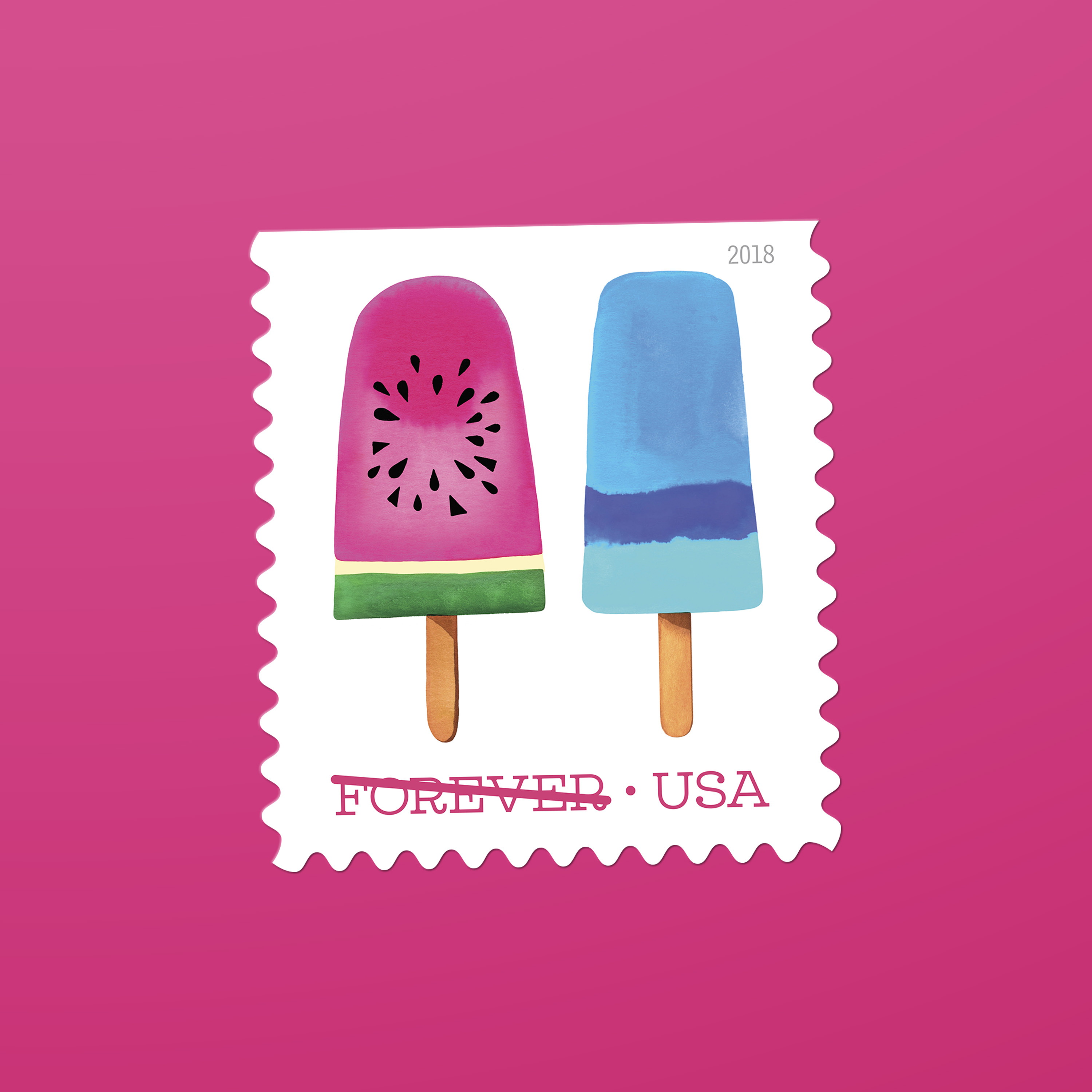
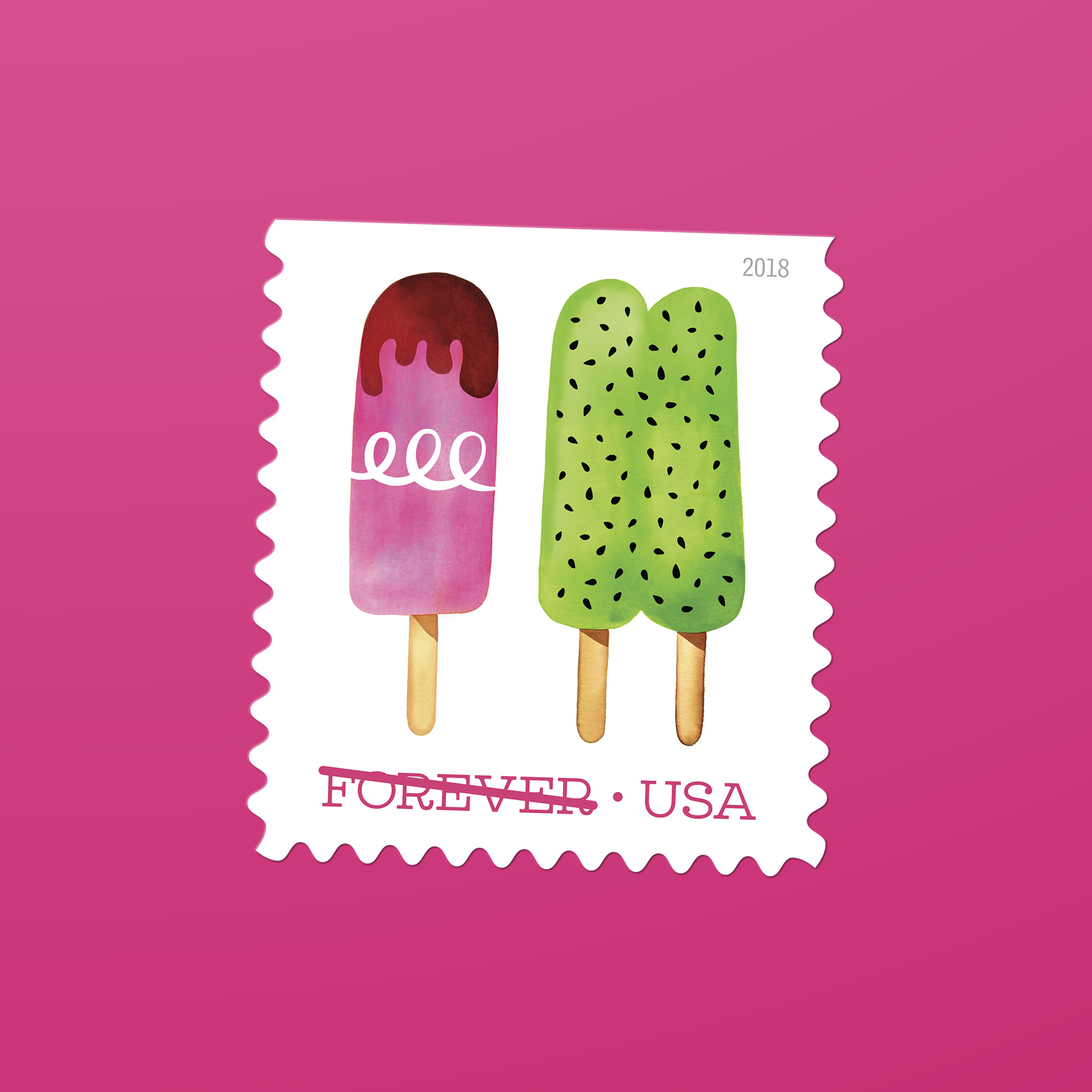
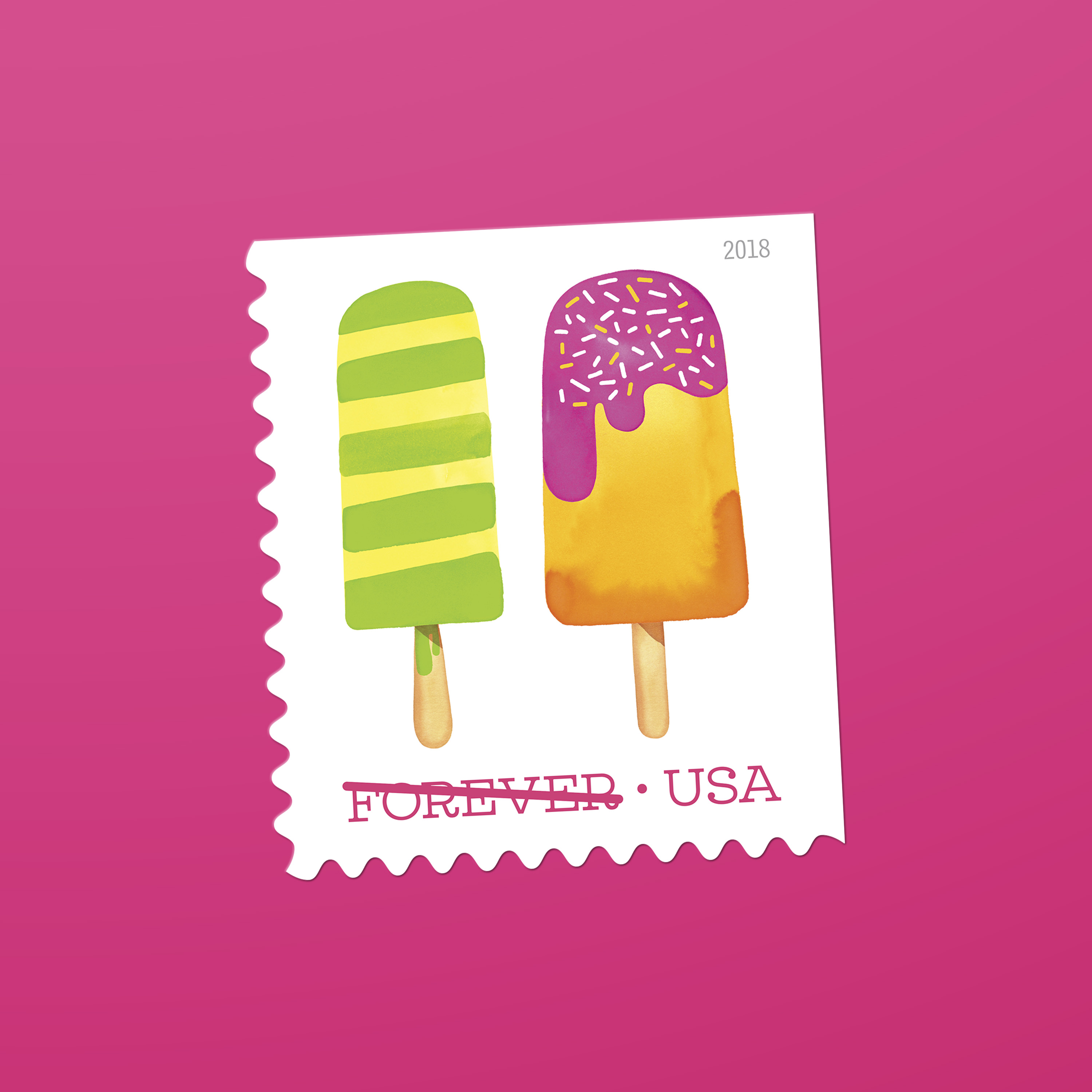
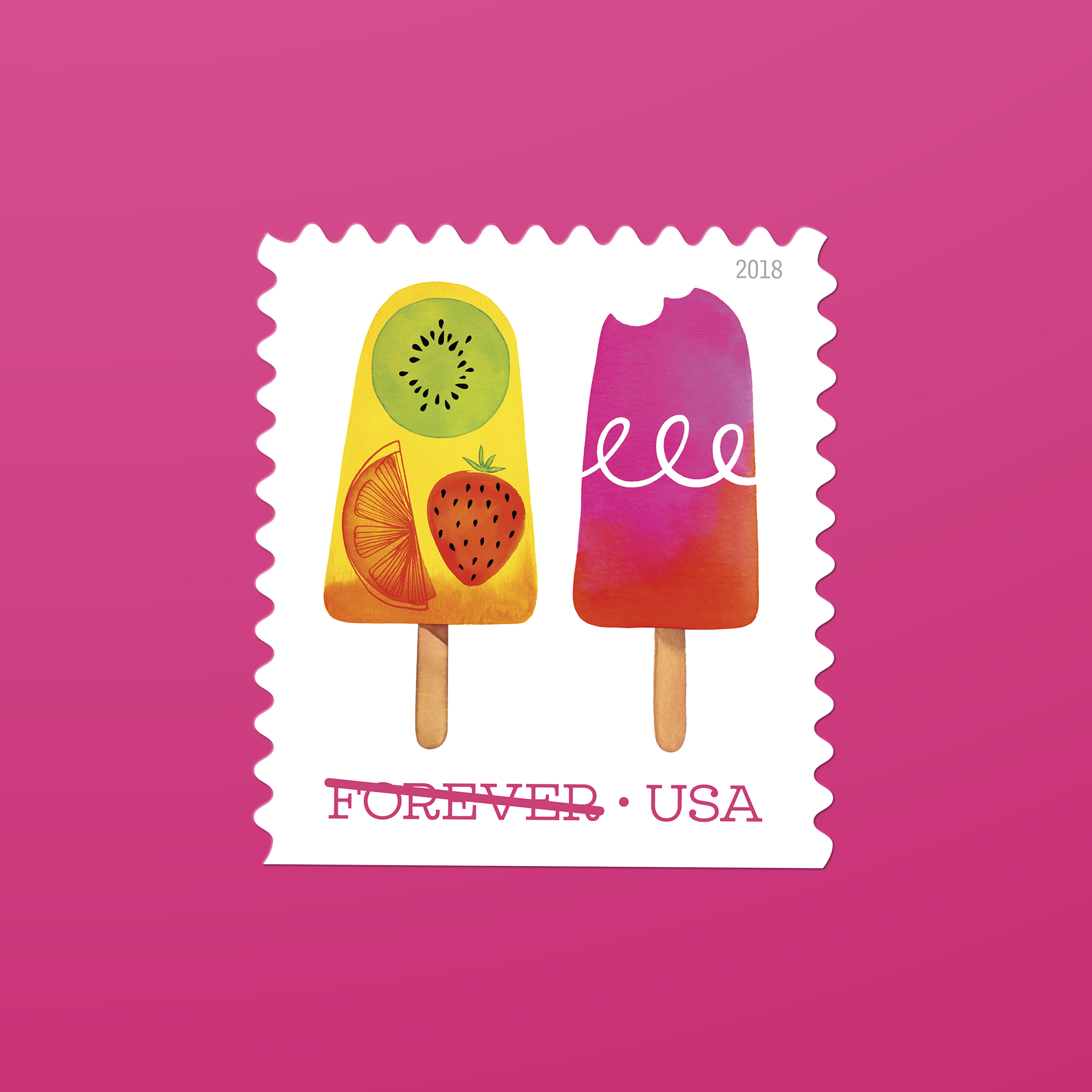
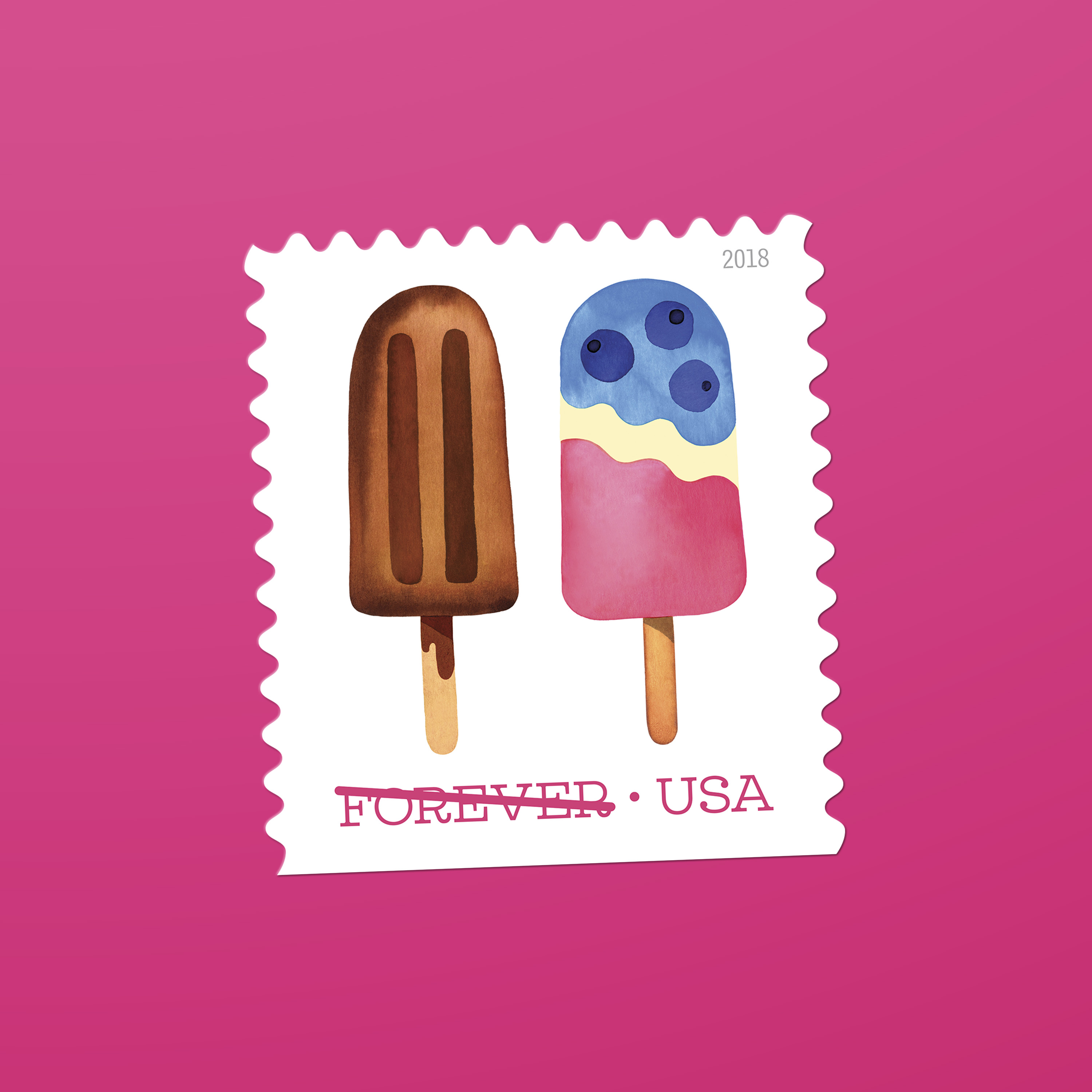
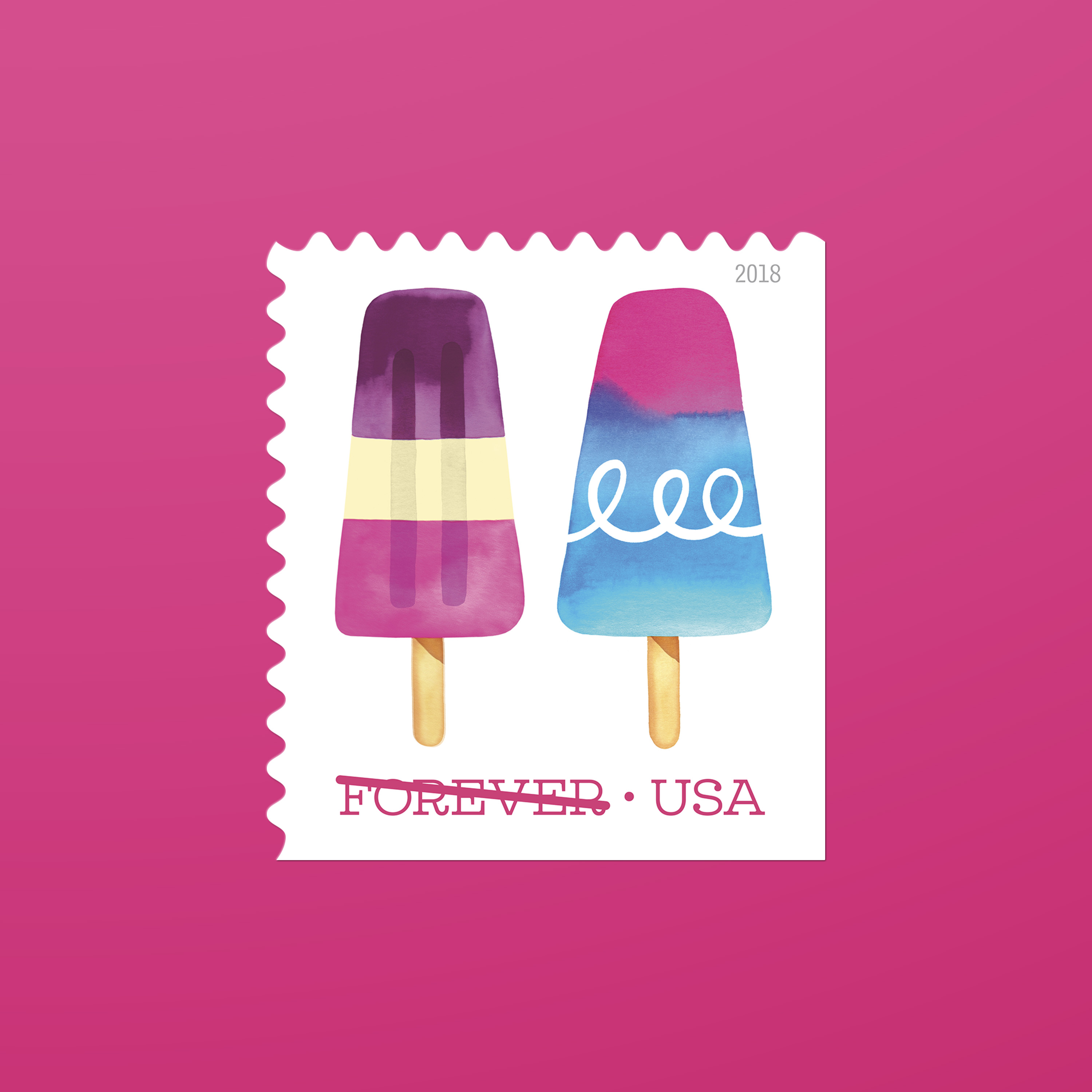
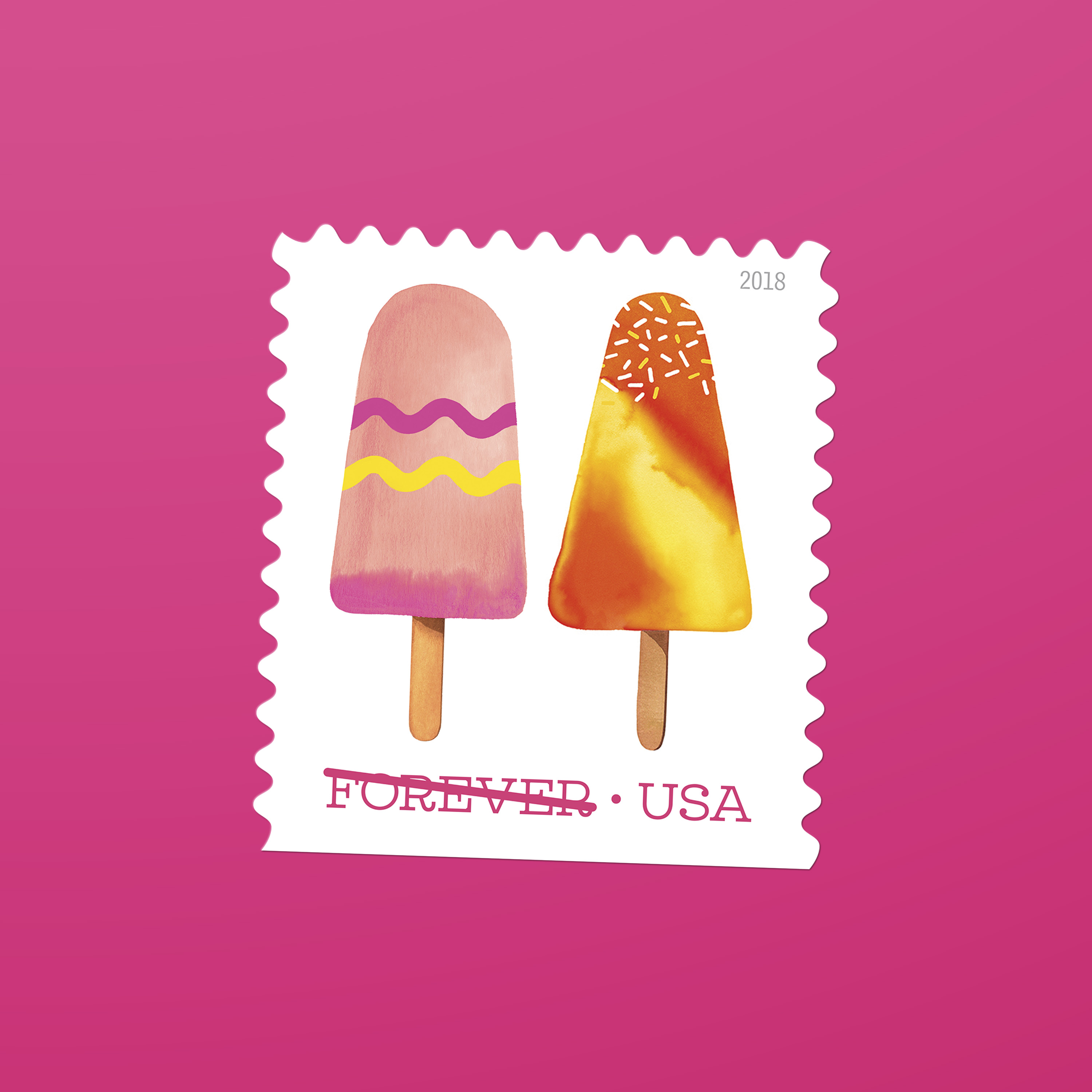
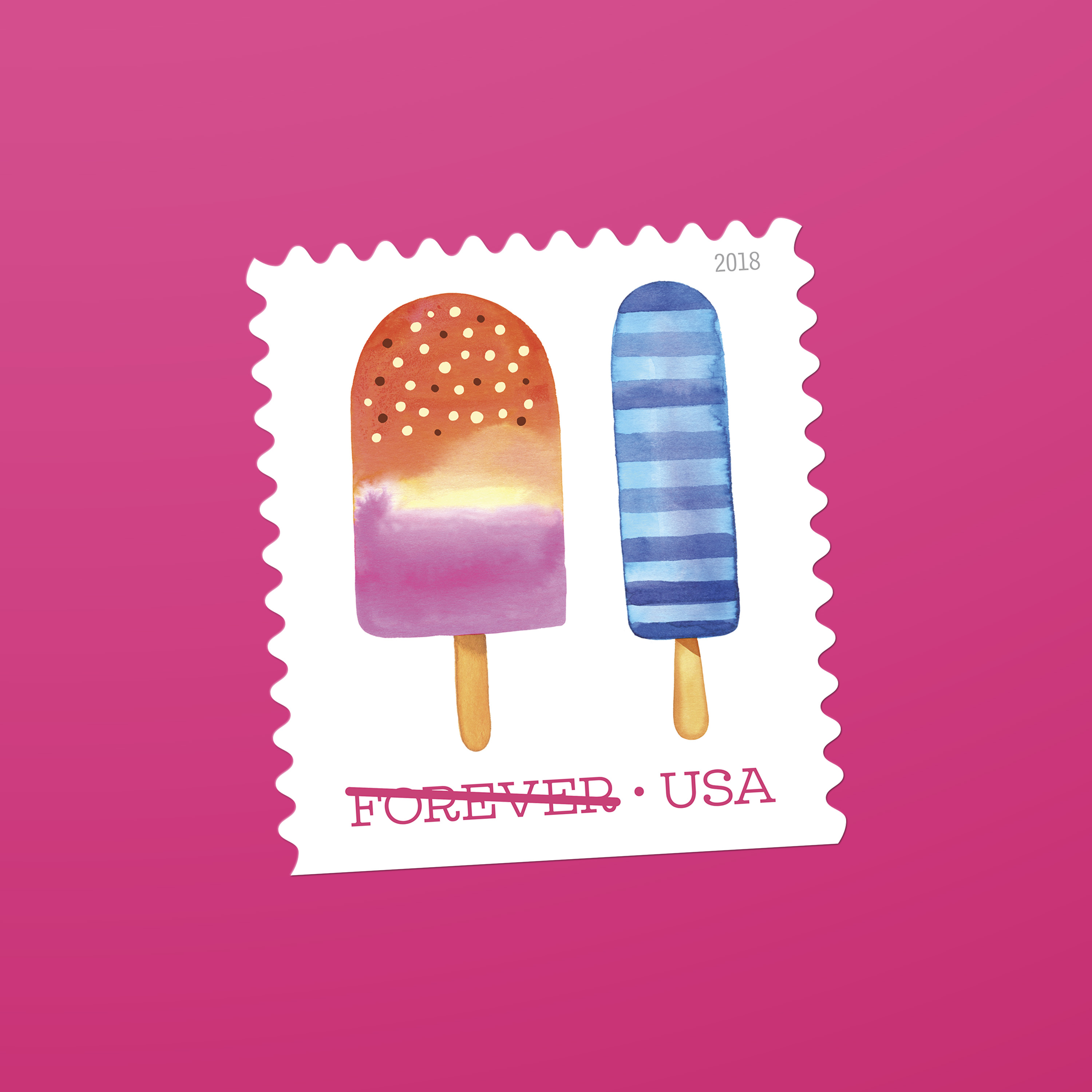
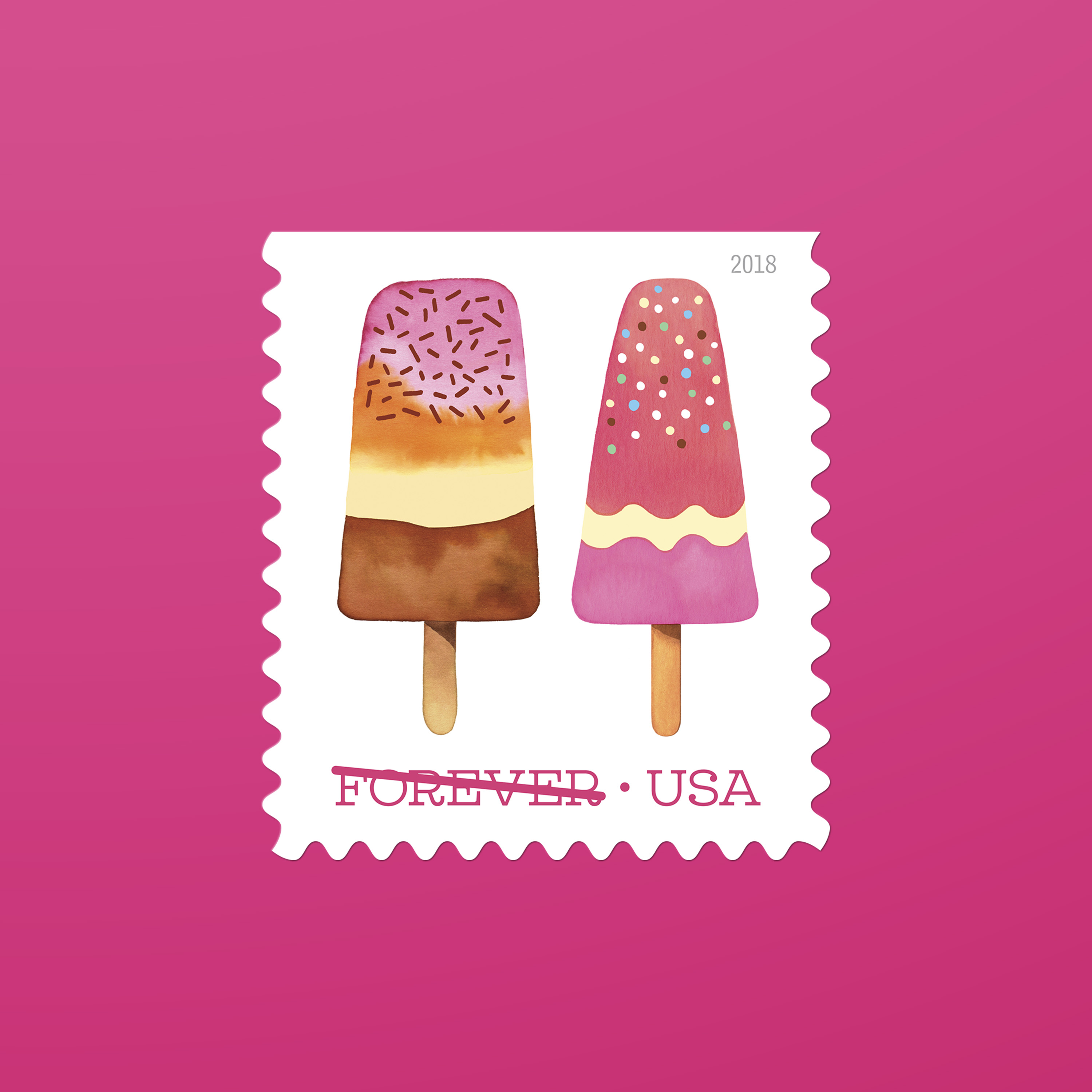
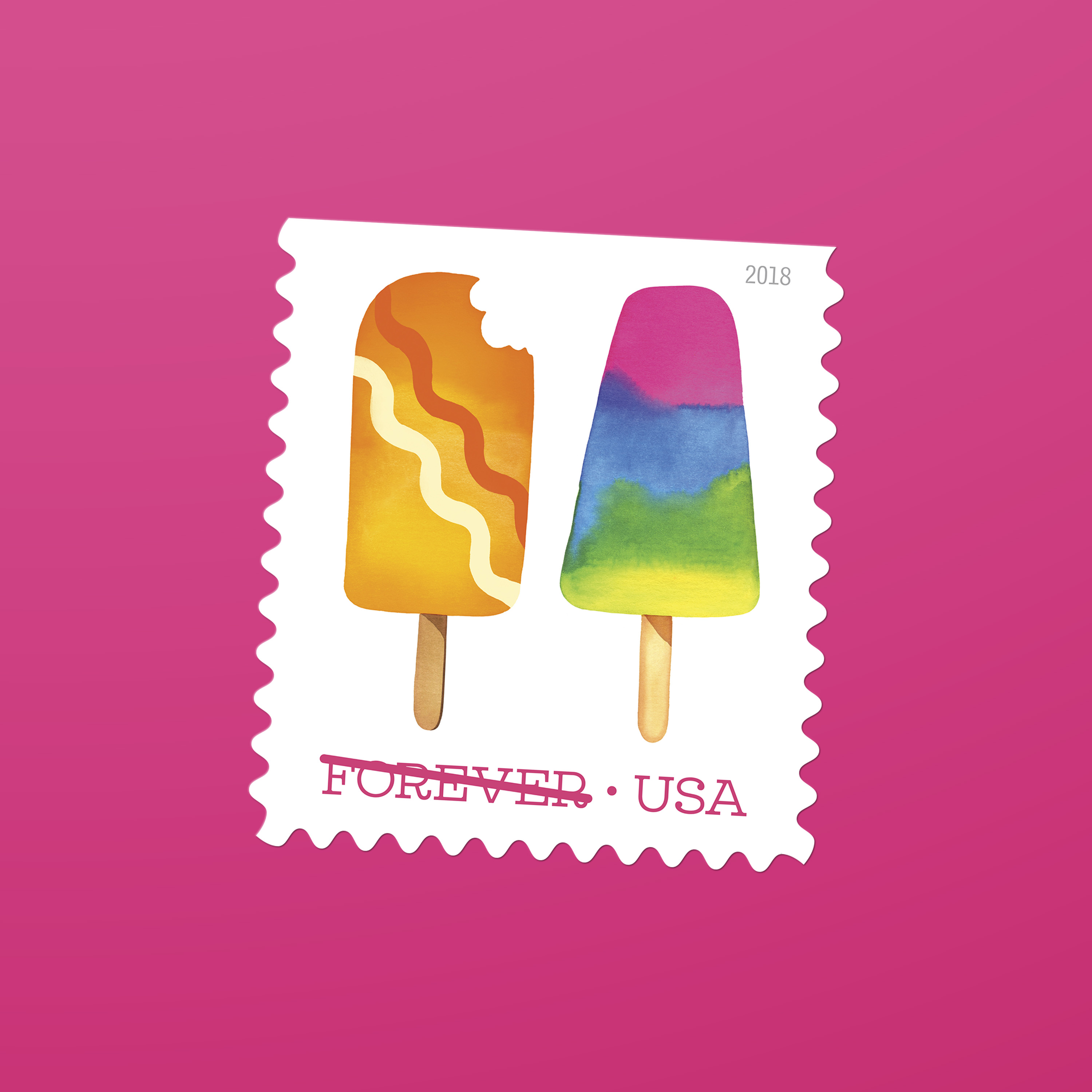
In 2018, the U.S. Postal Service issued its first — and so far only — scratch-and-sniff stamps. Frozen Treats, featuring Magrikie Berg’s whimsical watercolor illustrations of colorful, frosty pops on a stick, smelled as good as they looked. “The printer offered us a selection of fragrances, and we chose one that we felt was most reminiscent of the sweet scent of summer,” Duefrene explains.
The secret to scratch-and-sniff stamps (or any scratch-and-sniff product) is to contain fragrance molecules in microcapsules, and to add these microcapsules to printable ink. This special ink is used to print the stamps, which release the scent when they are scratched.
USPS art director Antonio Alcalá and Leslie Badani designed the typography and the stamps, which were issued in a booklet of 20.
Stamps with Metallic Foil
Building the transcontinental railroad during the 1860s was a massive engineering feat and one of the great achievements of the 19th century. The “Golden Spike Ceremony” at Promontory Summit in Utah on May 10, 1869, marked the linking of the rail lines built by the Central Pacific from the west and the Union Pacific from the east.
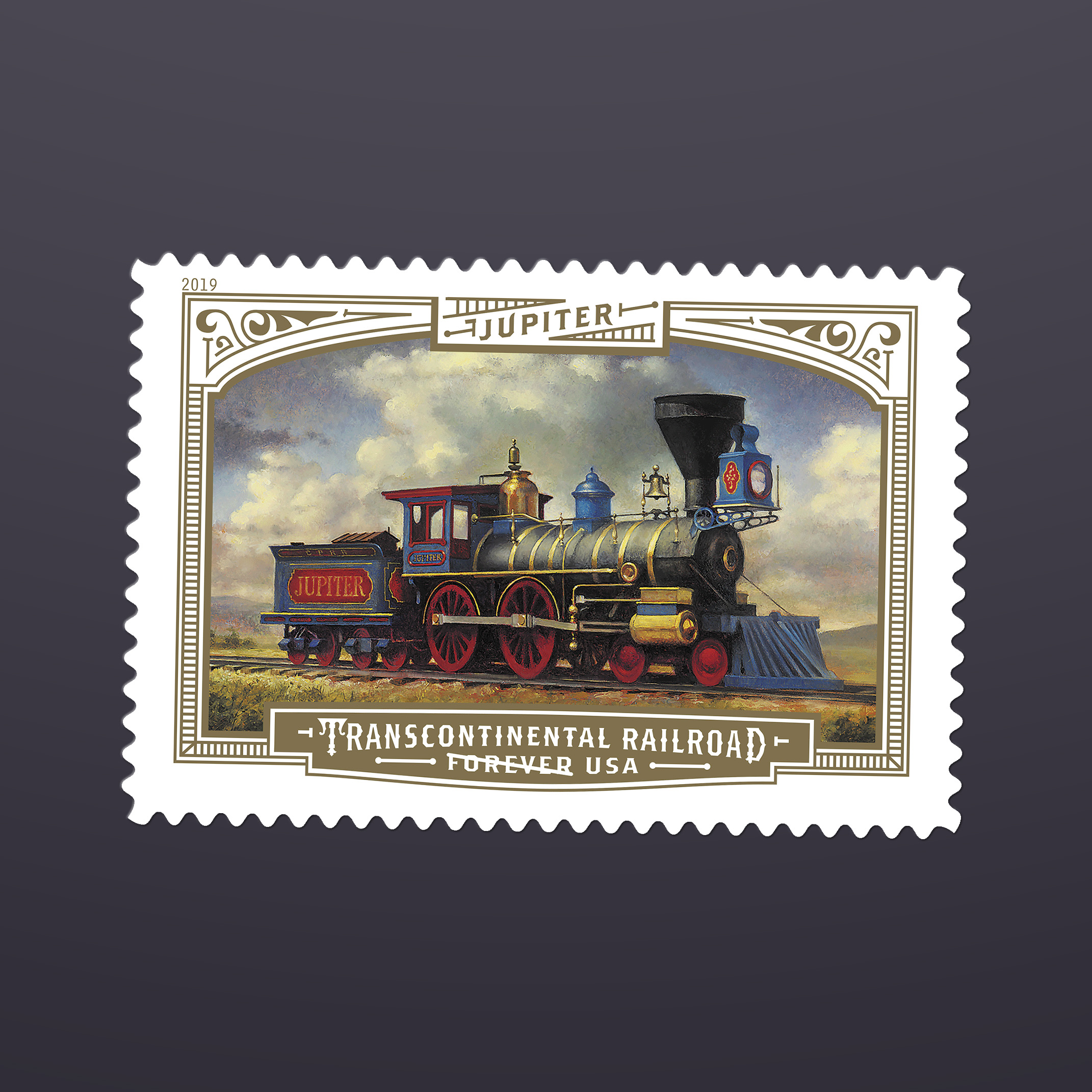
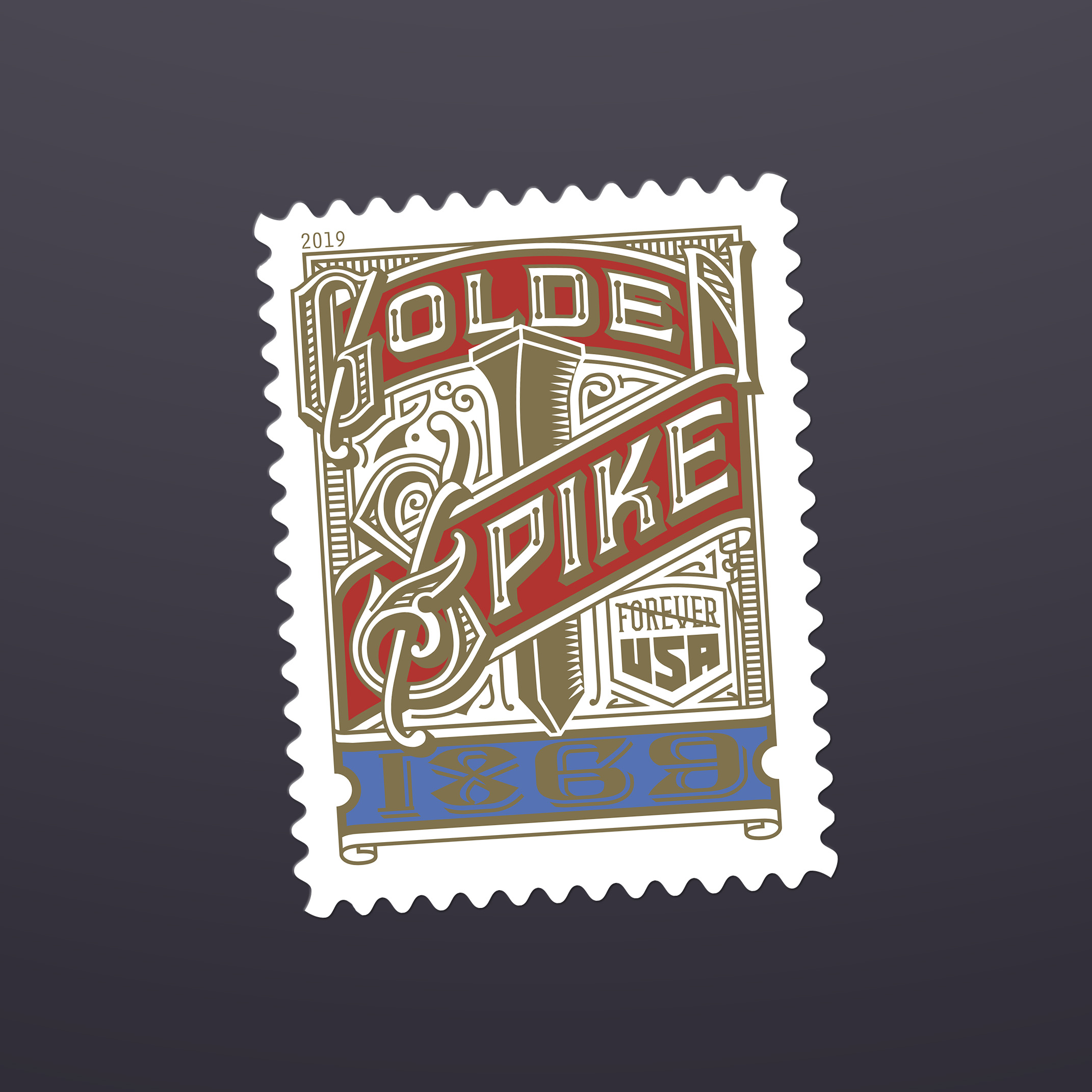
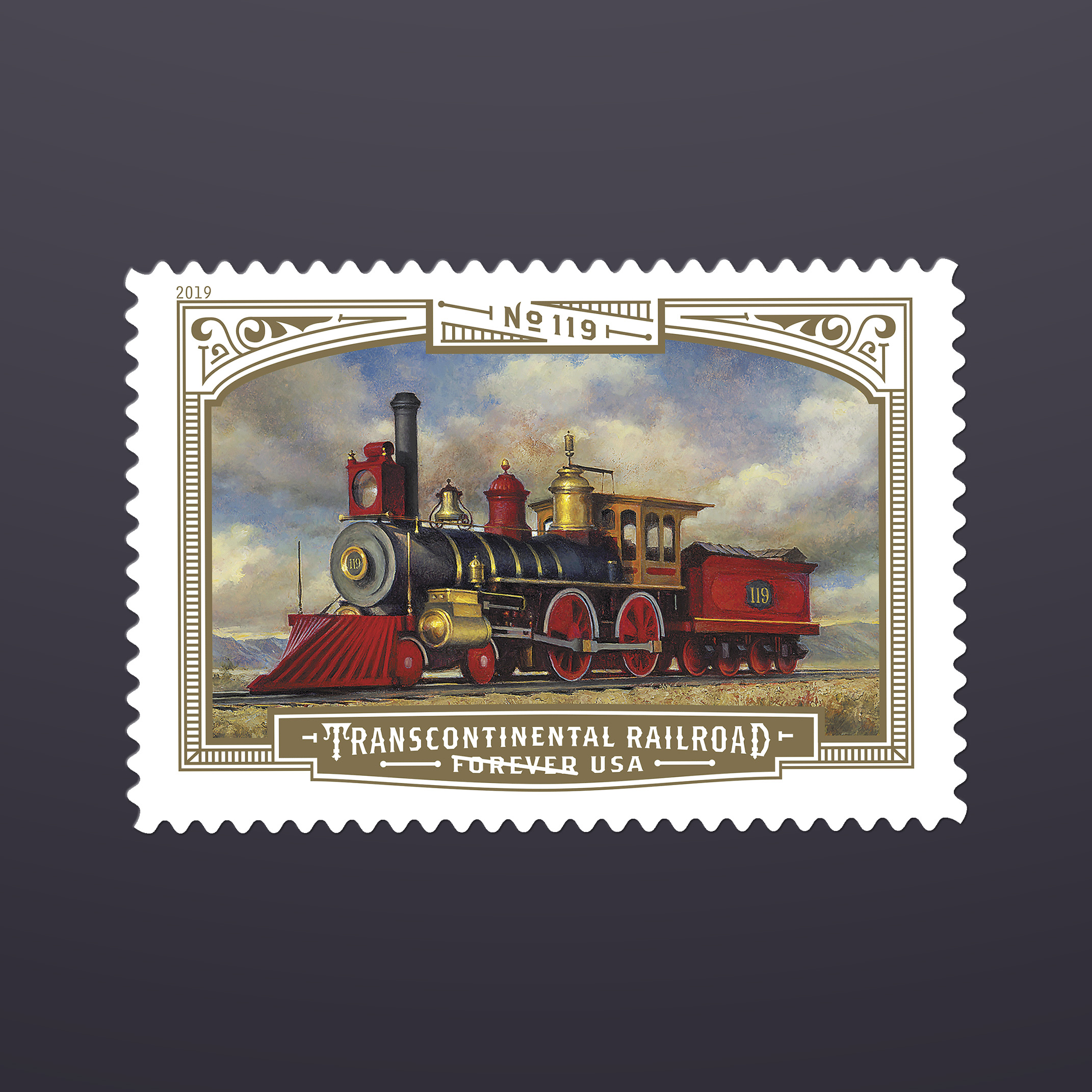
In 2019 USPS marked the 150th anniversary of the completion of the transcontinental railroad with a set of three different stamps in a pane of 18. Two of the three stamps feature the locomotives powering the trains that met in Utah. The third stamp depicts the famous golden spike that was a prominent part of the ceremony. Fittingly, each of the stamps and the header feature gold-foiled highlights that produce a glimmering effect.
The stamp printing process involves a press with multiple stations, one for each of the four “CMYK” colors — cyan, magenta, yellow, and black — that combine in various proportions to reproduce the full-color stamp images. For these stamps, an extra station was utilized on press that used heat to transfer metallic foil onto designated areas of the stamps.
Greg Breeding, an art director for the Postal Service, designed the issuance using paintings of the locomotives by Michael J. Deas. Kevin Cantrell illustrated the stamp depicting the ceremonial golden spike and created the border treatments and typography for all three stamps.
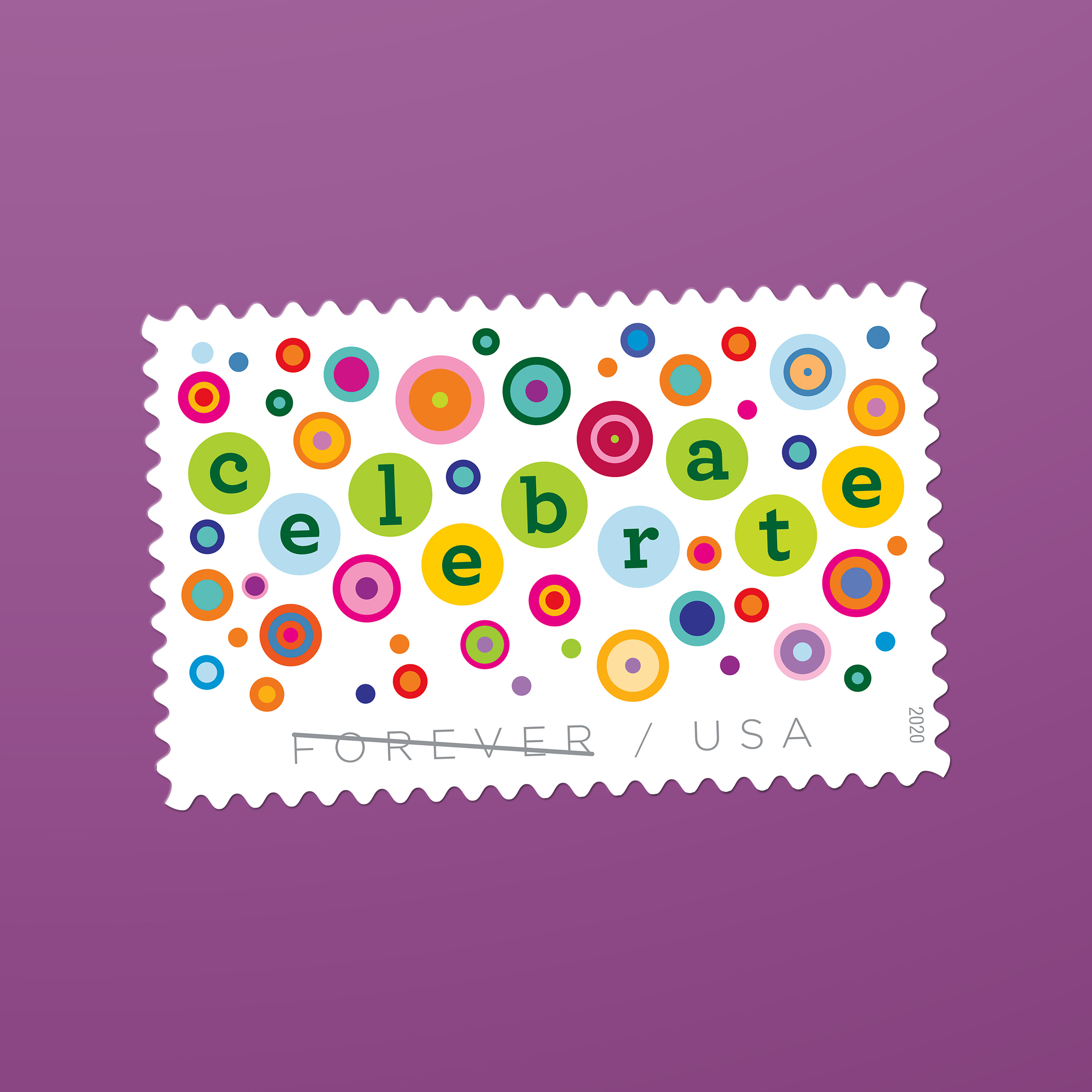
Dozens of colorful circles of different sizes radiate across the 2020 Let’s Celebrate! stamp like a burst of confetti. These stamps also feature foil stamping. Rather than gold, though, magenta, teal, and orange metallic highlights give the circles an added festive flair. Finally, as if to emphasize what this is about, dark green letters inside several of the larger circles spell the word “celebrate.”
Art director Antonio Alcalá designed the stamp, which was issued in a pane of 20.
Stamps with Holographic Printing
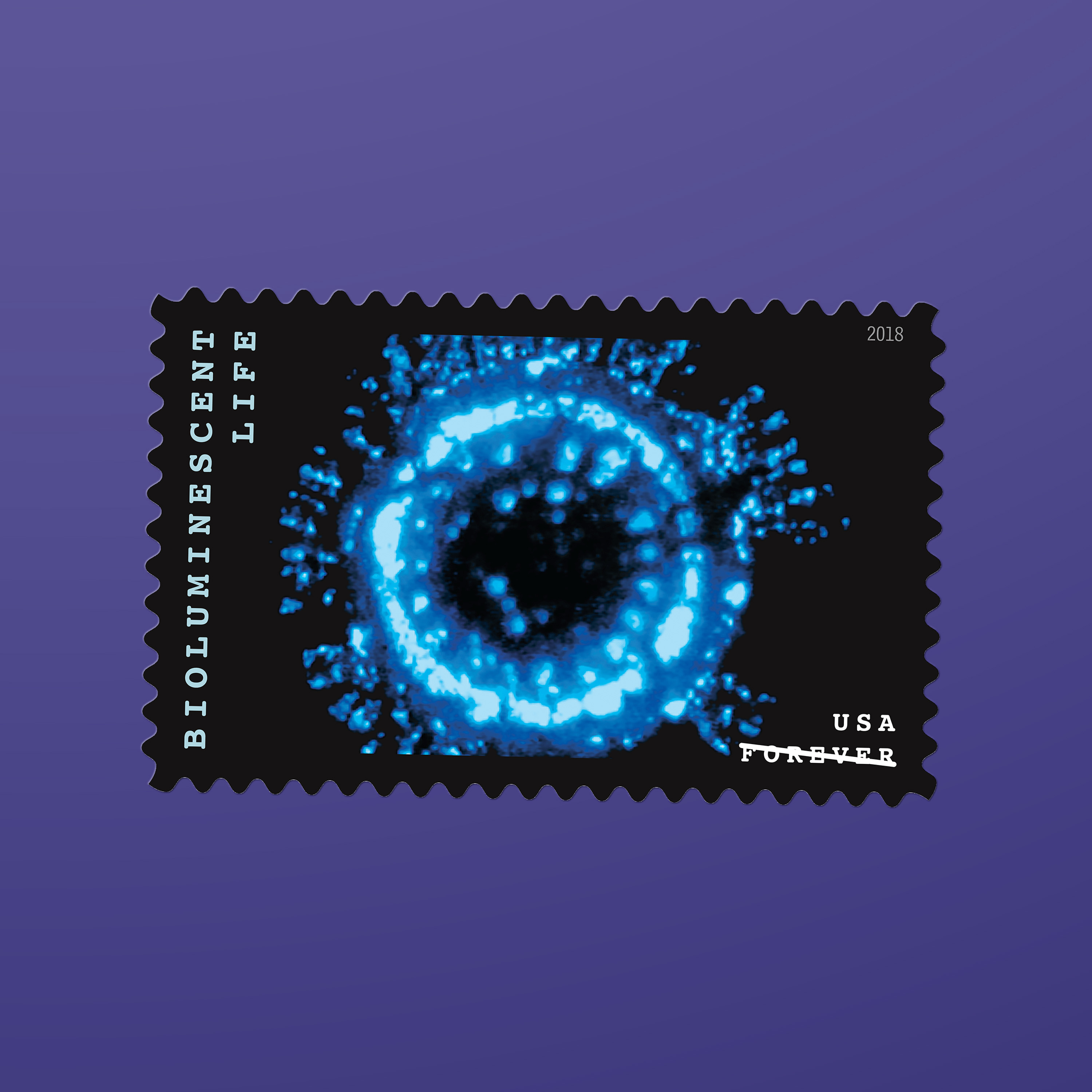
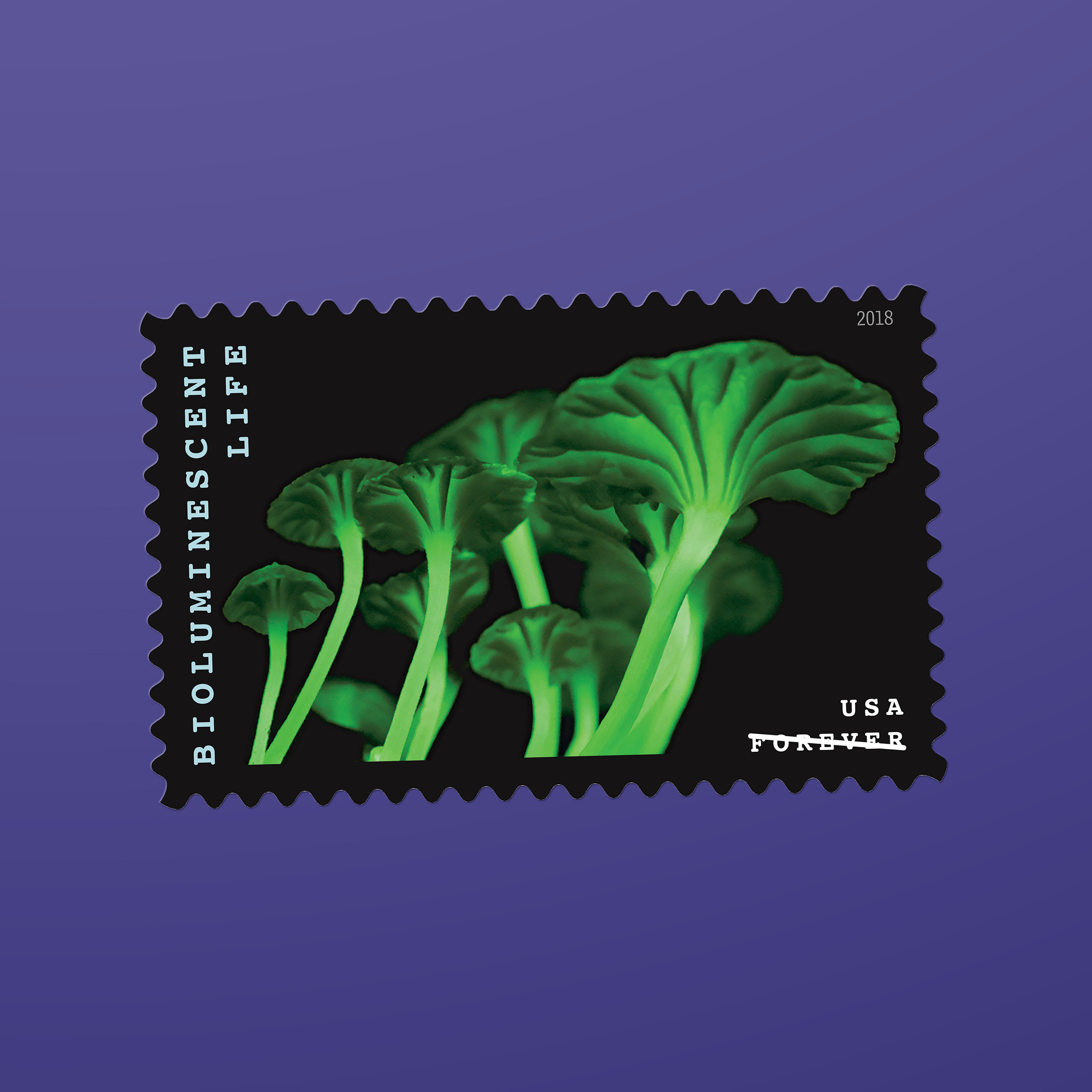
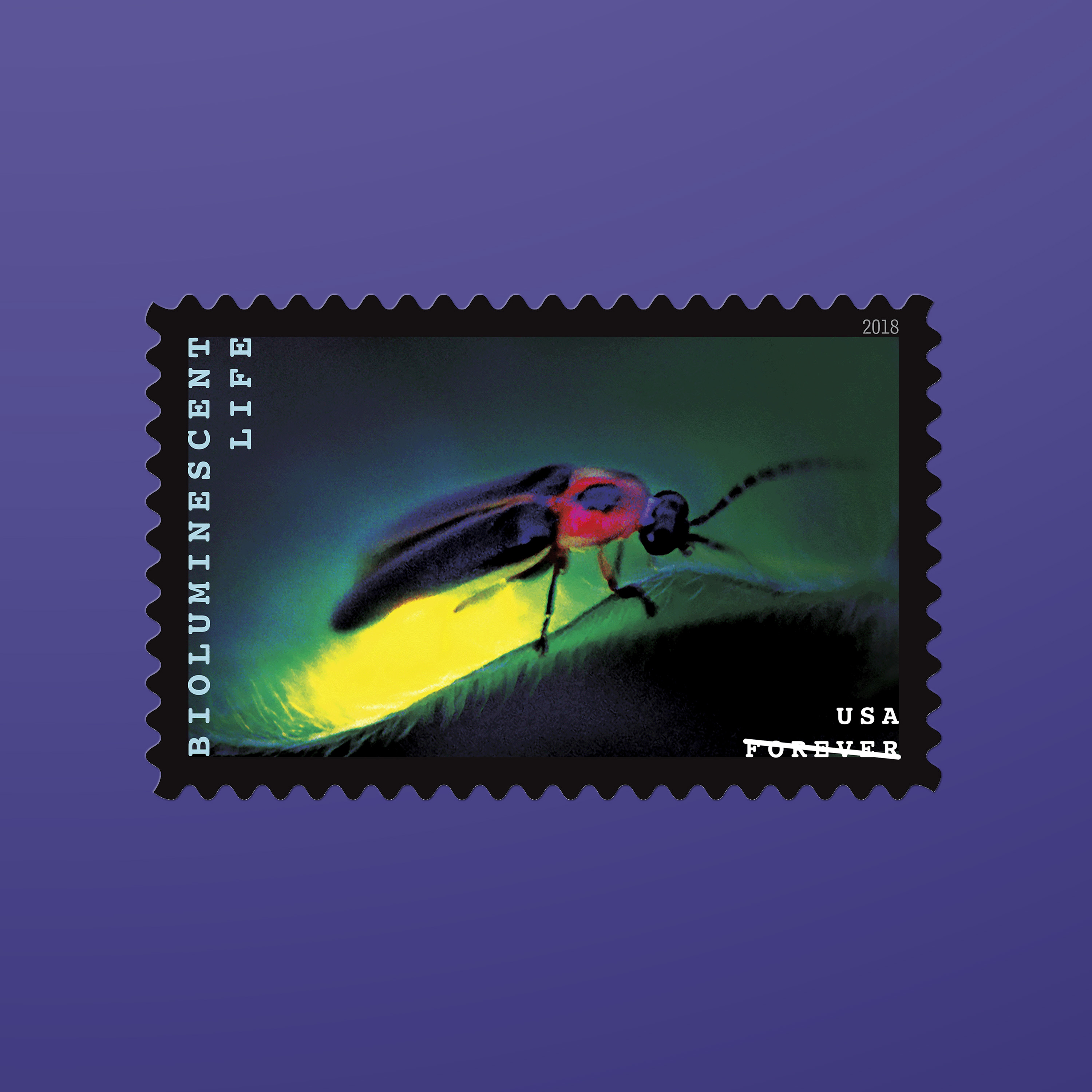
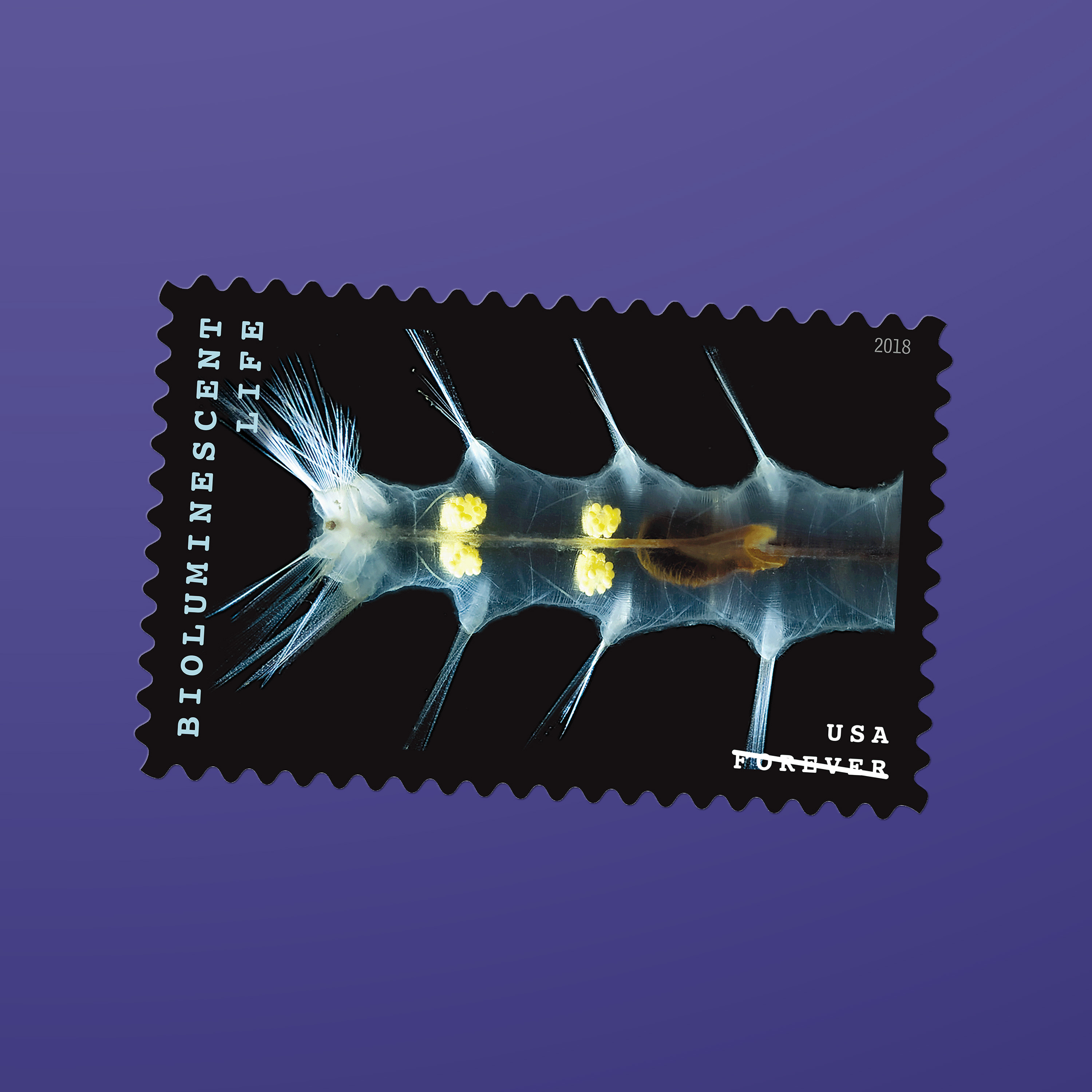
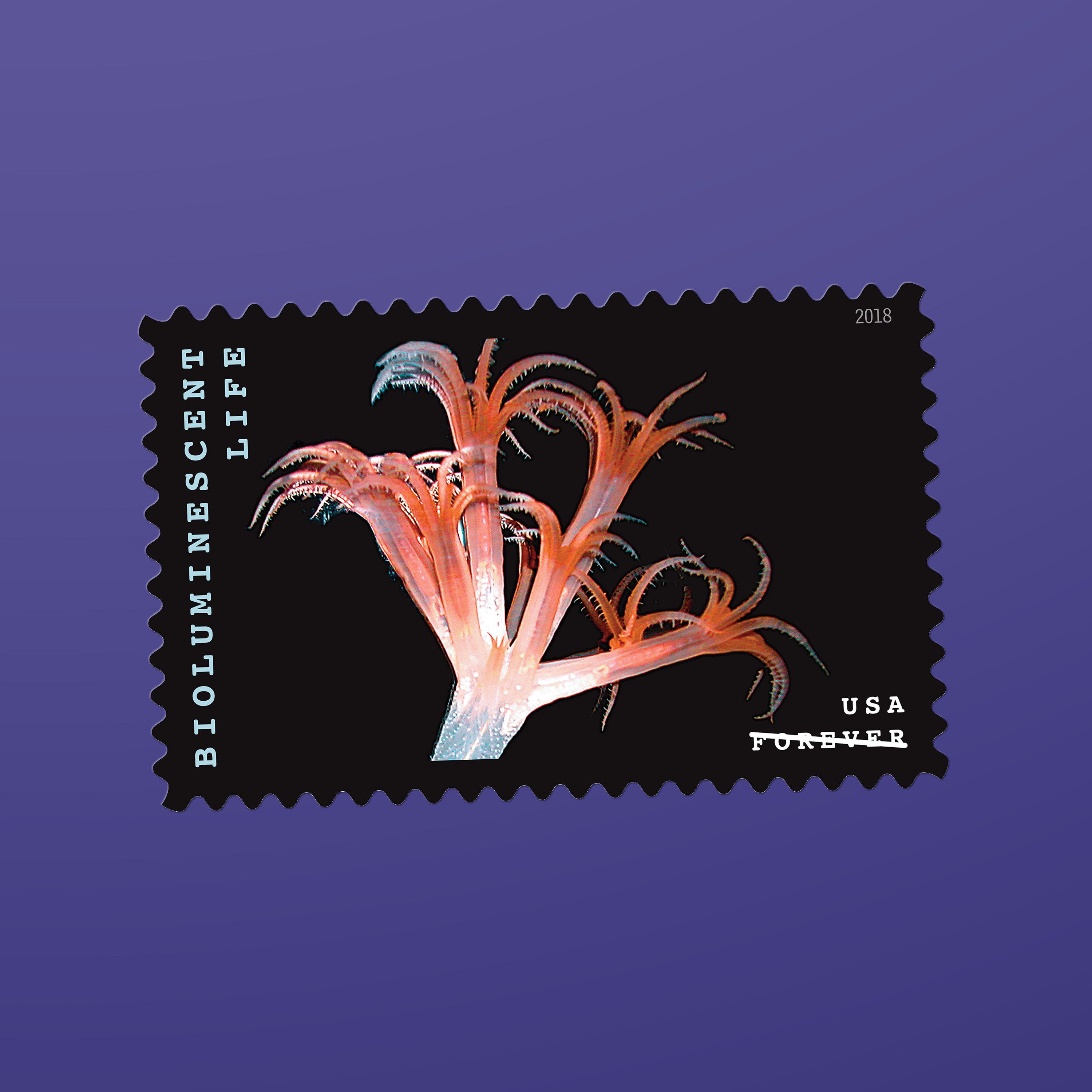
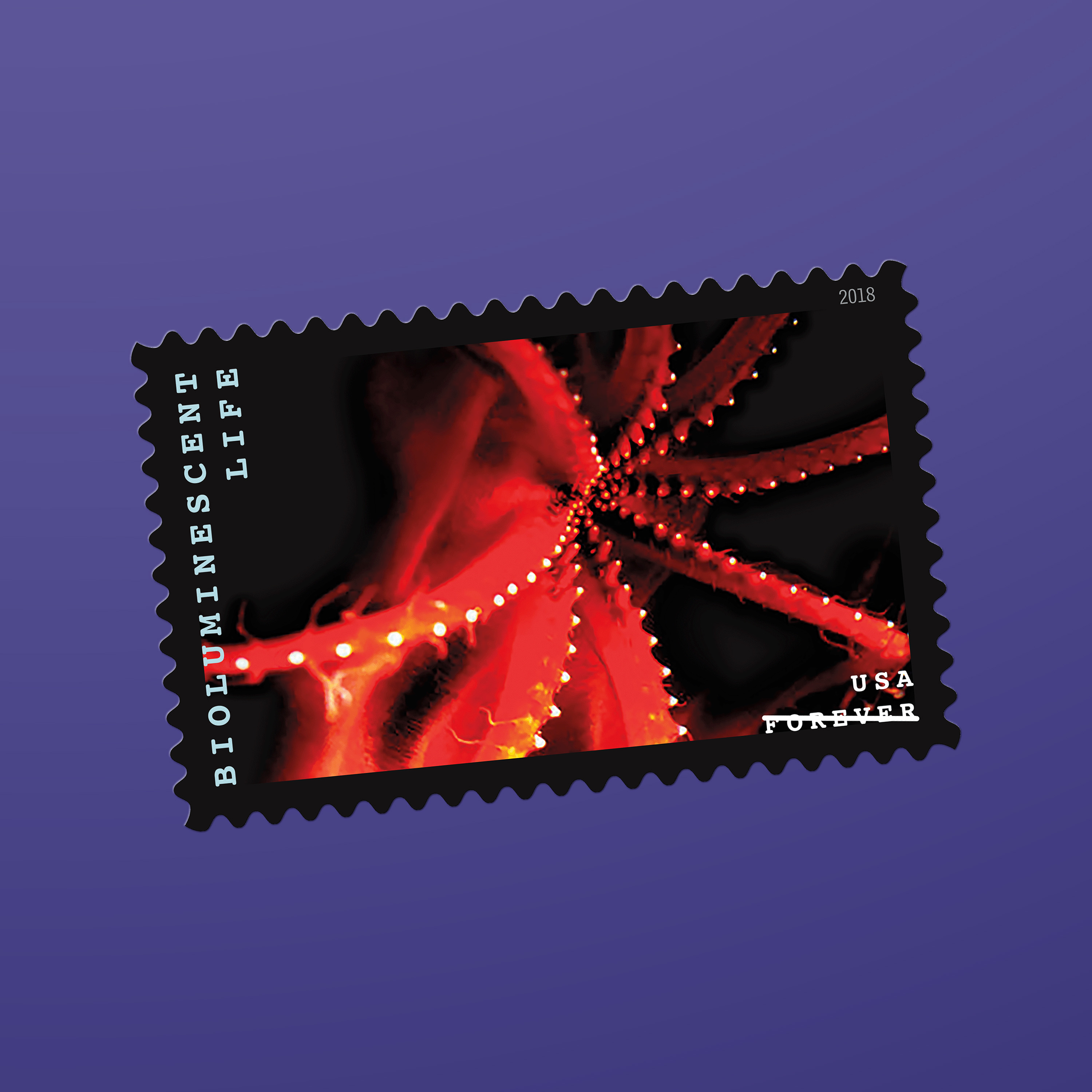
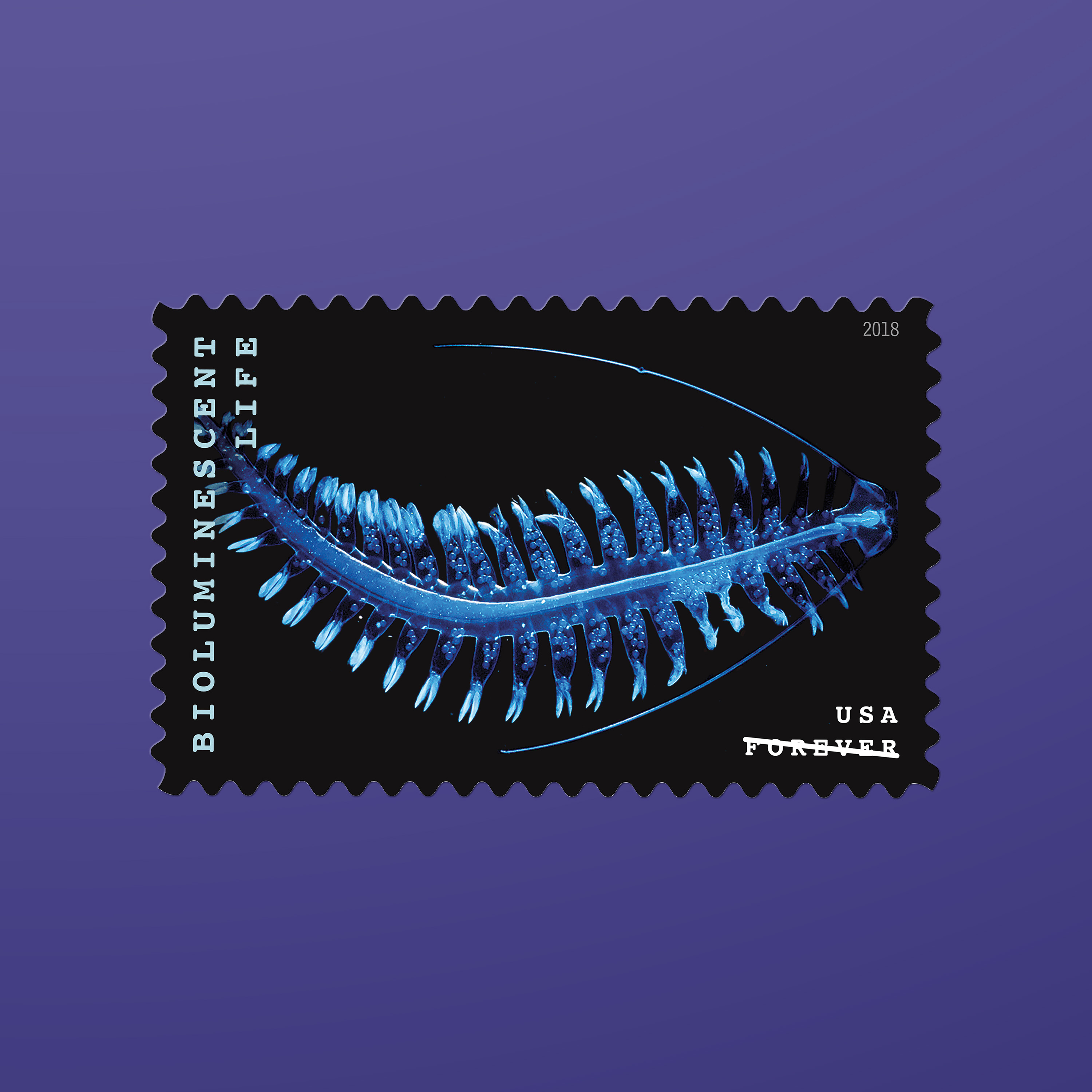
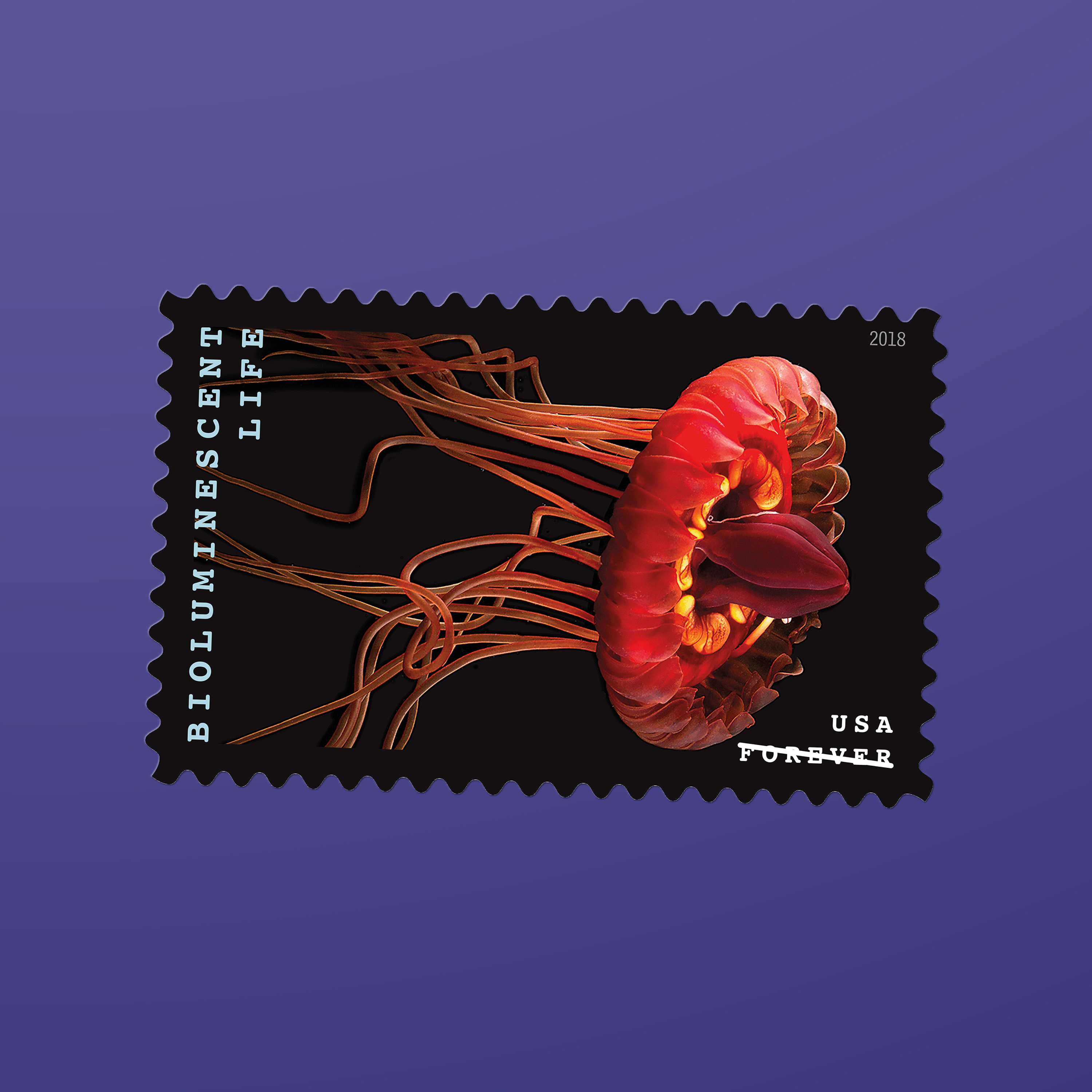
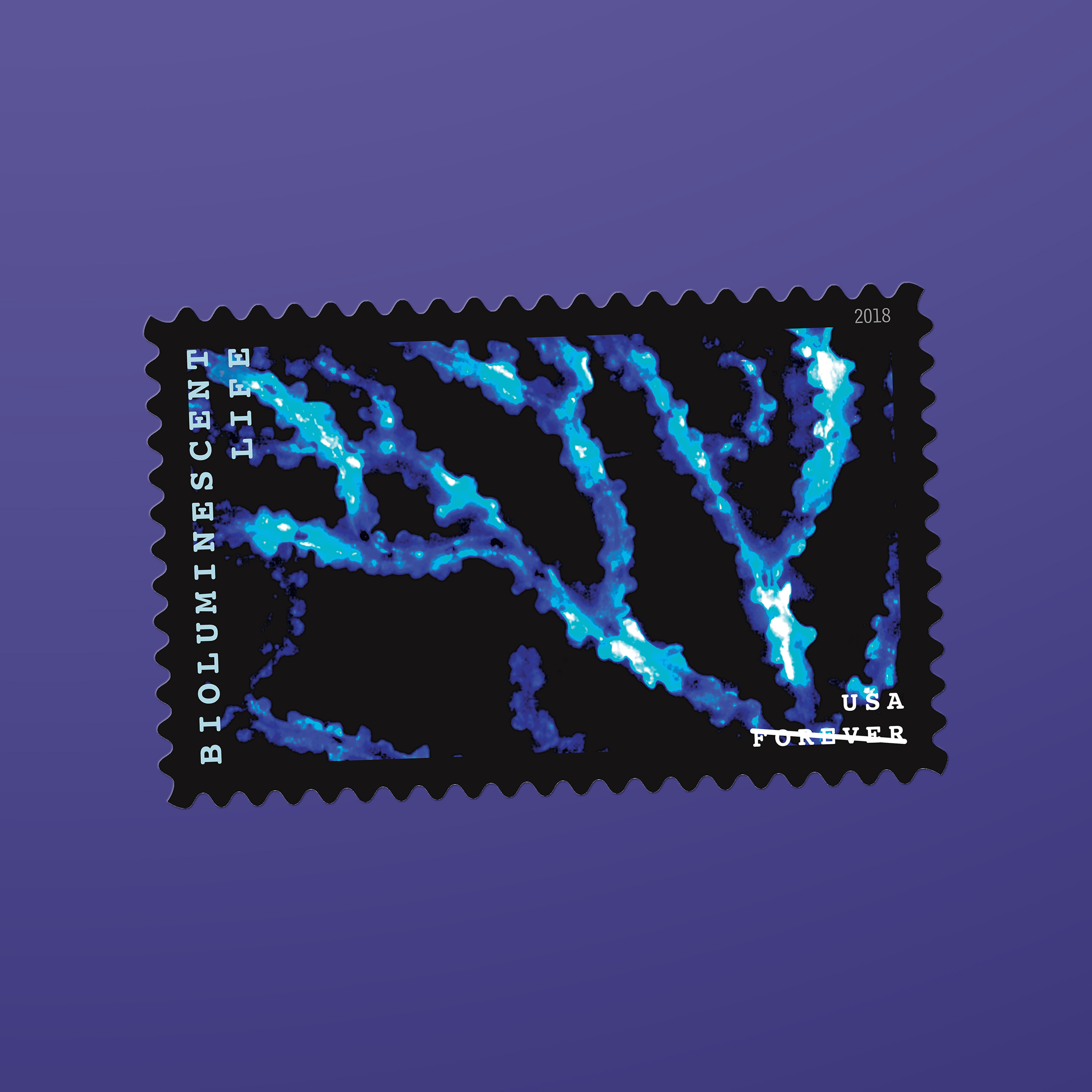
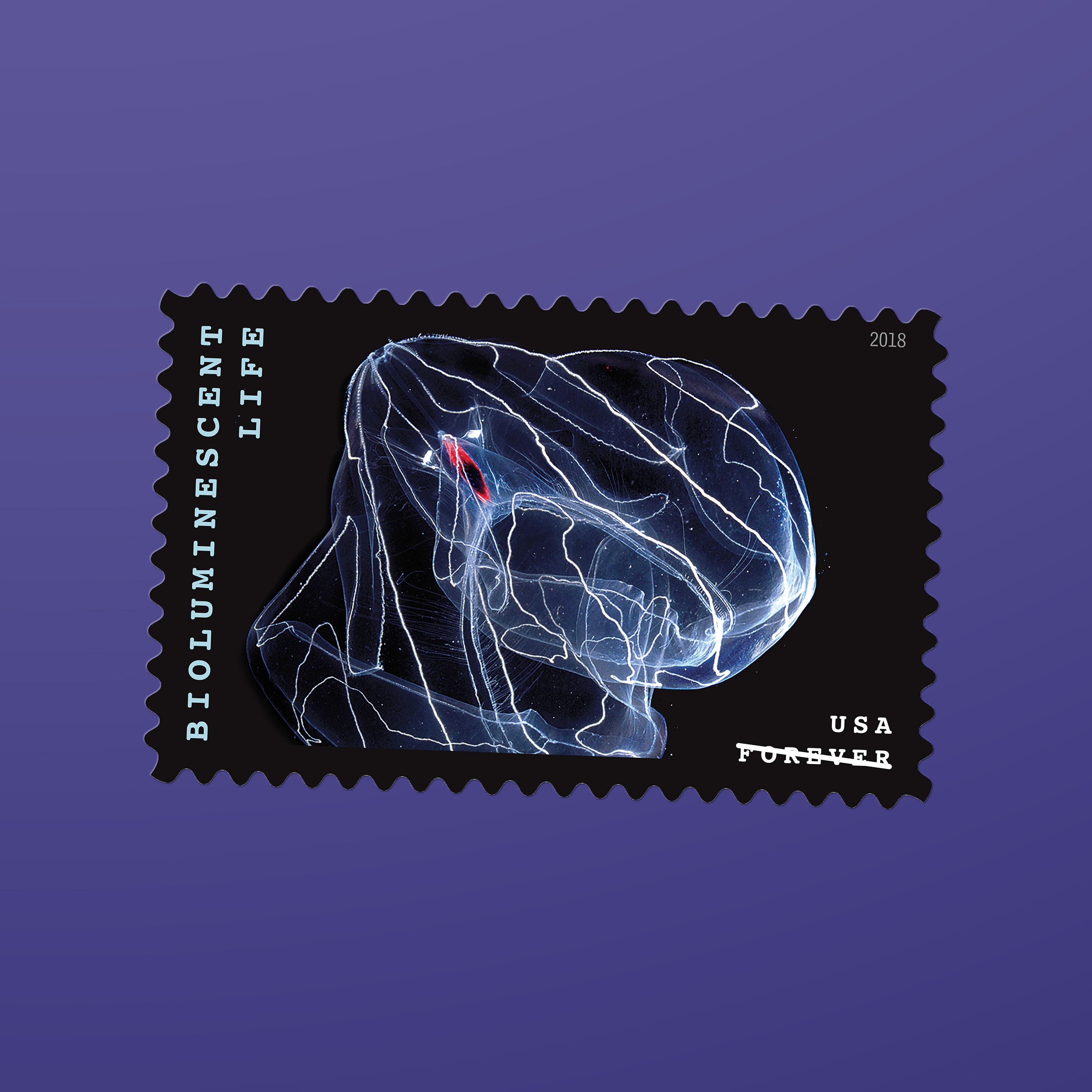
The 2018 Bioluminescent Life stamps, featuring 10 vivid photographs of 10 organisms that generate their own light, incorporated a proprietary rainbow holographic material that is highly reflective in white light. The print files were created using special techniques that enhanced the reflective qualities of the material while maintaining the stamp images’ color and detail. “The idea was to give these organisms movement and light,” Duefrene says.
Depicted on the stamps are a deep-ocean octopus, a midwater jellyfish, a deep-sea comb jelly, a mushroom, a firefly, bamboo coral, two types of marine worm, a crown jellyfish, and a sea pen.
Derry Noyes, an art director for the Postal Service, designed the stamps and the stamp pane using existing photographs. The issuance consisted of a pane of 10.
Stamps with Thermochromic Printing
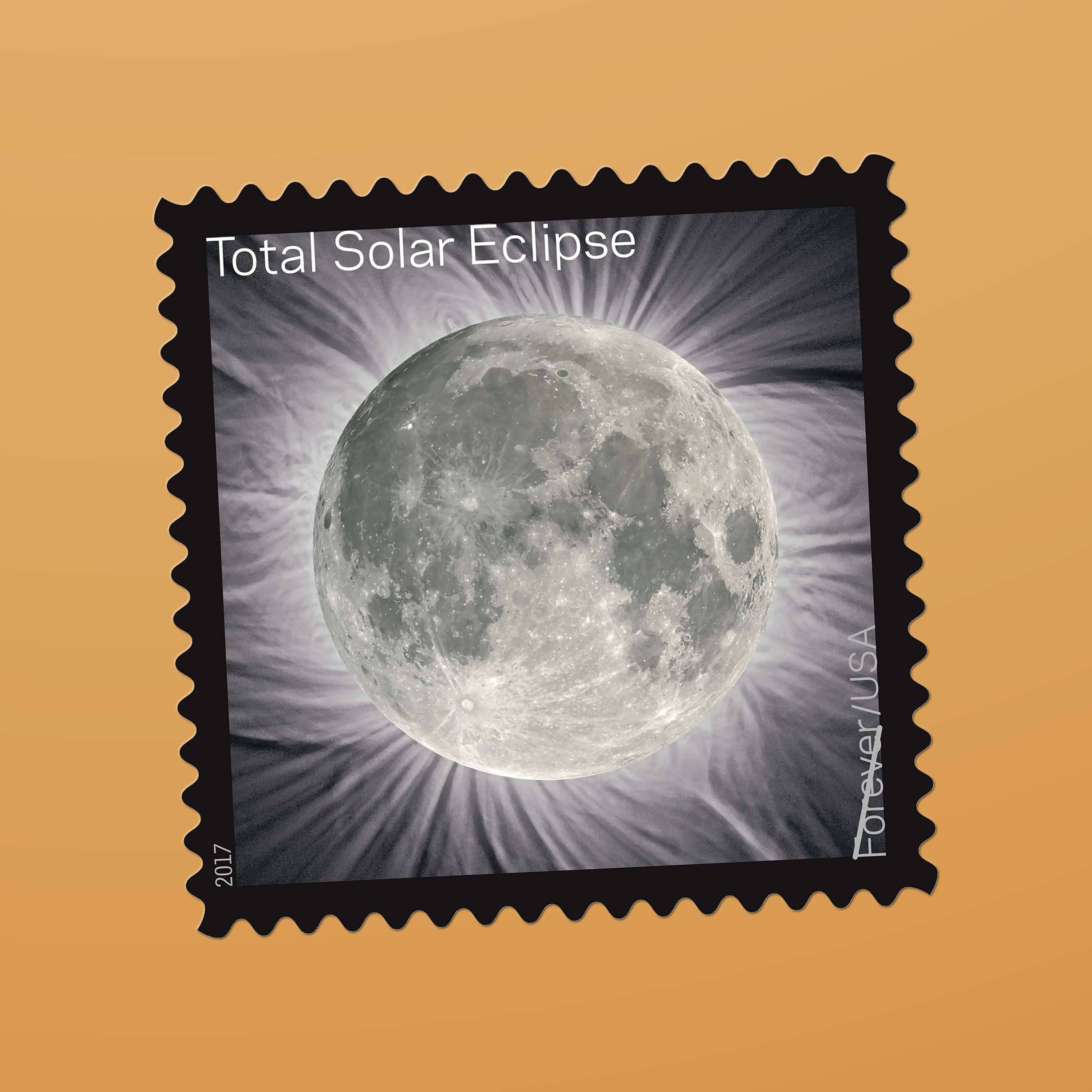
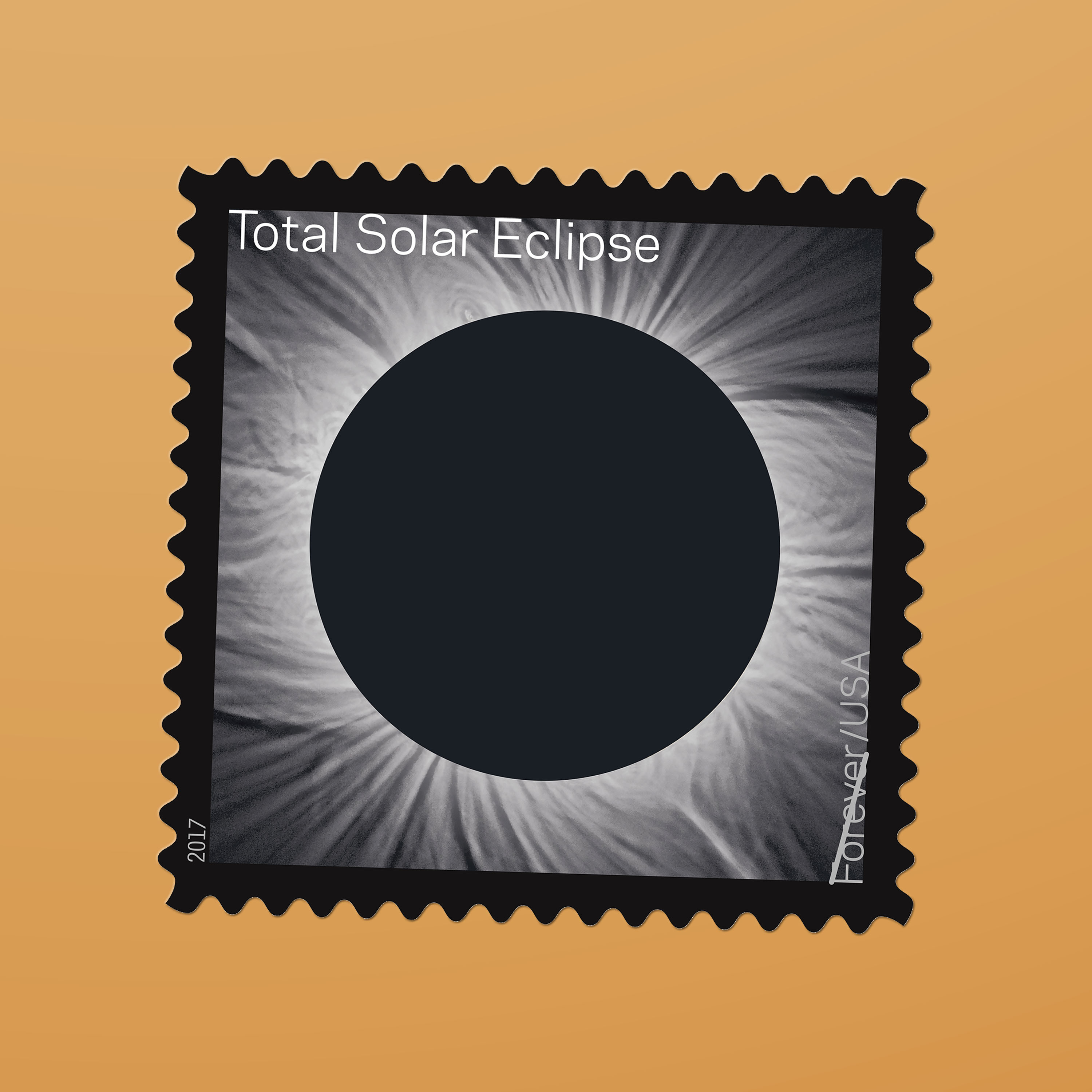
A total eclipse of the Sun occurs when the Moon completely blocks the visible solar disk from view, casting a shadow on Earth. The 2017 Total Eclipse of the Sun stamps featured an image captured in Jalu, Libya, on March 29, 2006 — and represented another first for USPS: They were printed with thermochromic ink, which reacts to the heat of one’s touch. Place a finger over the black disc on the stamp, and the ink changes from black to clear, revealing an underlying image of the Moon. Amazing! Once it cools, the image turns black again.
The secret here again is microcapsules, this time containing a dye, an organic acid, and a solvent. Normally, the solvent remains solid, holding the dye and the acid close together, so they reflect light and create color (black in this case). Touching the stamp’s image of the silhouetted Moon warms the solvent and separates the dye and the acid. When that happens, the Moon’s details are exposed from beneath the layer of thermochromic ink.
If you’ve been around long enough to remember the mood ring of the 1970s — which was said to reveal the wearer’s mood — well, it worked the same way. (To be clear, the ring actually offered no clue to the wearer’s state of mind, but it was a fun and novel idea.)
The stamps were issued in a pane of 16. Antonio Alcalá designed them using photographs by astrophysicist Fred Espenak.
Stamps with a Textured Coating
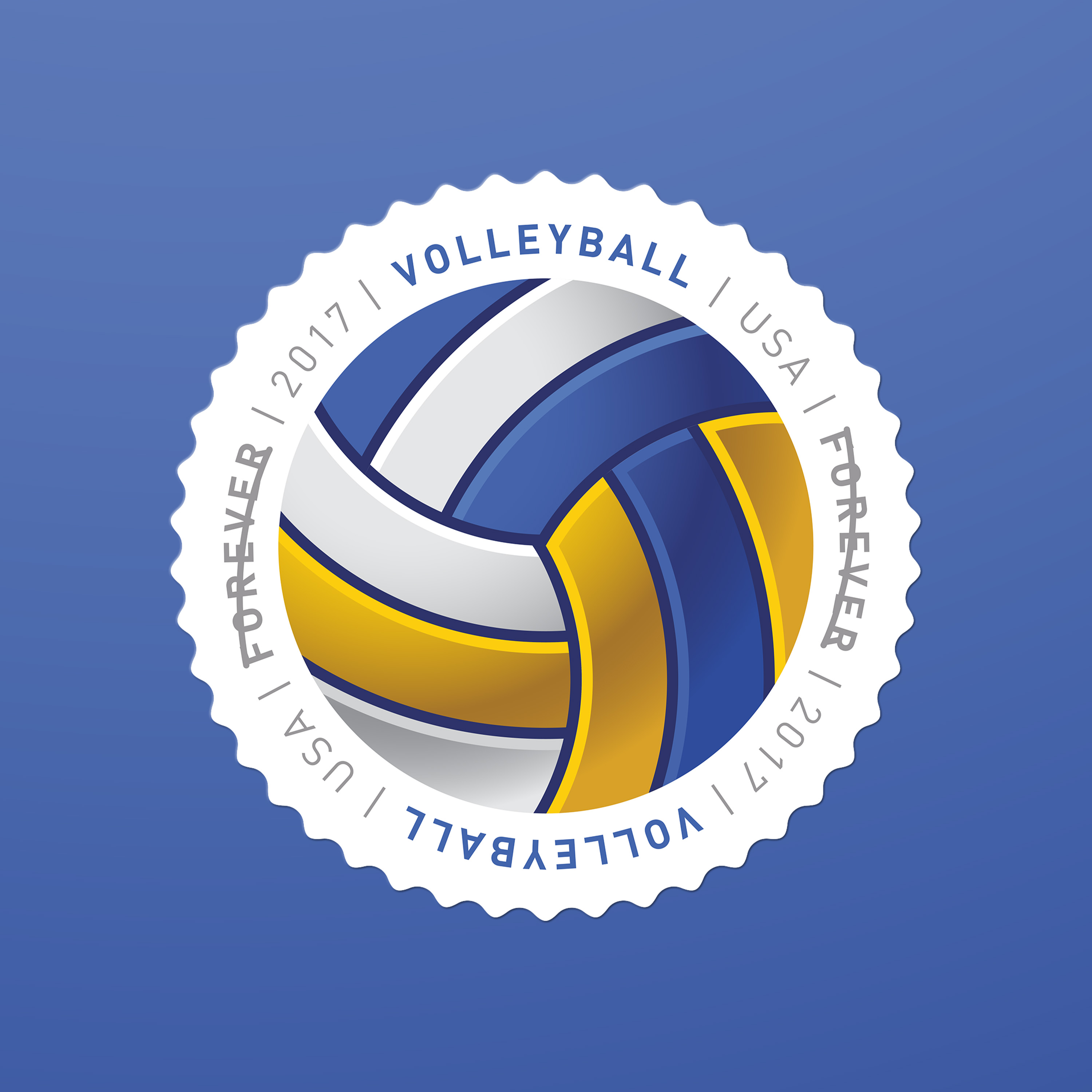
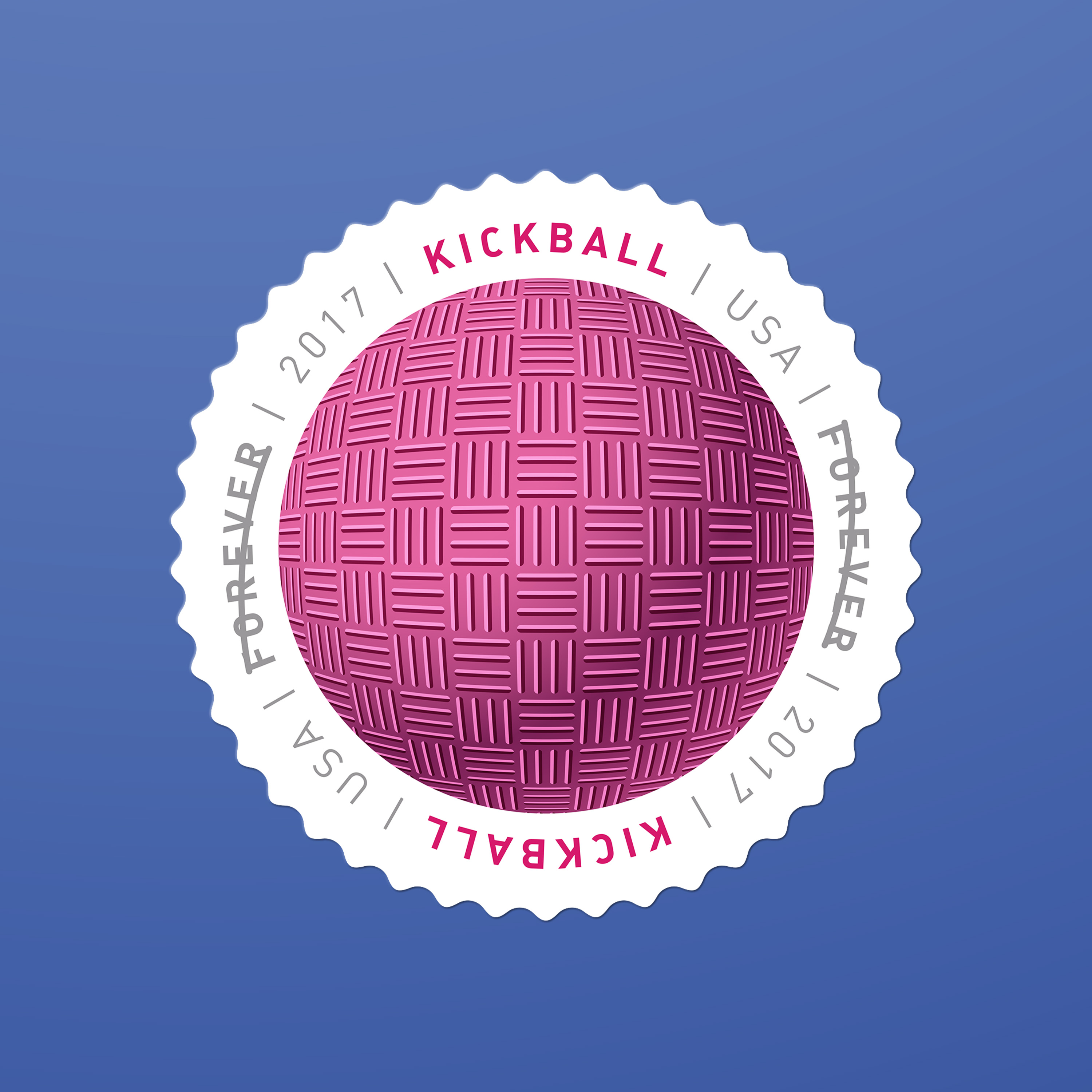
The eight different round stamps in the 2017 Have a Ball! issuance showcase illustrations of a baseball, basketball, football, golf ball, kickball, soccer ball, tennis ball, and volleyball. Annually, millions in the United States participate in the sports represented on the stamps. So what’s innovative here? Not only do the images practically fly off the stamps, they also have a textured feel, thanks to a special gloss coating applied to selected areas of each stamp during the printing process. Duefrene explains with examples: “For the baseball the coating was applied to the seams, and applied just to the black hexagons on the soccer ball.”
Artist Daniel Nyari created the colorful, stylized stamp art for Have a Ball! Mike Ryan designed the stamps, issued in a pane of 16, and Greg Breeding served as the art director for the project.