For the USPS American Bison Stamp, What’s Old Is New Again
The new buffalo stamp merges vintage stamp artwork with a modern design
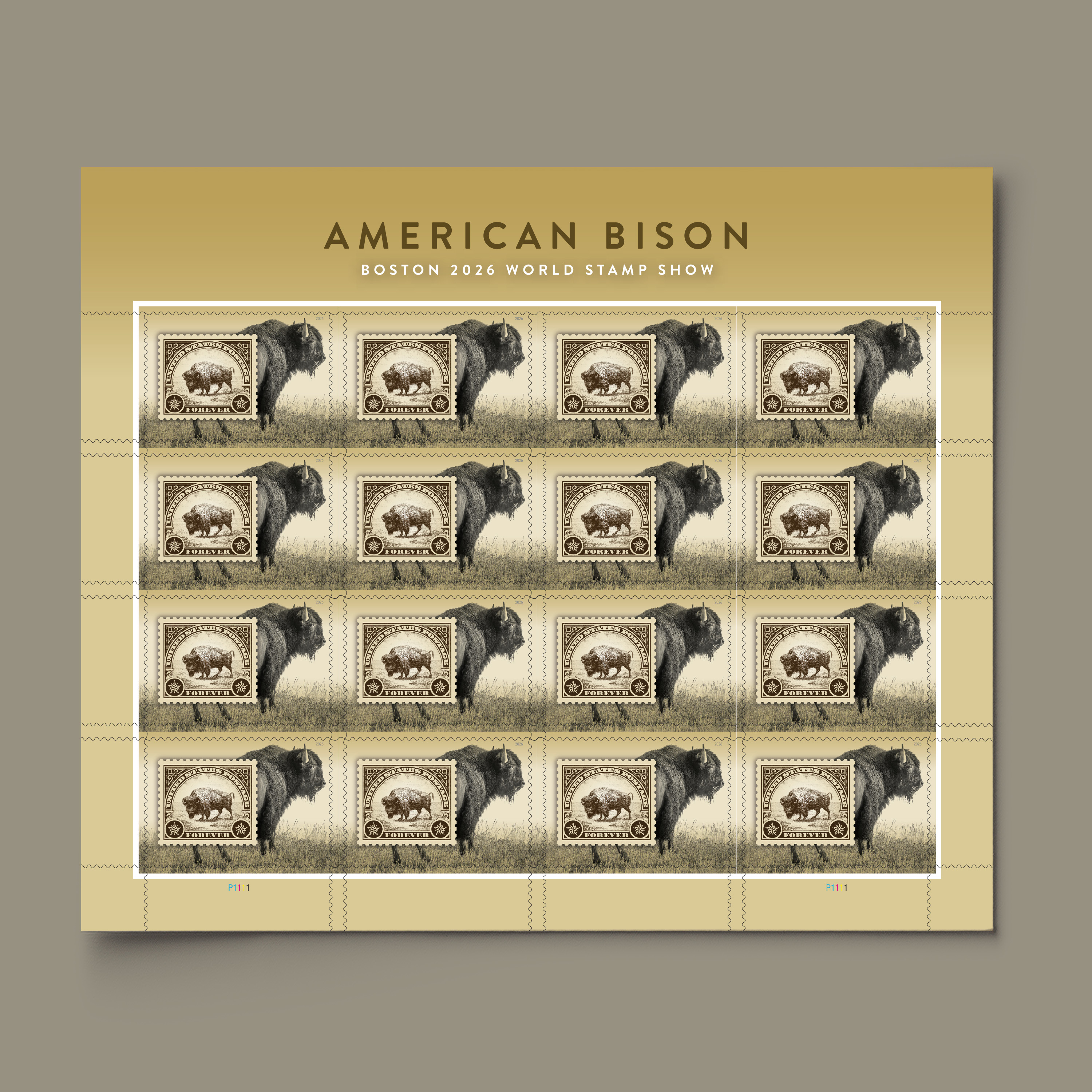
The scientific name of the buffalo — Bison bison — echoes, and so does the design of this new stamp: Artwork recalling a philatelic treasure of 1923 overlays a contemporary photograph of America’s national mammal.
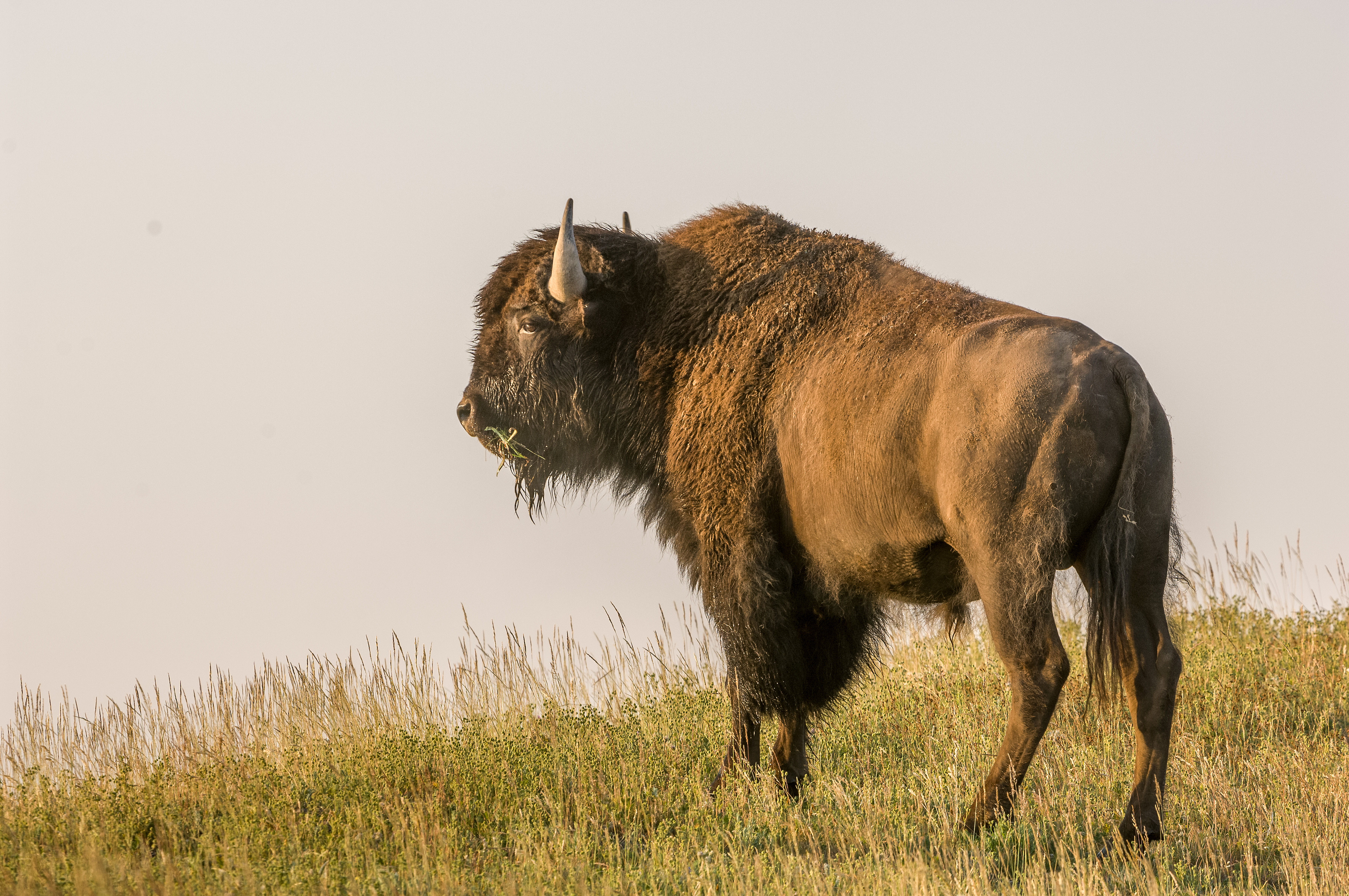
“I encountered this young bison bull in July,” says photographer Tom Murphy, “in Hayden Valley,” referring to a vast expanse within Yellowstone National Park where buffalo roam. Yellowstone is practically synonymous with the buffalo. Established in 1872, it is America’s — and the world’s — first national park, and home to the largest wild bison herd on Earth.
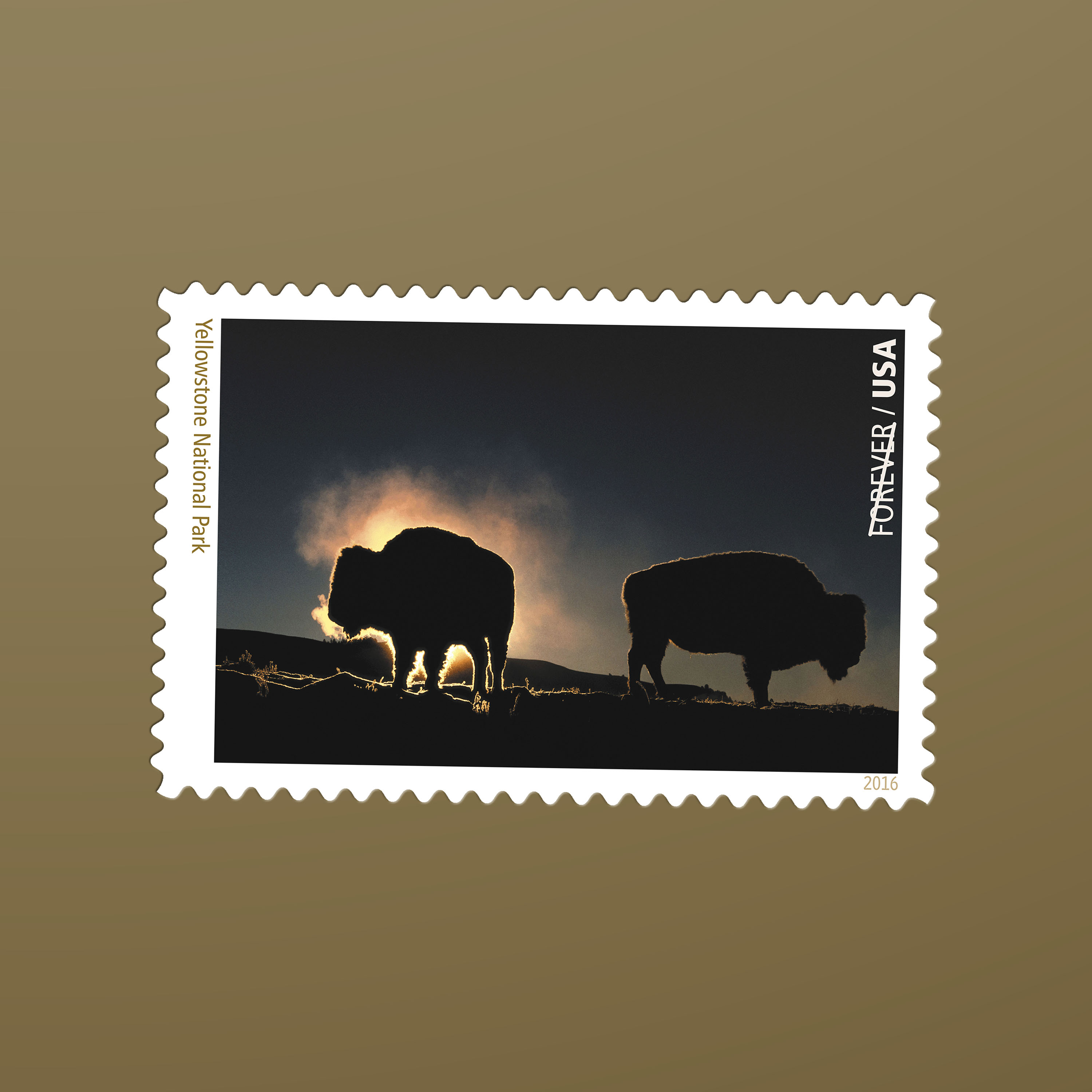
A past buffalo stamp — one issued to represent Yellowstone on a pane honoring the 2016 centennial of the National Park Service — featured an atmospheric silhouette of two bison there. Photographer Art Wolfe captured that dramatic image in numbing cold, “a 30-below morning in the Lamar Valley of Yellowstone,” he later recalled.
Photographer Murphy captured a much warmer moment. “This bull had his head up as he looked around for some of his friends during the rut” — or summer mating season, he says of the new stamp’s subject. “Mostly, buffalo are looking down, grazing.” The bull’s fleeting glance and Murphy’s keen eye yielded a moment worthy of the 1923 buffalo stamp’s engraved artwork. It was just what USPS art director Greg Breeding had in mind.
“Tom’s photo has the kind of reproducible detail that so many other buffalo photos lack,” says Breeding, “It has a background of clean sky — and magnificent prairie grass,” the perfect visual complement to the older stamp design.
Instead of creating a border around the photo, Breeding bled it over the stamp edges. This, he says, “helps the buffalo feel more out in the open, less constrained, and also creates a better background.” Between the stamps, seamless blending of the image allows the prairie grass to flow continuously across each row of the pane.
Superimposed on Murphy’s photograph is Breeding’s adaptation of the 1923 stamp, which was issued as the American bison was beginning its rebound from near extinction.
Thundering herds rapidly decline
Historically, buffalo were found nearly coast to coast, with their range coveriang about 60 percent of the continent. In 1805, explorers Meriwether Lewis and William Clark marveled at immense herds that could spread a mile wide and many miles long. A herd could take two days to thunder by.
For countless generations the lives of Native peoples of the Great Plains were intertwined with the ways of the buffalo. Tribes relied on them for sustenance and used virtually every part of the animal, crafting hides into clothing and tipis, bones and horns into tools, and much more. Descendants still refer to themselves as “buffalo people.”
As settlers pressed westward throughout the 1800s — especially once new railroads eased the journey — the toll on bison was immense. In just a few decades, millions of animals were reduced to mere hundreds, many killed just for their hides.
Some of the last surviving wild buffalo were captured as calves and transported eastward by railroad around the turn of the 20th century, giving many Americans their first glimpse of the magnificent animals. In Washington, D.C., and New York City, crowds marveled at bison specimens in museums and bison living in zoos, and were alerted to the plight of the few remaining in the wild.
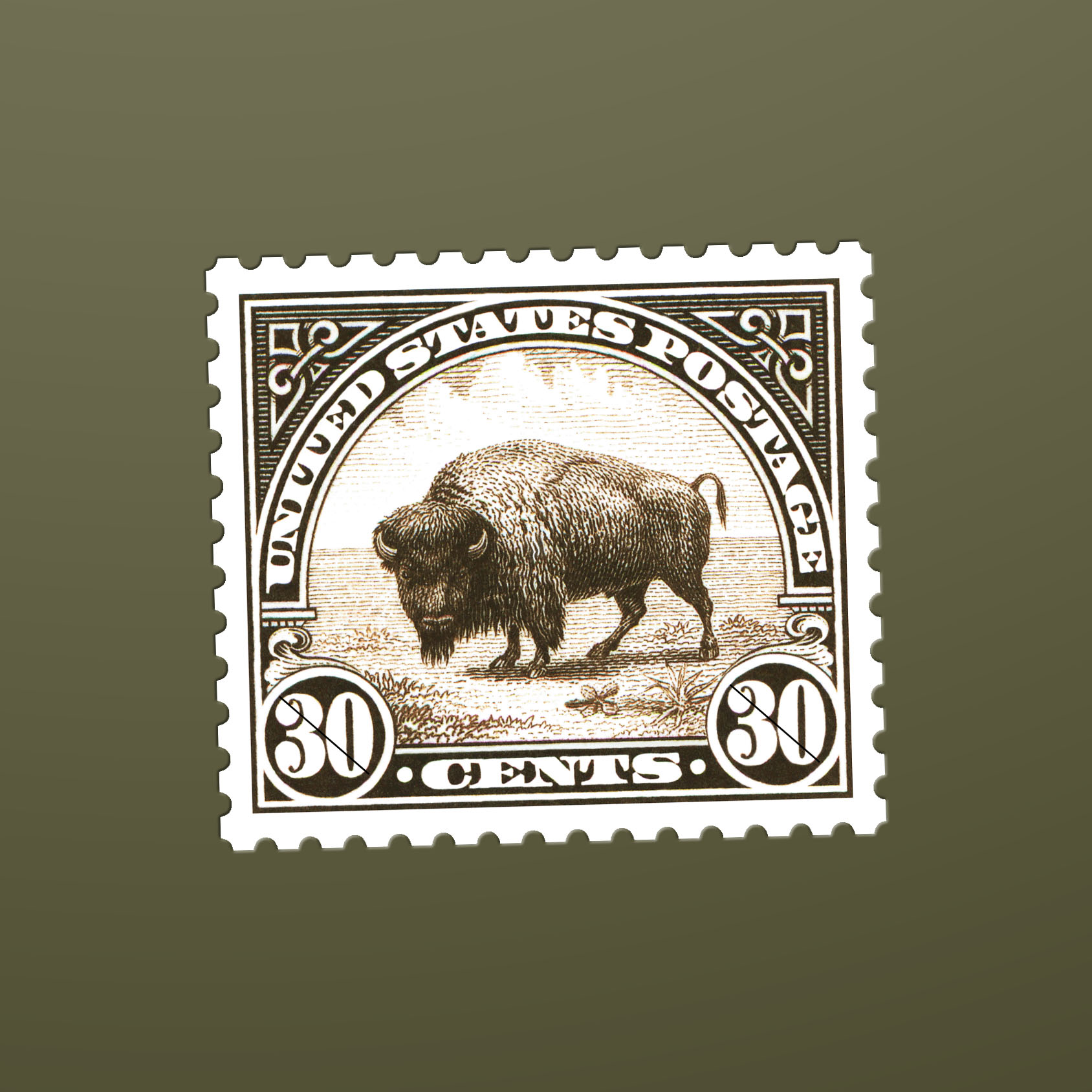
Around that time, artist Charles R. Knight drew a bull bison — a transplant from Montana to the nation’s capital. Knights’ artwork was then duplicated for the central vignette on the $10 federal reserve note. That currency, with portraits of Lewis and Clark bracketing the vignette, was first issued in 1901, and was printed until the early 1920s.
The species’ plight was in the public consciousness as the 1923 stamp joined other buffalo currency: the $10 note (inevitably nicknamed the “buffalo bill”), and the so-called Indian head/buffalo nickel. While the buffalo nickel depicted a different individual of the species, and was rendered by a different artist, the 30-cent buffalo stamp revived Knight’s rendering and was one of many denominations of the Bureau of Engraving and Printing’s “Fourth Bureau Issues.”
At home on the range, once again
The early 20th century saw passionate efforts to restore Western herds — a replenishment ironically enabled by sending captive-raised buffalo back to the wild West, in train cars again, from the urban East. The constant reminders of buffalo on the nation’s stamps, coins, and bills no doubt heightened public support of this conservation effort.
On designer Breeding’s 2026 adaptation of the vintage stamp, shaded stars take the place of numerals indicating the original’s 30-cent denomination; “FOREVER” replaces “CENTS.” To coordinate with the coloration of the century-old stamp, Murphy’s bison photograph is converted from color to monotone, then sepia-tinted. The older stamp was originally printed in ink referred to as olive brown.
Clair Aubrey Huston of the Bureau of Engraving and Printing (BEP) was the designer of the 1923 stamp, rendered by three BEP engravers: Edward M. Hall and Joachim C. Benzing collaborated on its ornate frame; Louis Schofield reproduced Knight’s artwork.
Bison are no longer the dominant wildlife species on the American landscape, but efforts to preserve them continue. Wild buffalo prosper in their home on the range in Yellowstone and other federal parks and refuges. Herds are also being restored by tribal nations, and the “buffalo people” are regaining their historic relationship with this ancient and iconic creature.
Photography by Tom Murphy