Who Was Harriet Powers? Formerly Enslaved Quilter Now on a U.S. Postage Stamp
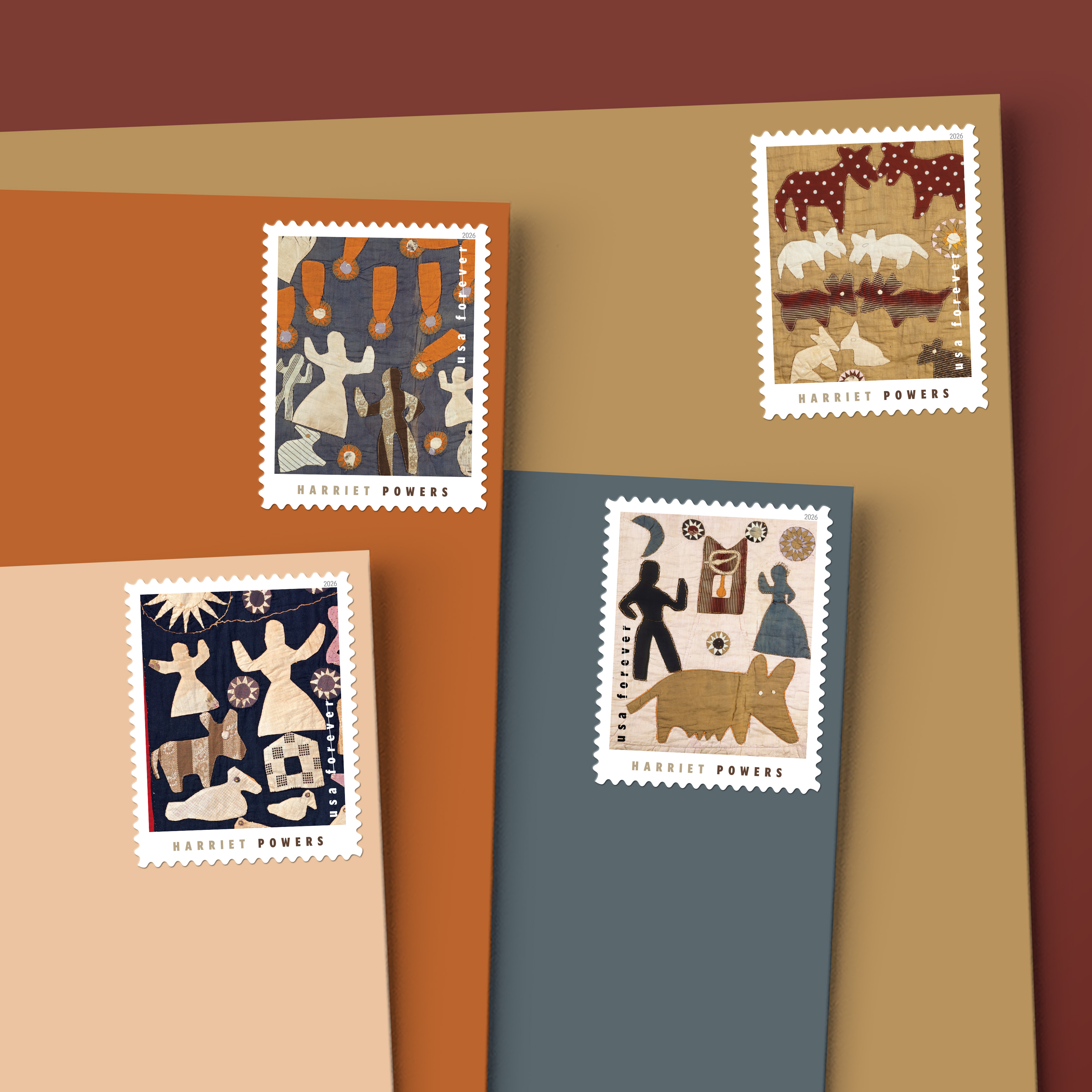
Four new stamps celebrate the artist whose stitched works are celebrated as masterpieces of American folk art and storytelling
Quilting is a popular American pastime, and quilts are a recurring subject for U.S. postage stamps, but this new issuance is a bit different. The spotlight falls on a specific quiltmaker: Harriet Powers (1837–1910), a formerly enslaved woman who stitched works that are celebrated as masterpieces of American folk art and storytelling. In earlier quilt issuances, the quilt style has been the focus: Star Quilts (2016); American Treasures: Quilts of Gee's Bend (2006); and American Treasures: Amish Quilts (2001).
Powers’s story is remarkable. Born on a plantation near Athens, Georgia, she likely learned to sew as a child, and she also learned to read. When she was 18, she married Armstead Powers, an enslaved farmhand on another plantation. After emancipation years later, they bought four acres in nearby Sandy Creek, Georgia, where they raised a family, as well as cotton and vegetables.
Along the way, Powers began creating quilts, and completed at least five. The two known to have survived are called story quilts because each of their panels features a pieced, appliquéd, and embroidered scene from a familiar story drawn from the Bible or local lore — often related to unusual weather events or other natural phenomena that had led people to believe the end times had come.
In 1886, Powers entered her “Bible Quilt” in a local fair, most likely the second annual Northeast Georgia Fair, in Athens. There, a young white art teacher named Jennie Smith fell in love with it and asked about purchasing it. Powers turned her down but ended up selling it to her a few years later for five dollars and calico for another quilt.
In 1895, Smith exhibited her students’ work at the Cotton States and International Exposition in Atlanta, sometimes called the Atlanta World’s Fair. She also displayed the “Bible Quilt” in the exposition’s Negro Building, a popular destination for local and out-of-town visitors, including President Grover Cleveland and one of his guides for the day, Booker T. Washington. Perhaps the pair viewed the “Bible Quilt.” More than one news report mentioned it among all the items on display in the Negro Building. It apparently also caught the attention of a group of Atlanta University faculty women, who, according to accounts, were so impressed they decided to commission a new quilt from Powers as a gift for the vice president of the university board, Dr. Charles Cuthbert Hall.
When Powers delivered the completed “Pictorial Quilt” in 1898, she explained each of its panels, just as she had done earlier when she sold the “Bible Quilt.” At some point during the six decades the “Pictorial Quilt” remained in the Hall family, a young great-grandson altered it slightly by using a ball-point pen to draw eyes on the animals that were missing them.
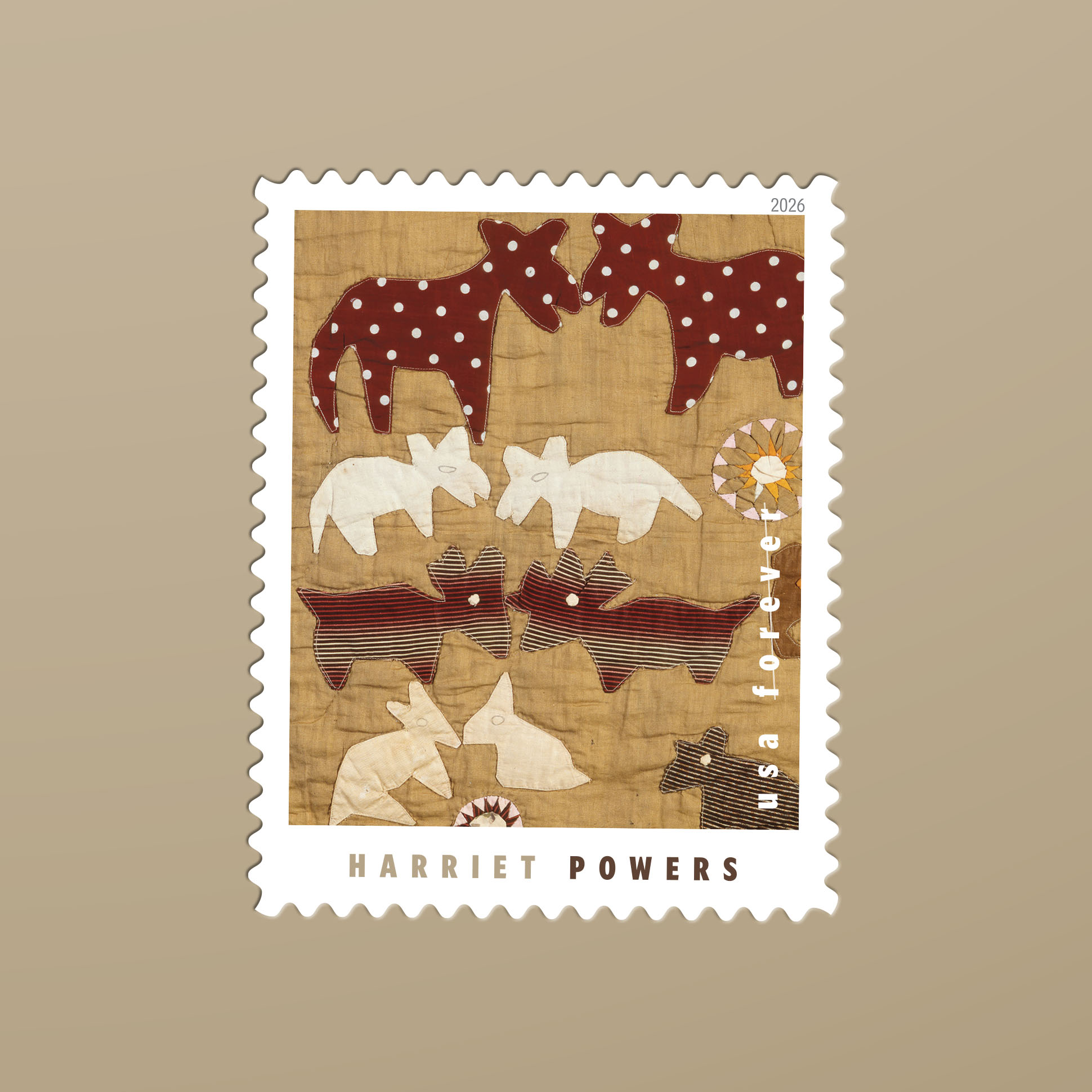
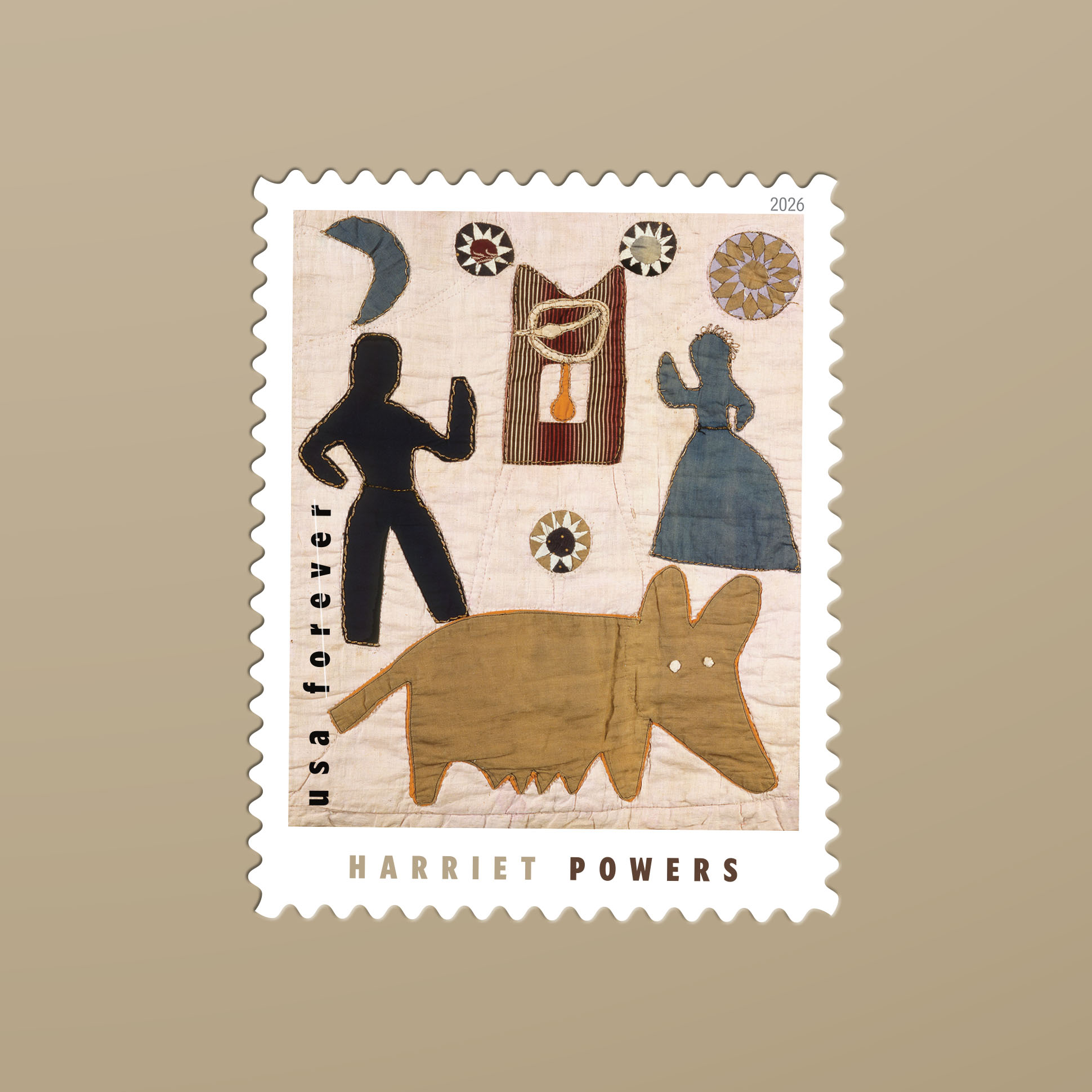
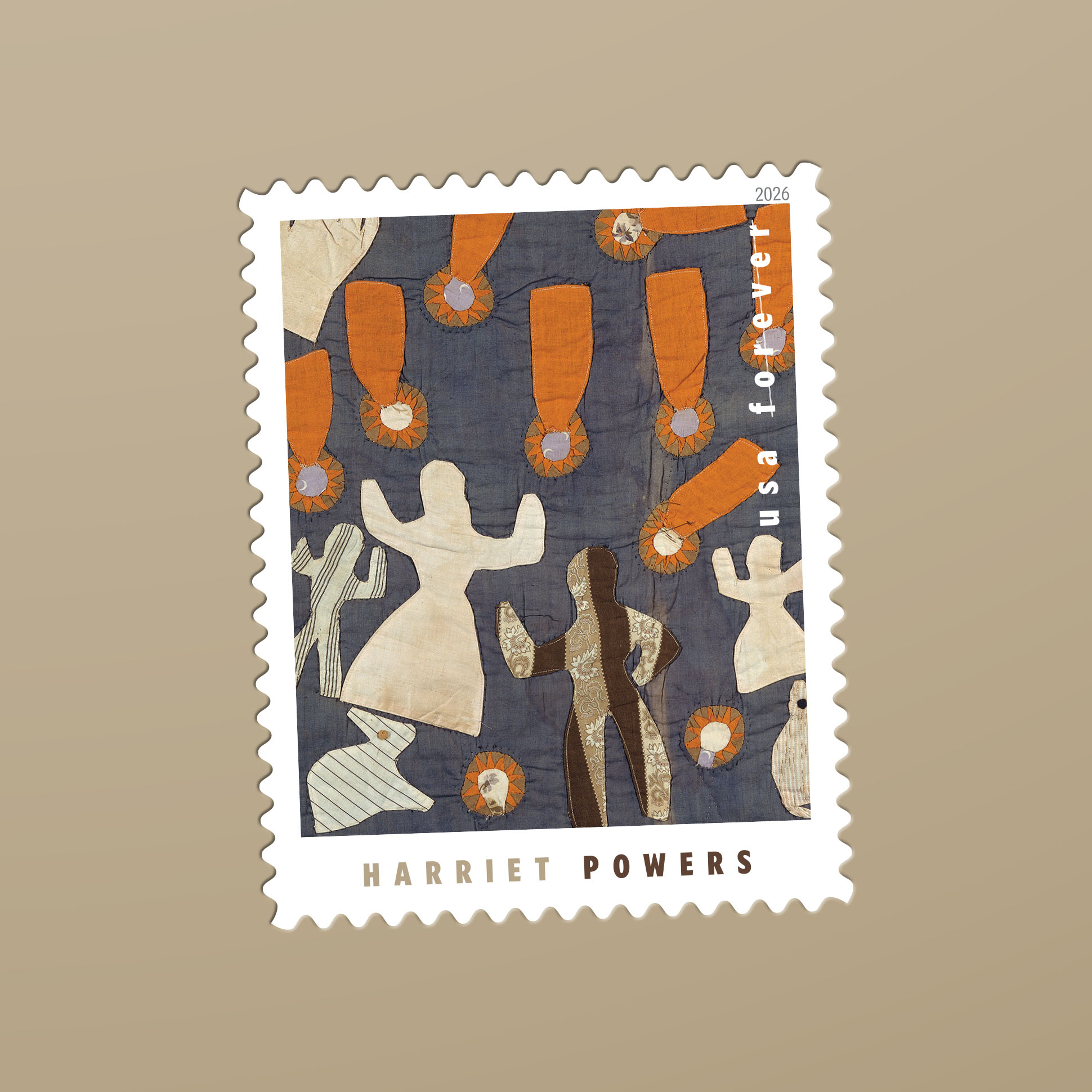
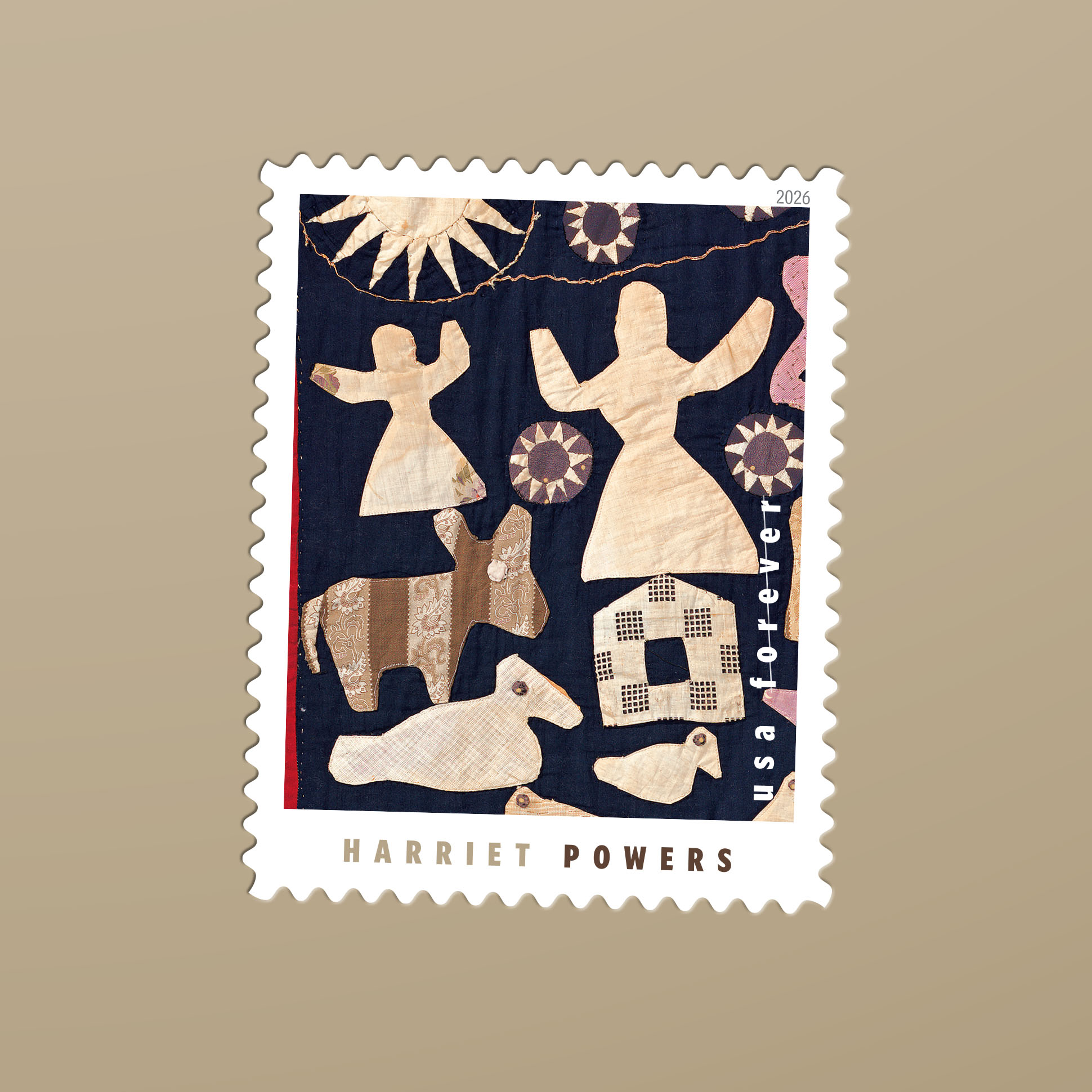
Art director Derry Noyes had worked on previous stamps featuring quilts, including the Amish, Gee’s Bend, and Star quilts. However, she was unfamiliar with Harriet Powers and had never thought of this genre of fabric art as a canvas for telling stories. “This is what is extraordinary about Harriet Powers’s quilts.” As for the color palette, “all I can say is WOW,” Noyes adds. “So beautiful and fresh to this day!”
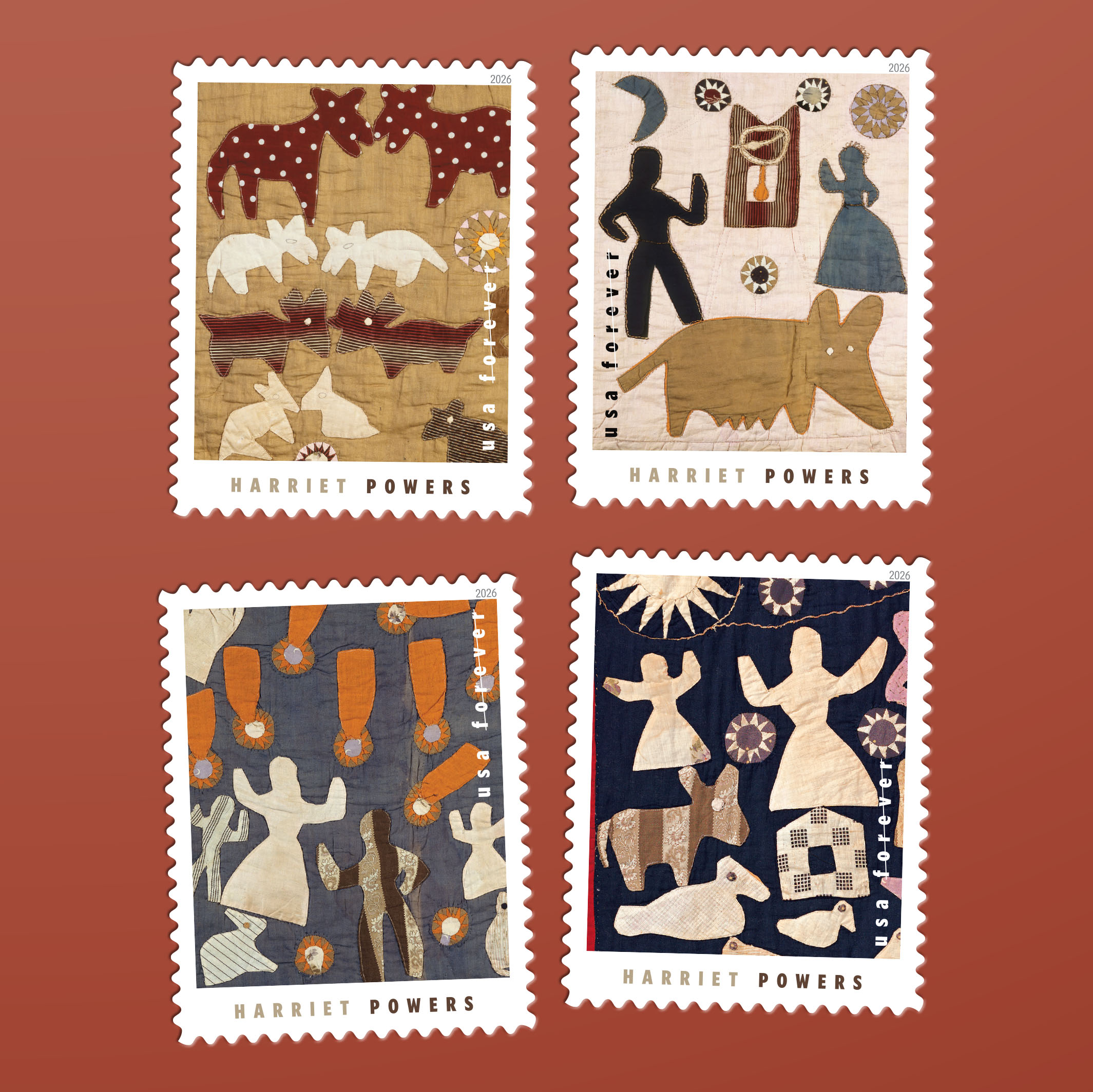
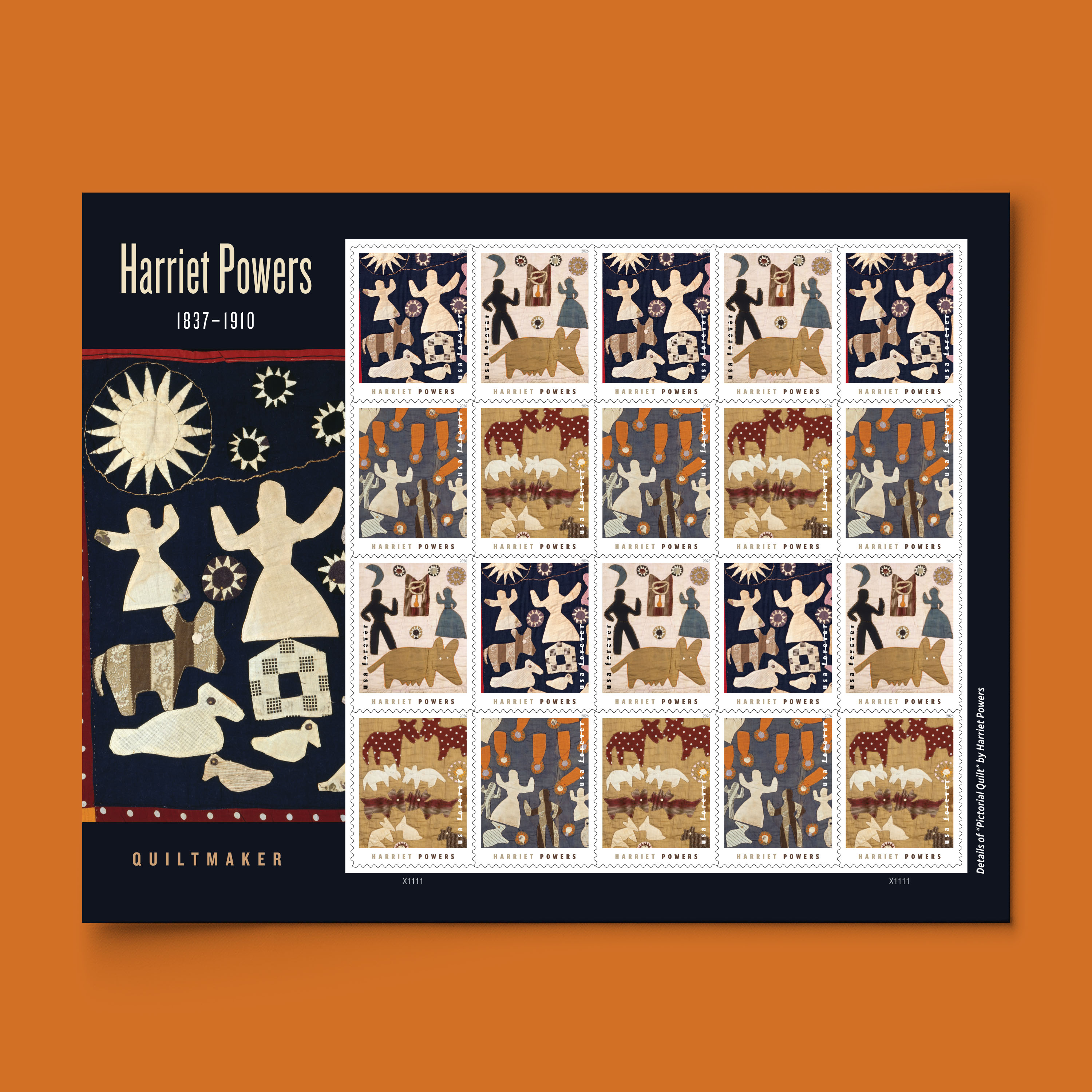
The plan for the issuance was four different stamps in a pane of 20, featuring panels selected from the “Pictorial Quilt.” The original quilt has 15 panels, though, so Noyes had to choose. She needed “four different stories that also had different elements and colors that worked well independently and also as a pane.” In addition, the images would need to hold up well at stamp size and still communicate the stories Powers was trying to tell. Finally, “I wanted the pane to look as if there were more than just four different scenes,” Noyes explains. “By changing the starting order at the beginning of each row I was able to create the impression of a multitude of scenes.”
The “Pictorial Quilt” became part of the collections of the Museum of Fine Arts, Boston, in the 1960s. Powers’s other extant work, the “Bible Quilt,” now belongs to the Smithsonian National Museum of American History. The donor shipped it to the museum in 1968 through the U.S. Mail.
Pictorial quilt, 1895–98, by Harriet Powers. Bequest of Maxim Karolik 64.619. Photograph © 2025 Museum of Fine Arts, Boston.