
How Love Stamps Won Over America
A relationship that had a rocky start has only deepened with age
You’ve enjoyed Love stamps for more than 50 years. But amazingly, the first stamp in what became this popular and celebrated series wasn’t meant to be a “love stamp” at all.
Inspired, so the story goes, by a frequent traveler in Oklahoma who wrote to postal authorities in 1970 about his longing for a stamp that could distinguish his love letters, the Postal Service issued the first Love stamp on January 26, 1973, in Philadelphia, “the City of Brotherly Love.” The stamp featured the work of pop artist Robert Indiana: the now-familiar design with the letters “LO” stacked on top of “VE,” with the letter “O” tilted, all against a simple blue-and-green background. At the time, the Postal Service called it a “Special Stamp for Someone Special,” lest it be used for Valentine’s Day alone.
Reaction from some collectors was not positive. Some were angry that the stamp did not literally “commemorate” anything specific, while others simply disliked the design. Some referred to it as the “hippie stamp.” One journalist even asked whether its release marked “a day of infamy for American stamps.”
Then the public spoke, and their opinion was not in question. The “Special Stamp for Someone Special” turned out to be enormously popular, with 233 million printed in just the first year, twice the quantity of a typical commemorative at the time. When the stamp finally went off sale on January 31, 1975, after multiple reprintings, more than 330 million had sold, even after a rate increase from 8 cents to 10 cents meant that people needed to add an additional two cents of postage to use it.
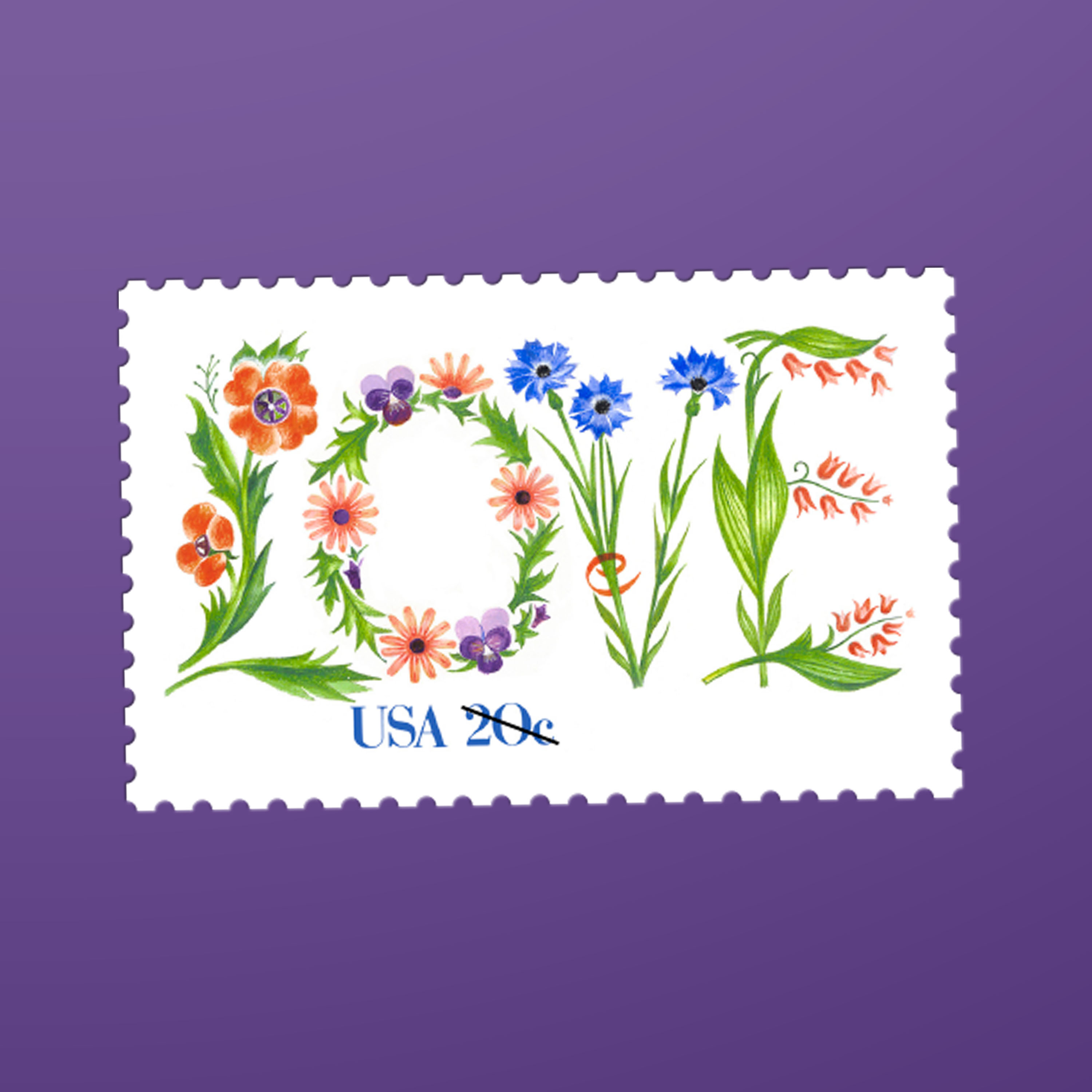
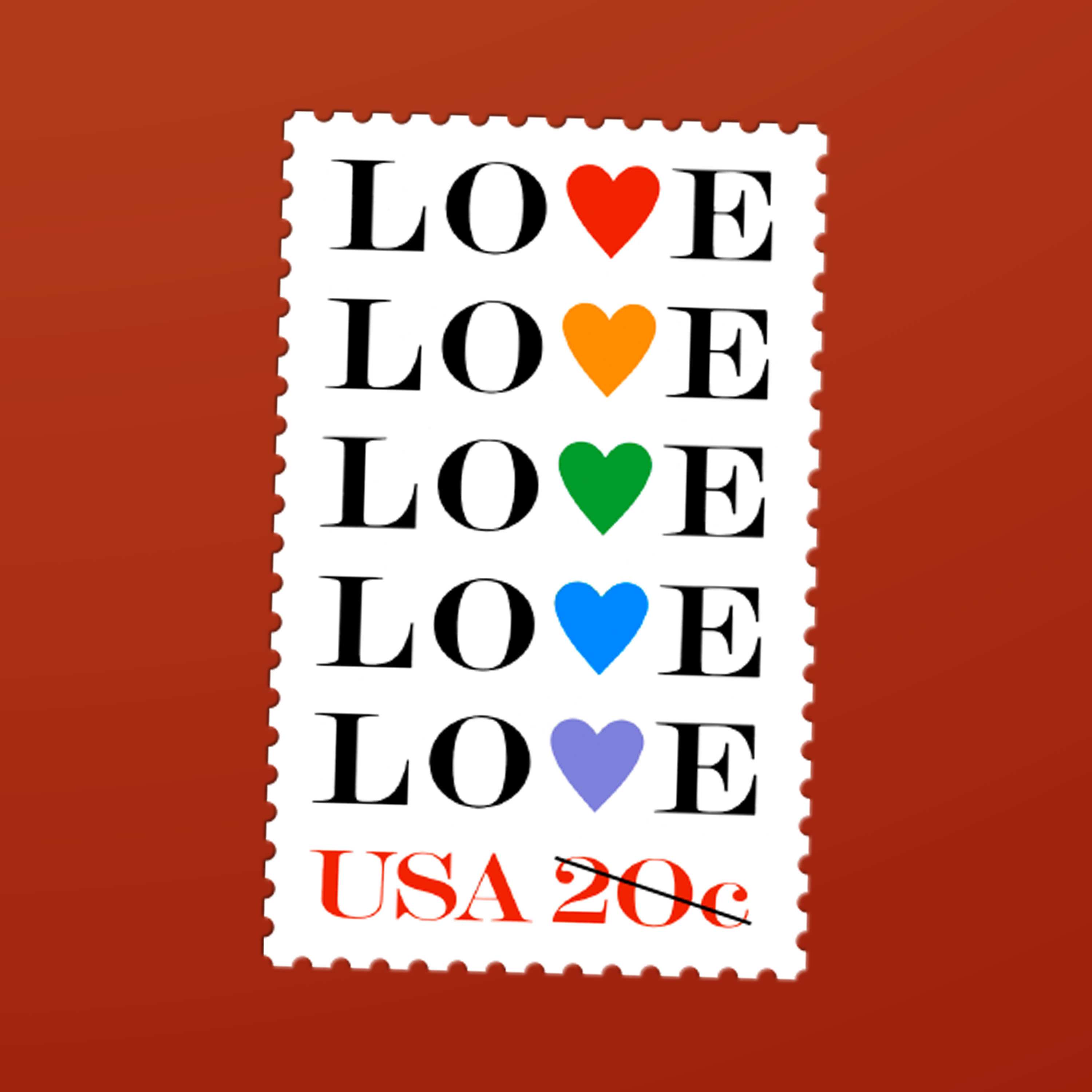
Demand for new Love stamps never faded, and after several years, the Postal Service reconsidered an unused design from 1973. February 1, 1982, brought the issuance of a new stamp with sketches of flowers by designer Mary Faulconer forming the word “love” — a stamp that saw an astounding 880 million sold.
By 1984, it was clear that even though Love stamps were usually issued in time for Valentine’s Day, they were popular all year long. Sales of Love stamps were second only to the combined sales of approximately 1.5 billion Christmas stamps. Love had become a series, and an American stamp tradition had begun.
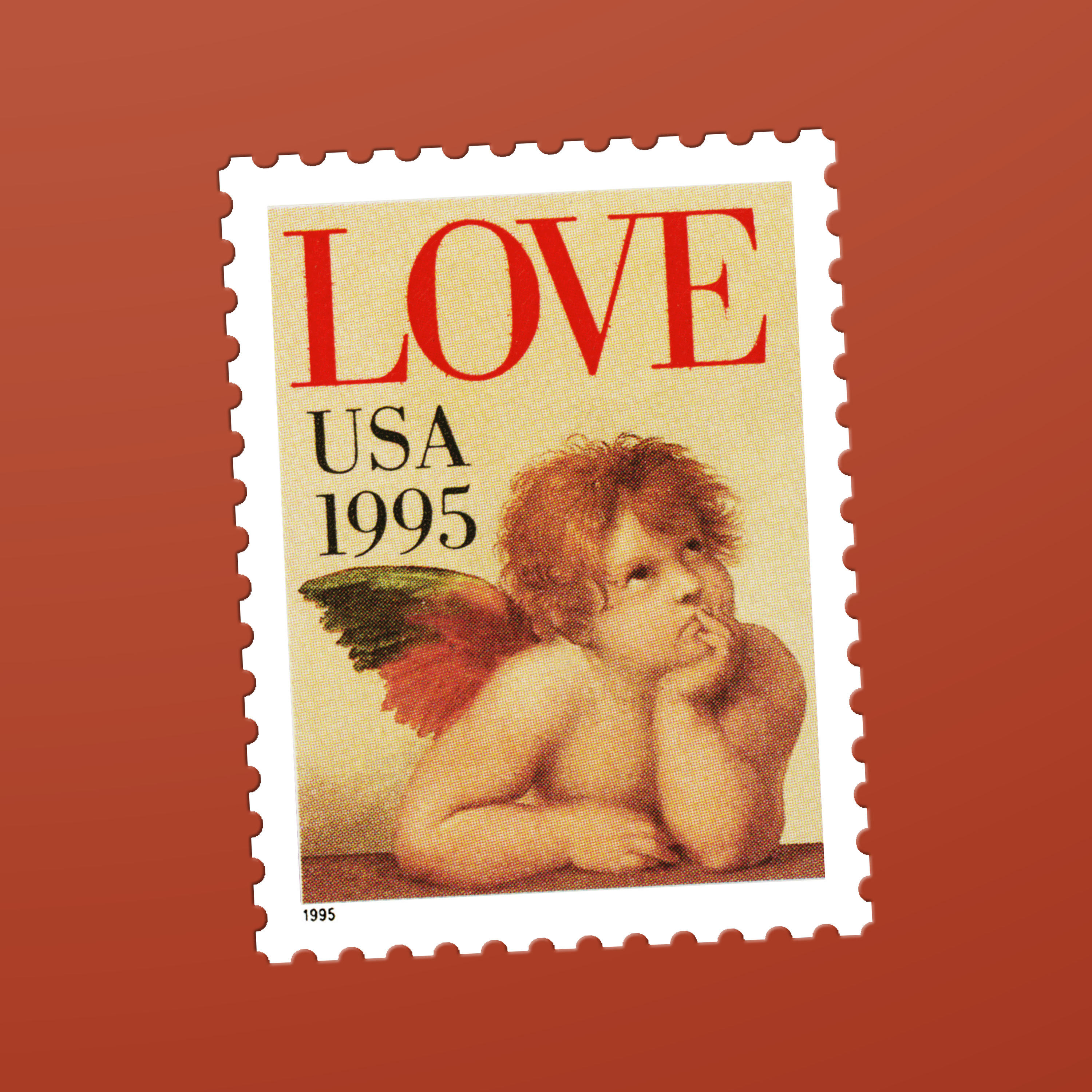
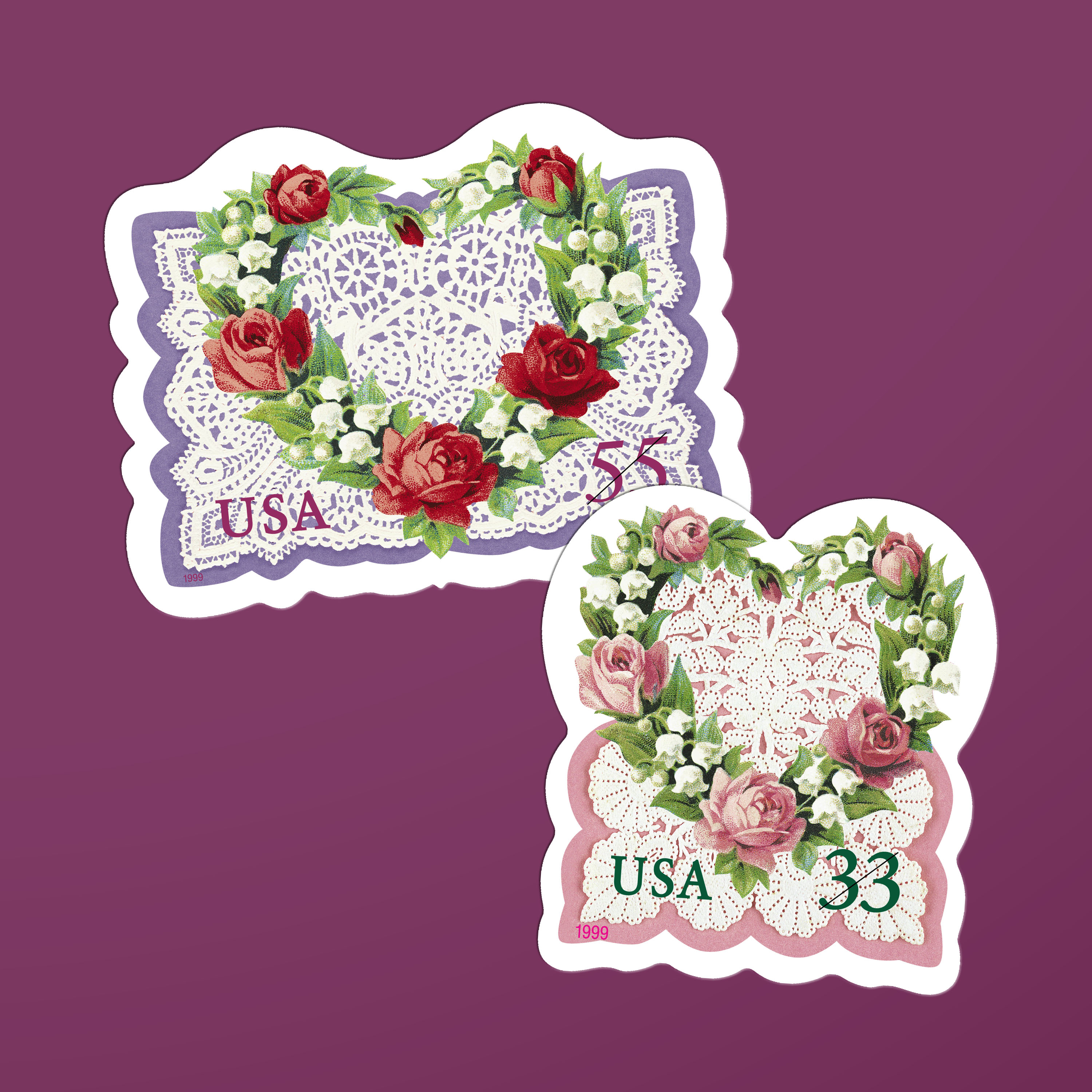
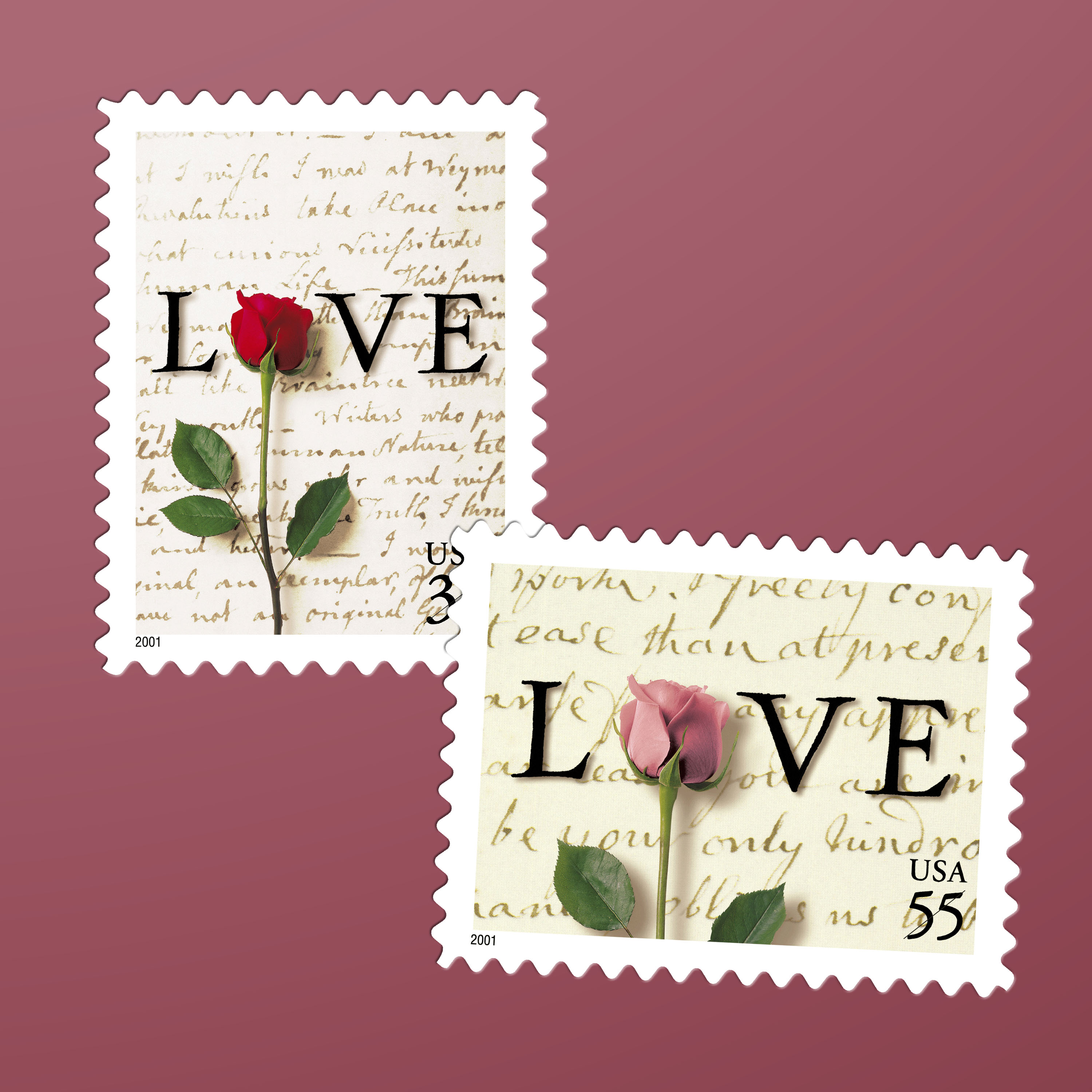
In the years since, each new issuance has presented artists and designers with fresh opportunities to explore one of the world’s oldest themes. Puppies, flowers, birds, playing cards — each new stamp makes its own bold statement. Collectors and the general public alike remember their favorites: The hugely popular 1995 stamps featuring Raphael’s cherubs, issued in multiple formats, got people talking about Renaissance painting; the 1999 stamps were cut to fit the shapes of the 19th-century valentines featured on them; and the love letters of John and Abigail Adams brought a poignant personal touch to a pair of 2001 Love stamps. Of course, the Postal Service has also had fun choosing first-day-of-issue locations for these stamps, including Romance, Arkansas; Loveland, Ohio; Loveland, Colorado; and Valentines, Virginia.
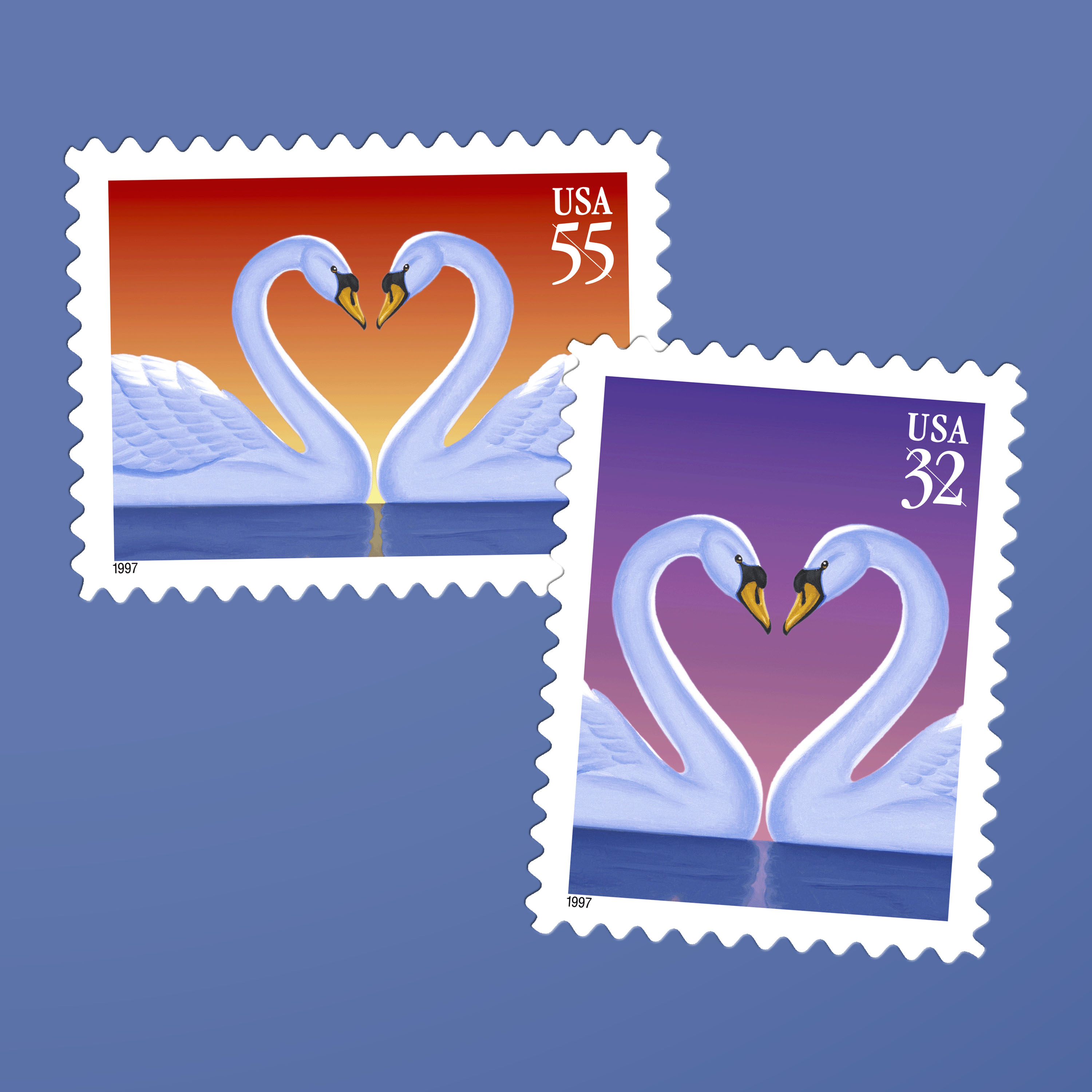
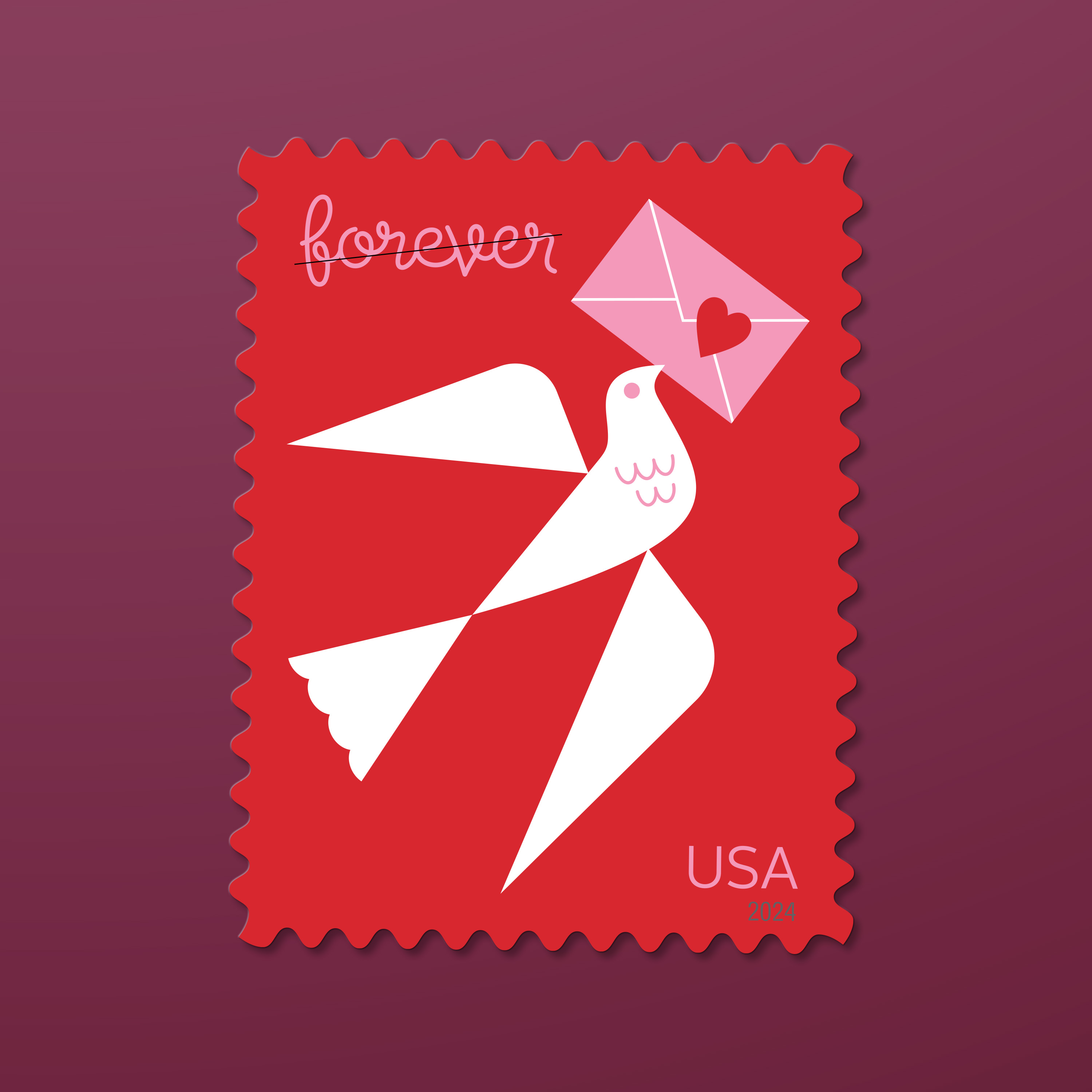
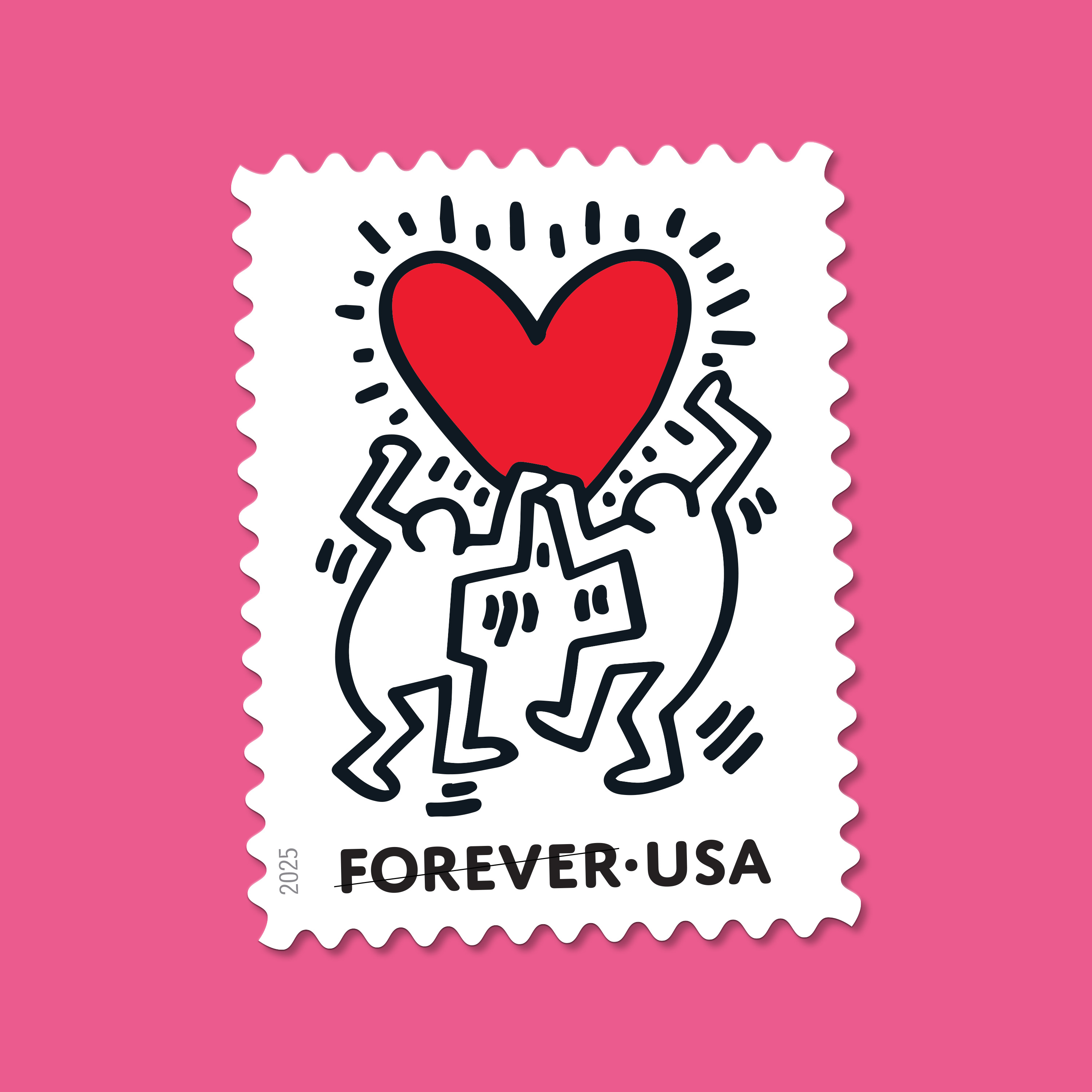
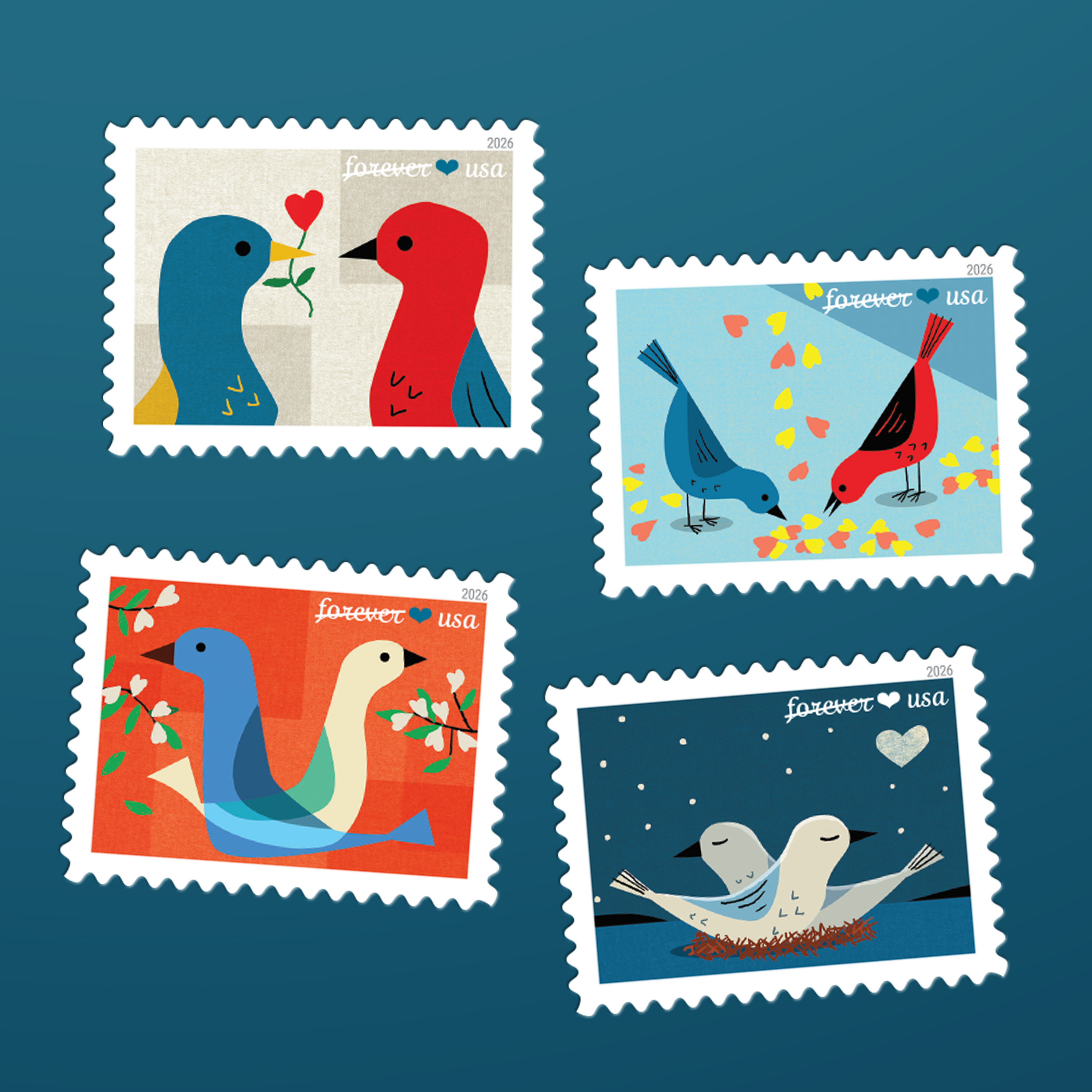
Not all of the Love stamps have the word “love” on them. In 1997, a pair of stamps featuring two swans whose necks form a heart were the first not to include the word in the design, and designers since then have sometimes chosen to omit the word if it doesn’t fit naturally into the stamp art. But even after all these years, whether the stamps use the word or not, the public still adores the Love series, proof that philatelic innovations can win America over — even without love at first sight.