
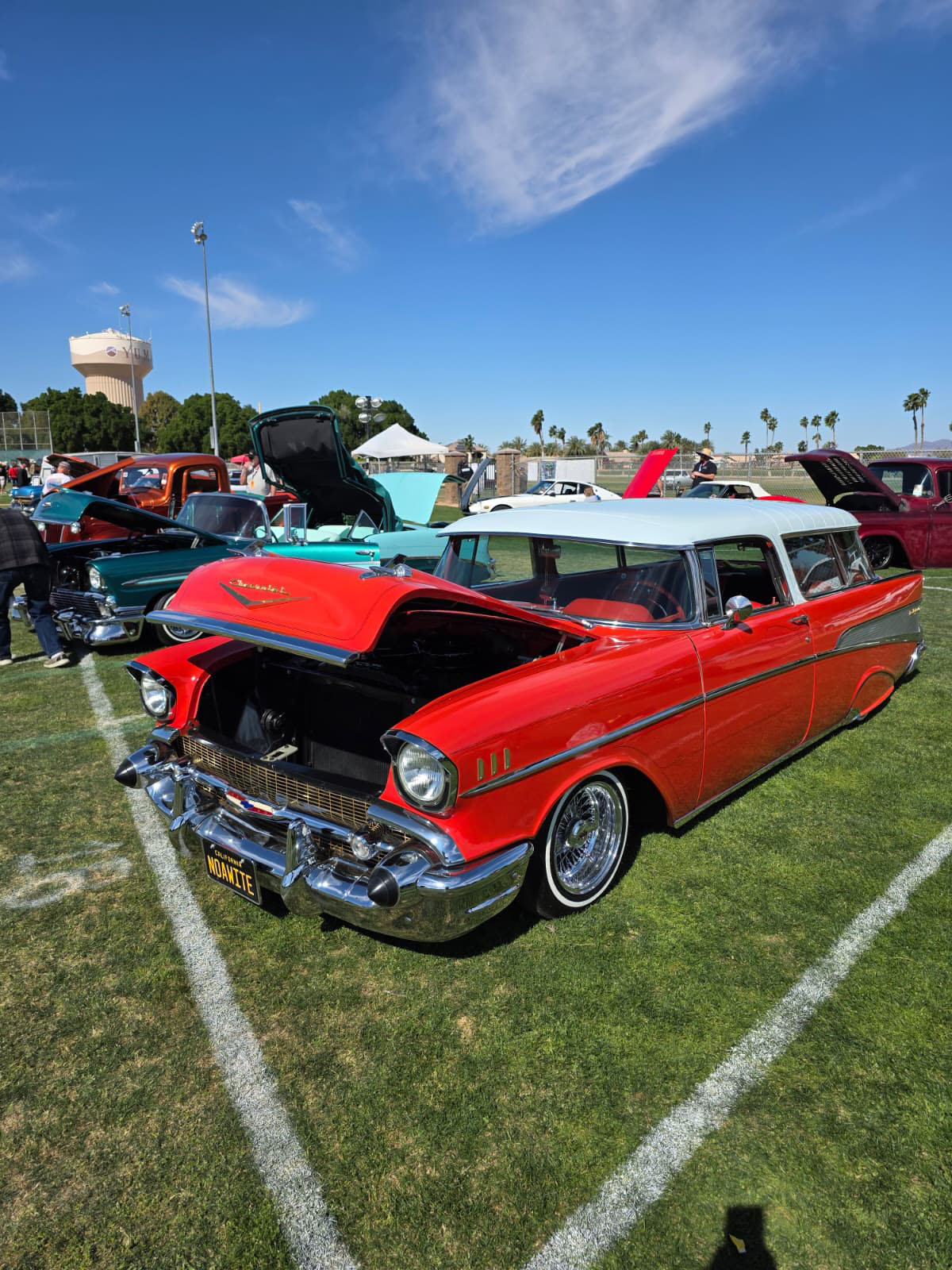
The Lowrider Way of Life: Rigoberto Reyes on Cars, Community, and Culture
A San Diego pioneer shares how lowriding, activism, and Chicano Park shaped a movement now honored by the USPS Lowriders stamps
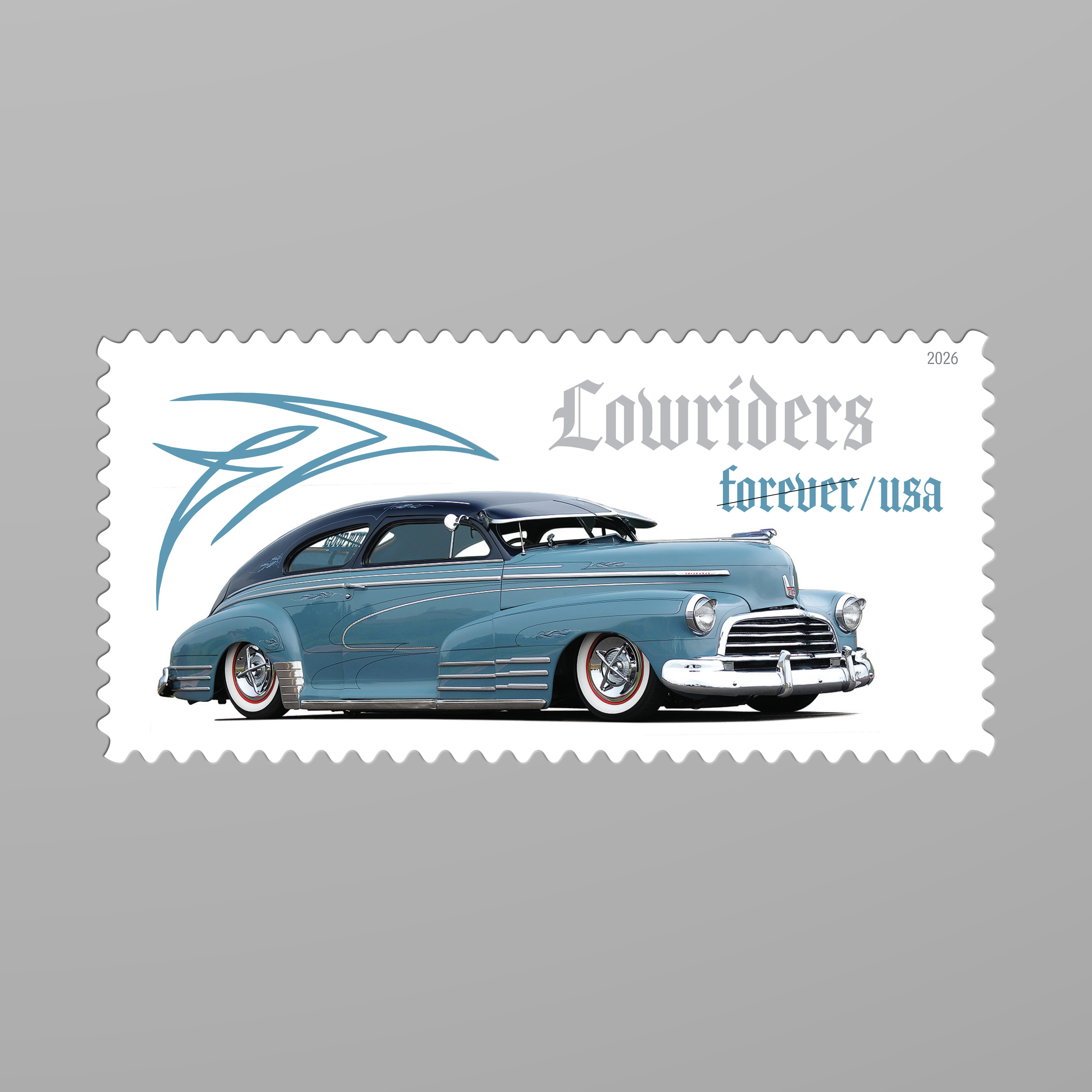
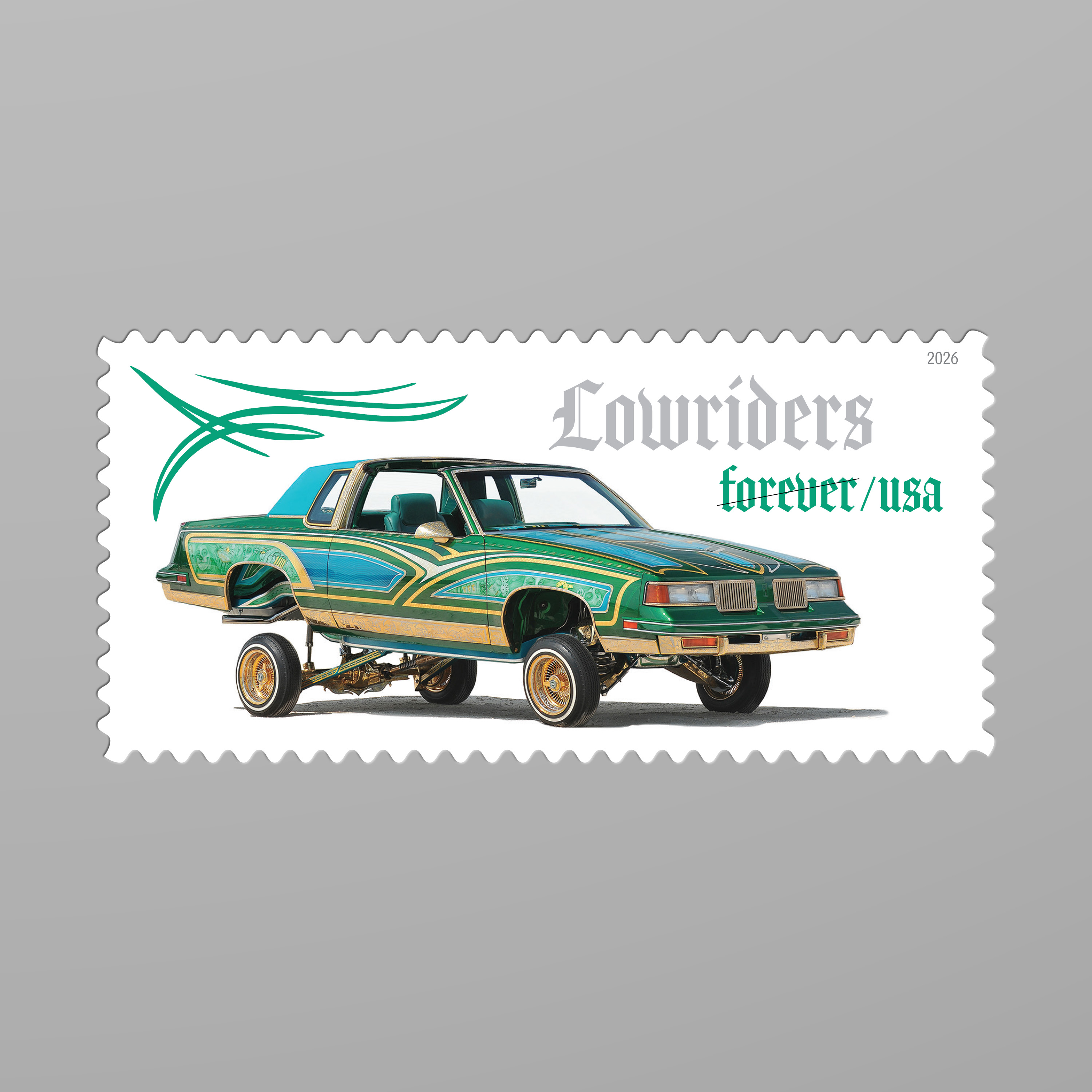
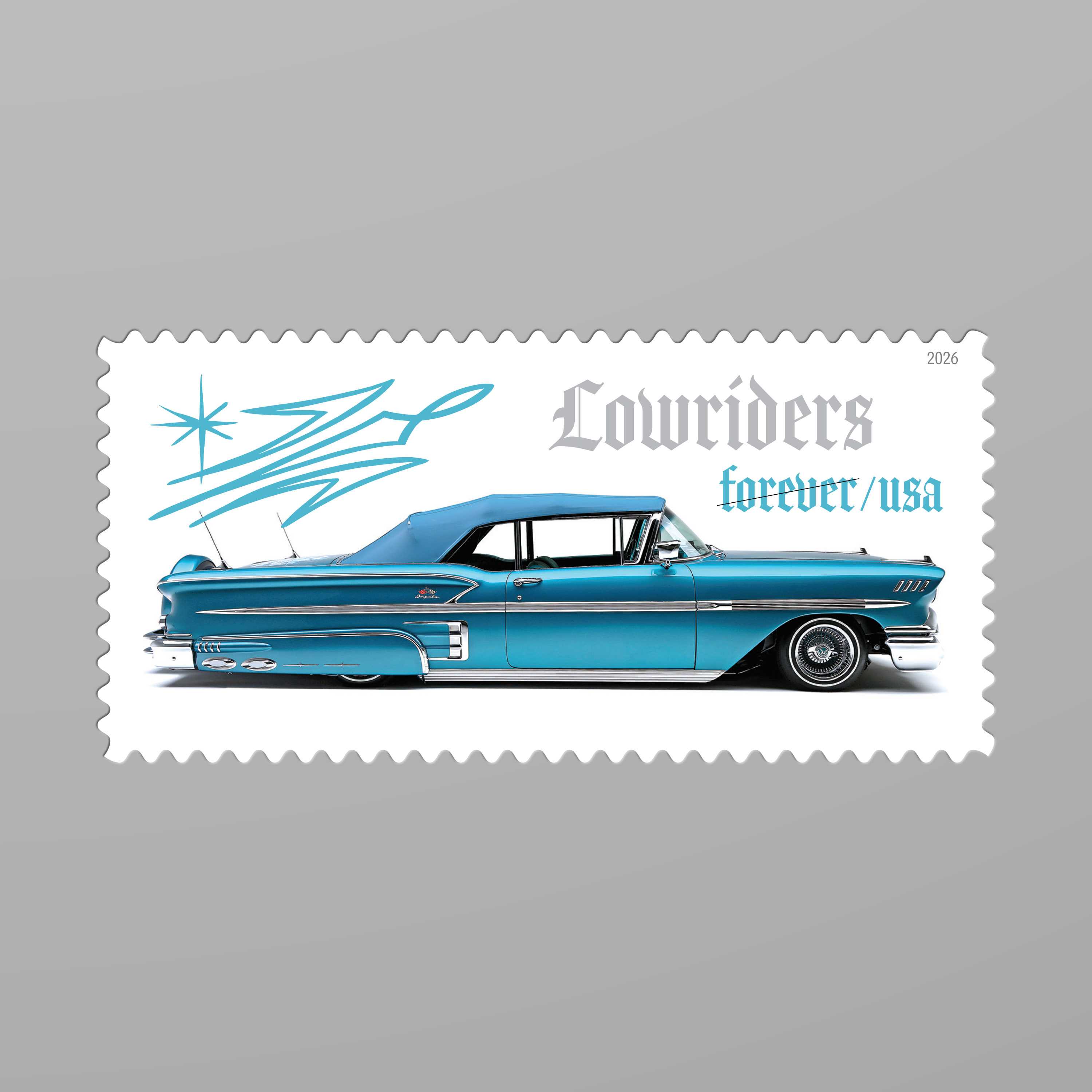
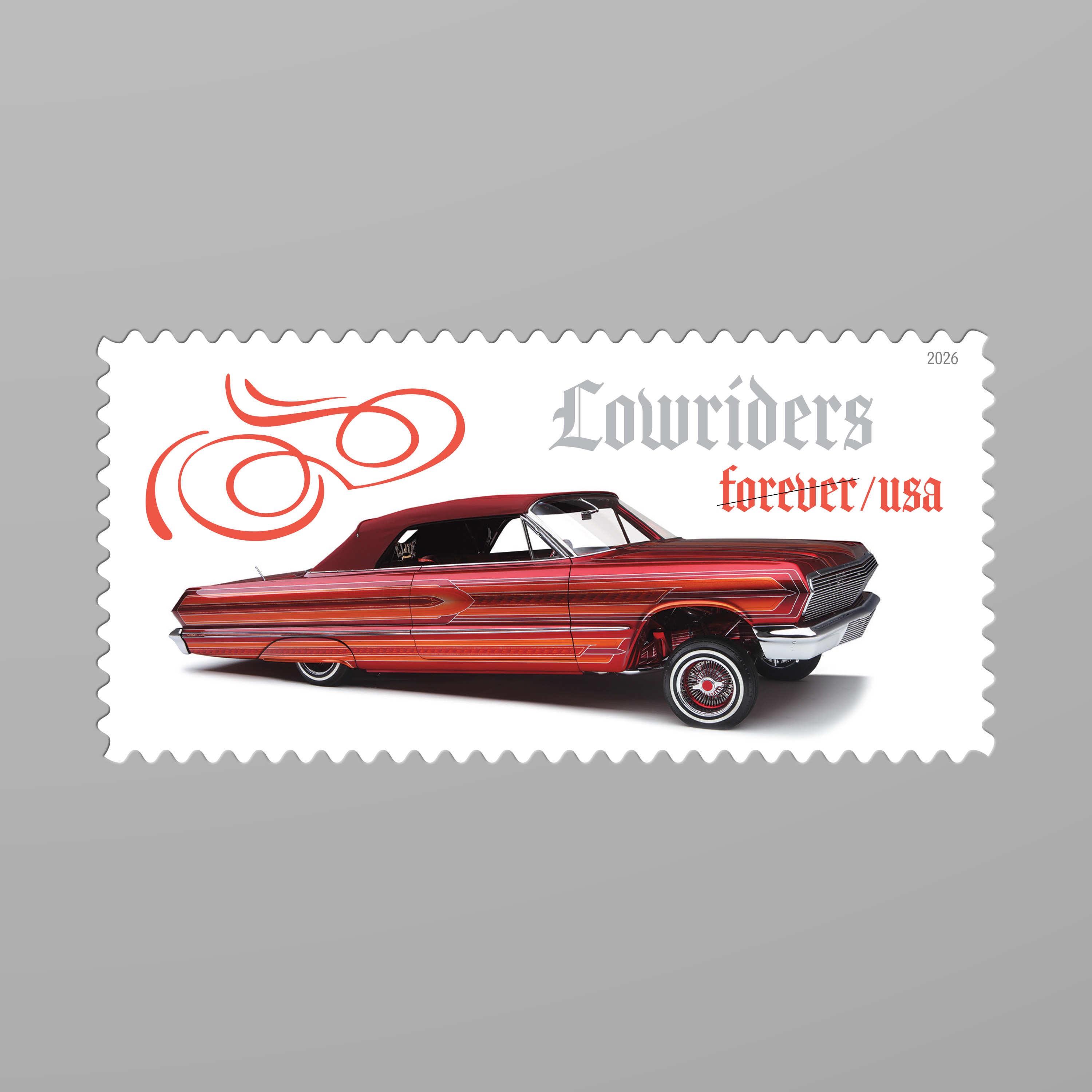
Last March, the U.S. Postal Service held a dedication ceremony for the Lowriders stamps in San Diego, California. Now we’d like to introduce Rigoberto “Rigo” Reyes, who has documented that city’s lowrider community in a book, a film, and a university archive.
—
Reyes was about 11 years old the first time he saw a lowrider, in the late 1960s. “Lowriding was fairly new then, and I just fell in love with it,” he recalls. Although lowriding had roots that reached back to the 1940s in East Los Angeles and the Southwest borderlands, it didn’t really take off until the 1970s. Reyes was mesmerized by the cars’ beauty and the fancy hydraulics that allowed them to “hop” and do other tricks.
Several years later, armed with a driver’s license and a little money, Reyes paid $200 for a gold-with-white-top 1957 Chevrolet 210 sedan, his initiation into the lowrider world. He was about 17 years old.
The 210 and the cars he’s acquired since were all “in rough shape, meaning they were projects,” he says. He spent two years rebuilding the 210 into a sleek, burgundy-with-black-top masterpiece.
Today, Reyes is retired from a long career in community development but is still immersed in the lowrider world. The popularity of lowriding has increased enormously since his youth. Car clubs have popped up all over the country and even the world. San Diego alone boasts dozens.
In addition, a whole industry has grown up around lowriders — with good-quality parts readily available for most models. It was a different story in the 1970s, though: Car owners scavenged parts at junkyards or found them at military surplus outlets or through word of mouth. This was challenging, but “we were experimenting with it,” Reyes says. “It was all trial and error: what we call Chicano ingenuity.
“We built our own little Frankensteins,” he adds.
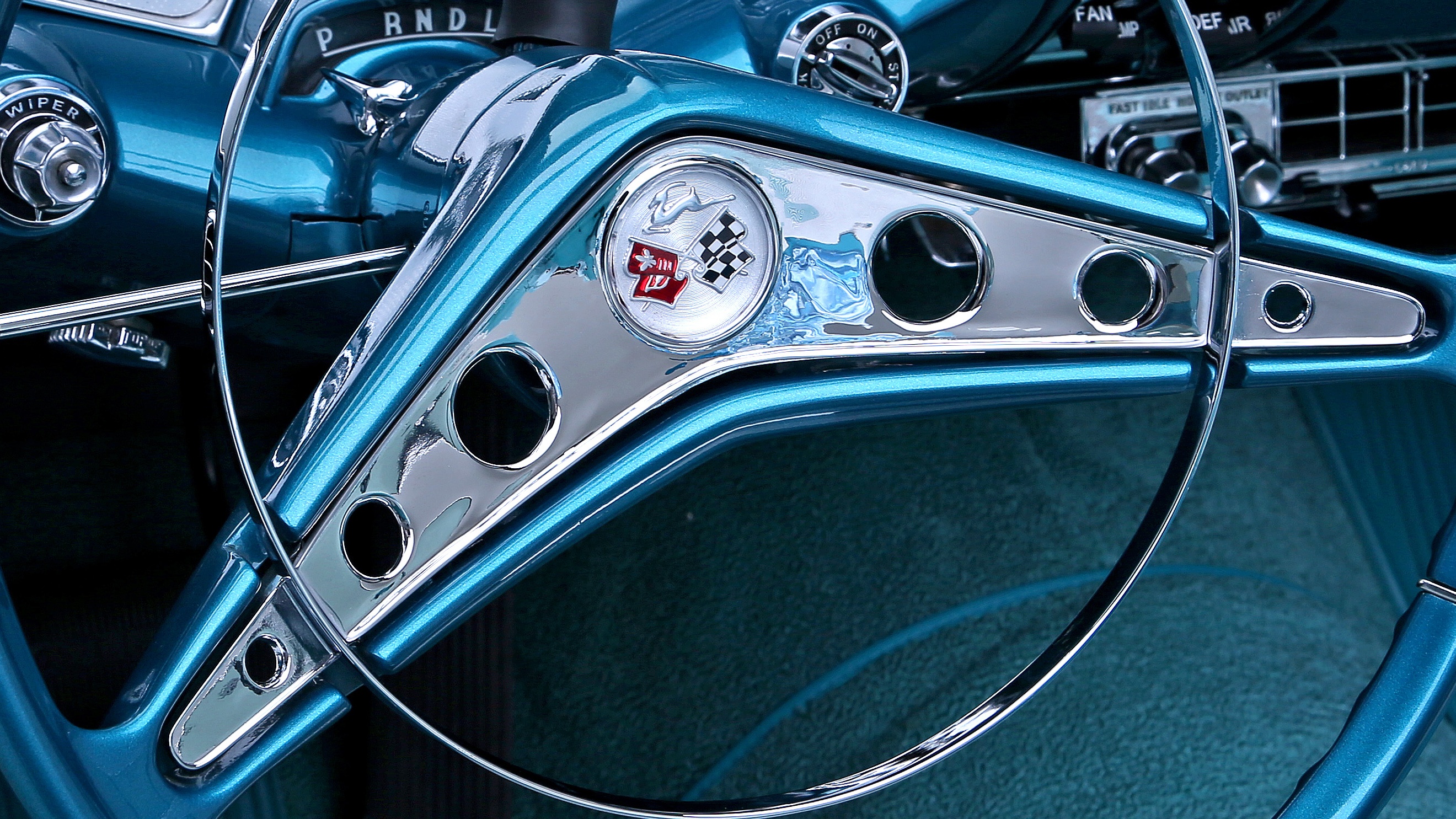
Lowriding can be an expensive undertaking, and the best way around that is to join a car club, the backbone of the lowrider world. Reyes started with the Casinos Car Club in 1975, then two years later became a founding member of the Amigos Car Club of San Diego; he’s still a member. “We have people with various skills: great mechanics, great painters, great stripers, upholsterers, and so on,” he explains. Members trade skills, “and a lot of it is friendships, the fact that we belong to the same organization and try to help each other out.”
Reyes does appreciate the much better quality of the parts that now are manufactured specifically for lowriders, and the shops that sell and install hydraulics and make other modifications. “It’s a blessing that the industry has evolved,” he says, but “we can’t forget what the pioneers went through and how we did it back then.”
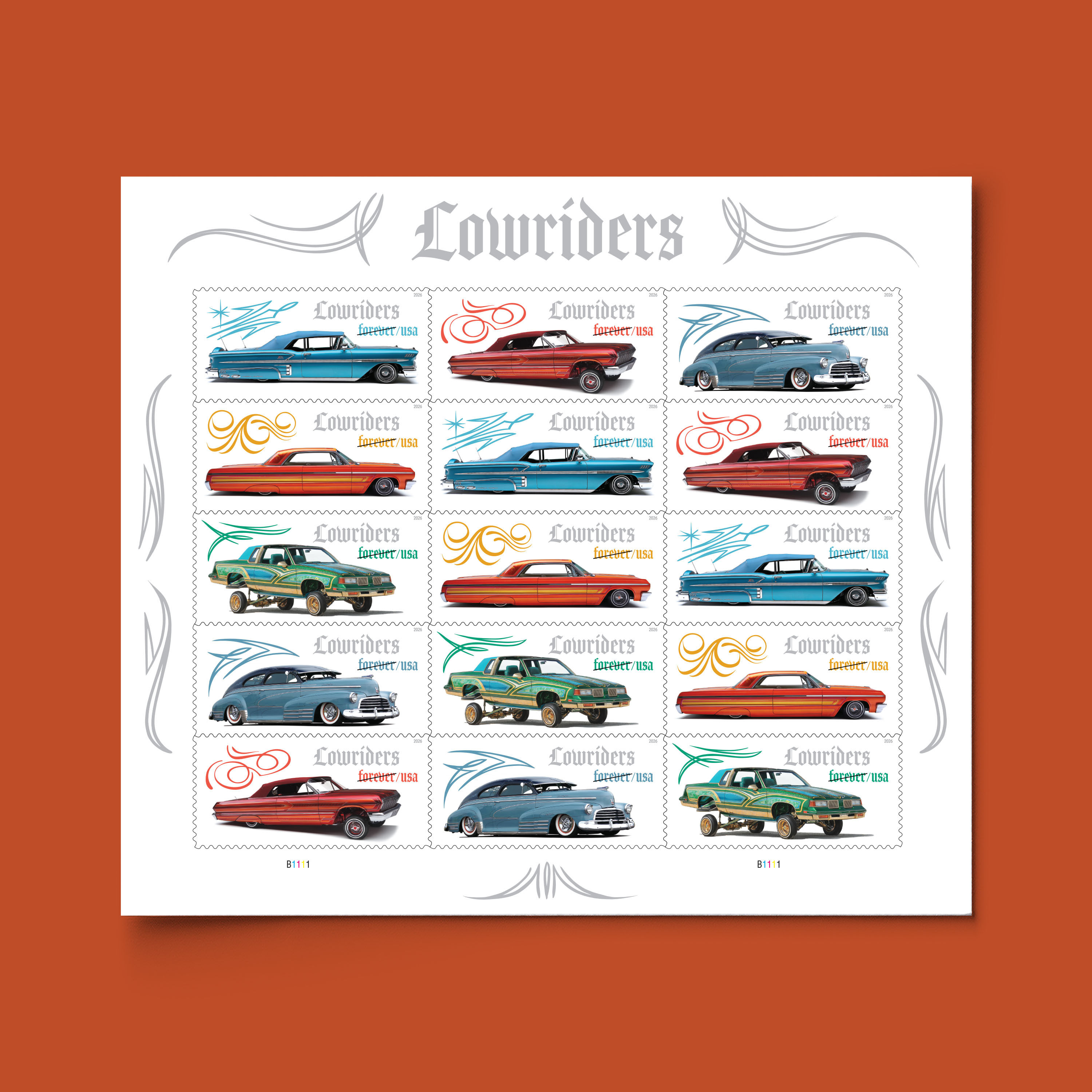
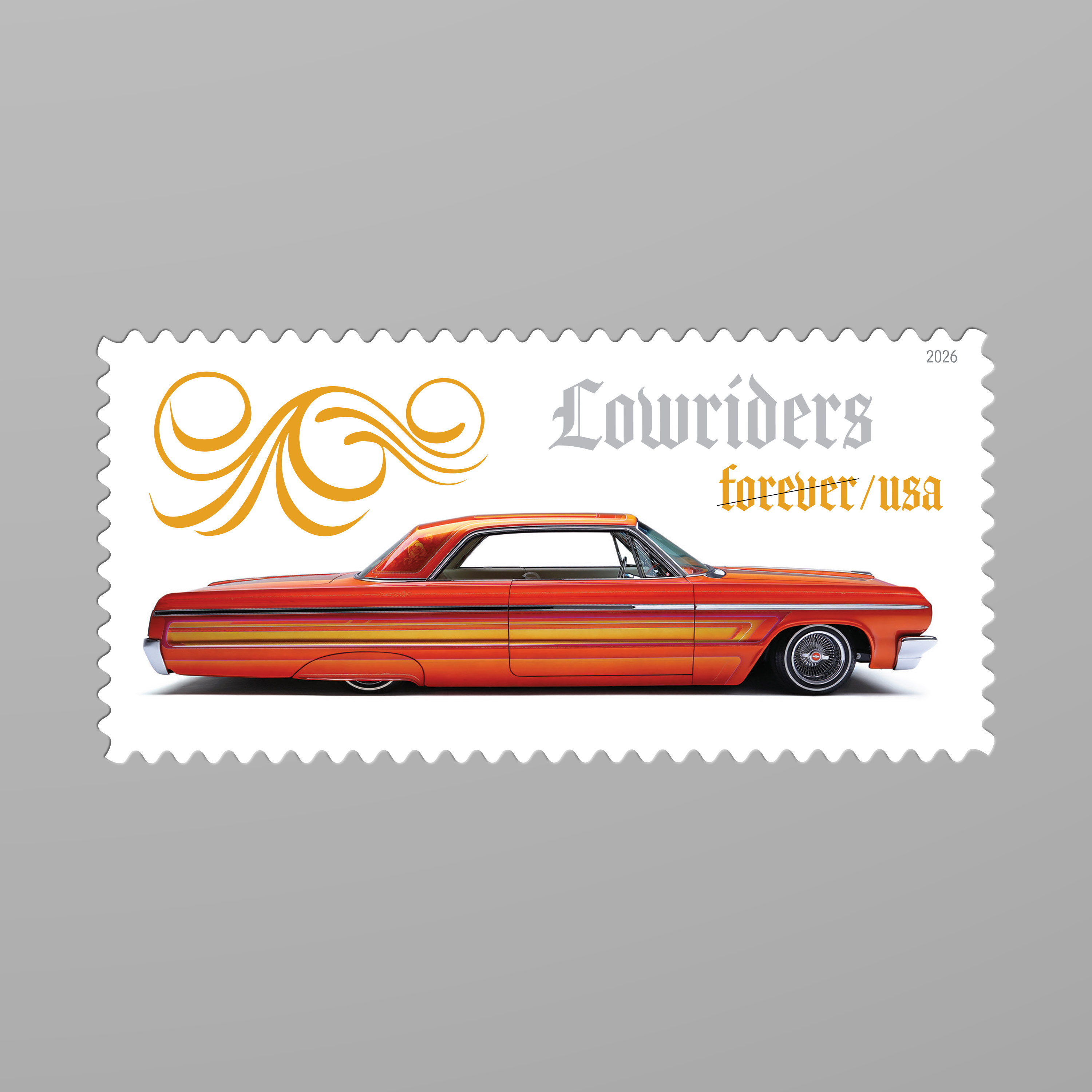
In the early 1980s, Reyes sold the 210 and started over with a 1959 Chevrolet Impala, one of the most popular lowrider models. (Three of the five cars pictured on the Lowriders stamps are Impalas.) Christened “Azteca” and customized with a mural on the hood and trunk, the brilliant green lowrider belonged to Reyes until the early 1990s when he sold it to Japanese buyers who shipped it home.
The third car is one he still owns: a boxy 1929 Willys Knight sedan — a luxury American automobile manufactured between 1914 and 1933 by Willys-Overland Company of Toledo, Ohio. It’s rare to see a car of this vintage as a lowrider, Reyes says; in fact, he knows of no others like his ’29 Willys Knight. He also owns a red and white 1957 Chevrolet Bel Air Nomad (pictured at left).
Lowriding and Activism
For Reyes, social activism and lowriding have always gone hand in hand. Growing up in San Diego’s San Ysidro section, he witnessed and learned lessons from the United Farm Workers’ successful campaign for better wages and working conditions. When Chicano activists occupied a piece of public land and converted it into a park in their Logan Heights neighborhood south of downtown San Diego, Reyes was there, even though he was only 12 years old.
In addition to co-founding a car club, he co-founded the San Diego Lowrider Council in 1979; co-founded and edited a community newspaper in the early 1980s; and helped establish the Balboa Park Automotive Museum in the late 1980s. He chose a career in community building, including skills training and outreach, and more recently has taught the same at the University of San Diego.
Chicano Park
For years, residents of Logan Heights had campaigned for a park, but the city of San Diego instead rezoned the neighborhood for industrial facilities. Then came a freeway. By the mid-1960s, Interstate 5 had replaced a swath of the community, displacing about 5,000 families. The 1969 opening of the San Diego–Coronado Bridge, accessed from Interstate 5, pushed out even more families.
On April 22, 1970, coincidentally the first Earth Day, the community learned that the state of California was about to build a highway patrol station and parking lot on the public land under the bridge. Activists organized residents — men, women, and children — to occupy the land, for 12 days. They formed the Chicano Park Steering Committee, and the community cleaned up the land and planted it. Eventually the city agreed to acquire the parcel from the state and make the park official. The Steering Committee, of which Reyes is a longtime member, remains the park’s stewards.
Logan Heights has become the center of the city’s Chicano and lowrider communities, thanks mainly to the existence of El Parque Chicano. With its large collection of murals, the park is the heart of the neighborhood and now also houses the Chicano Park Museum and Cultural Center; Reyes serves on its board. Gentrification may have pushed out many longtime residents, “but as long as Chicano Park is there, the traditions will stay,” he says. “It’s an integral part of who we are.”
The Lowriding Life
When Reyes joined the lowrider world, weekends meant meeting up with his friends to work on their cars and cruise. But lowriding was sometimes regarded as a nuisance, and the police often went after car owners for small infractions, while municipalities started to ban cruising altogether and adopted other measures to keep lowriders off the streets.
The bans contributed to the rise of car shows, and then super-shows featuring thousands of lowriders, with competitions involving tricks such as “hopping.” Reyes regrets that the younger members of the lowriding community know only shows, to the extent that “the street culture is lost.” But he doesn’t just let it go. “We can’t forget where we came from; we came from the streets,” he says. “Car shows came later. That’s something that I try to impress on the up-and-comers.”
Now, though, since California’s legislature prohibited anti-lowrider laws as of January 2024, cruising is slowly returning. “It’s becoming more mainstream, if you will, versus back in the day when it got to the point where it was almost outlawed,” Reyes notes.
In 2015 Reyes was invited to one of the world’s biggest lowrider shows, on the other side of the world. “At first I was reluctant, thinking my culture was being stolen, but after going to Japan and experiencing how much love and respect they have for it, I came back with a totally different perspective,” he says.
Speaking of respect, a lowrider exhibition is ongoing at the Smithsonian National Museum of American History, in Washington, D.C., and one of the cars featured on the Lowriders issuance is in that exhibition.
These days, Reyes' weekends in San Diego mean cruising when the weather is good — as it is much of the year — as well as picnics, fundraisers, car shows, and other events hosted by the various clubs. Among the most popular locations for cruising and events are Chicano Park; J Street in Chula Vista, a few miles south; and Crown Point Beach in Mission Bay.
In addition, keeping his cars in shape “is never-ending,” Reyes says. “I won’t call it a hobby because to us it’s a way of life.”