
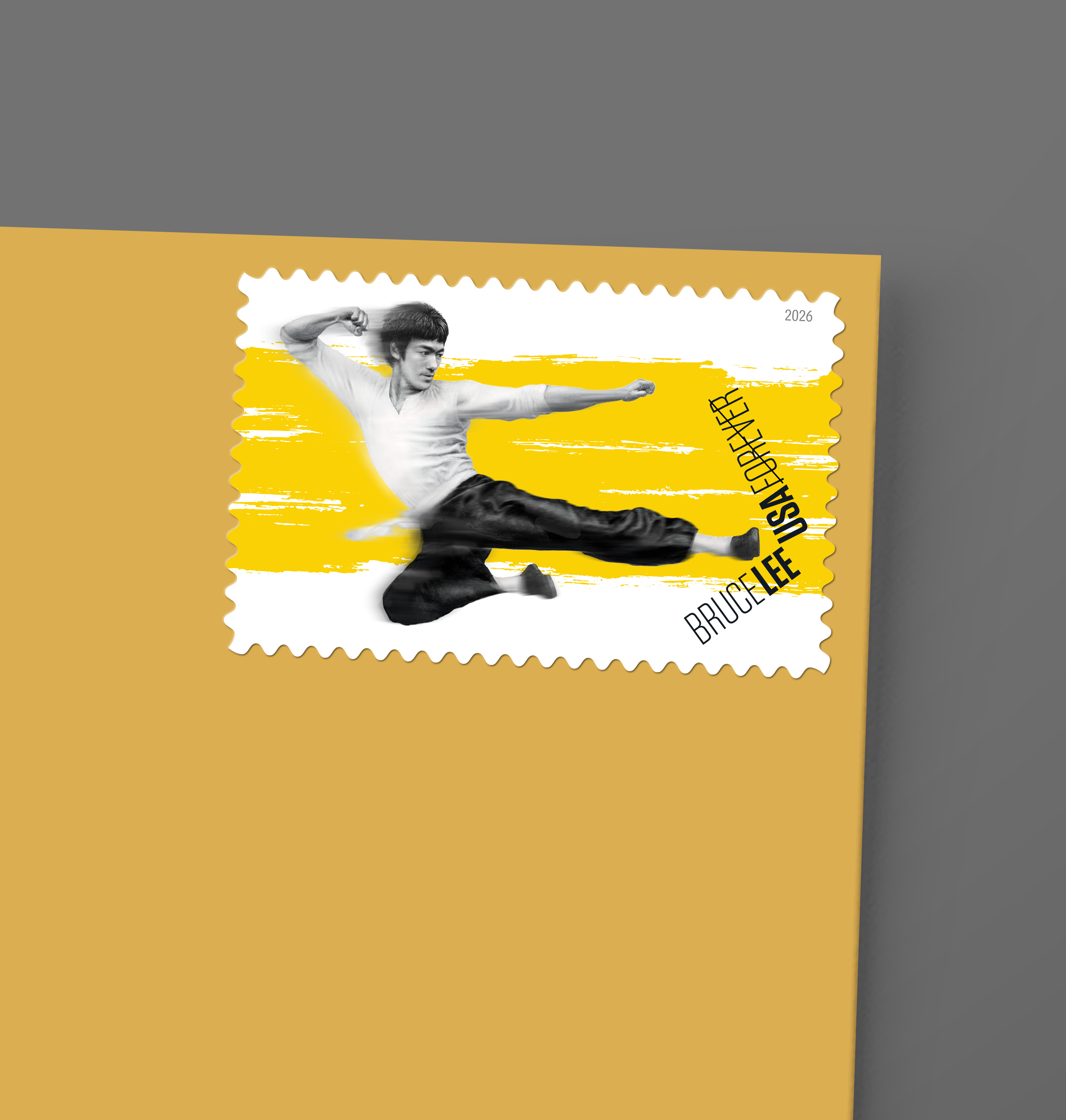
The Story Behind the New Bruce Lee Postage Stamp
A new stamp freezes Bruce Lee mid-air, honoring the Chinese American martial artist, actor, and filmmaker
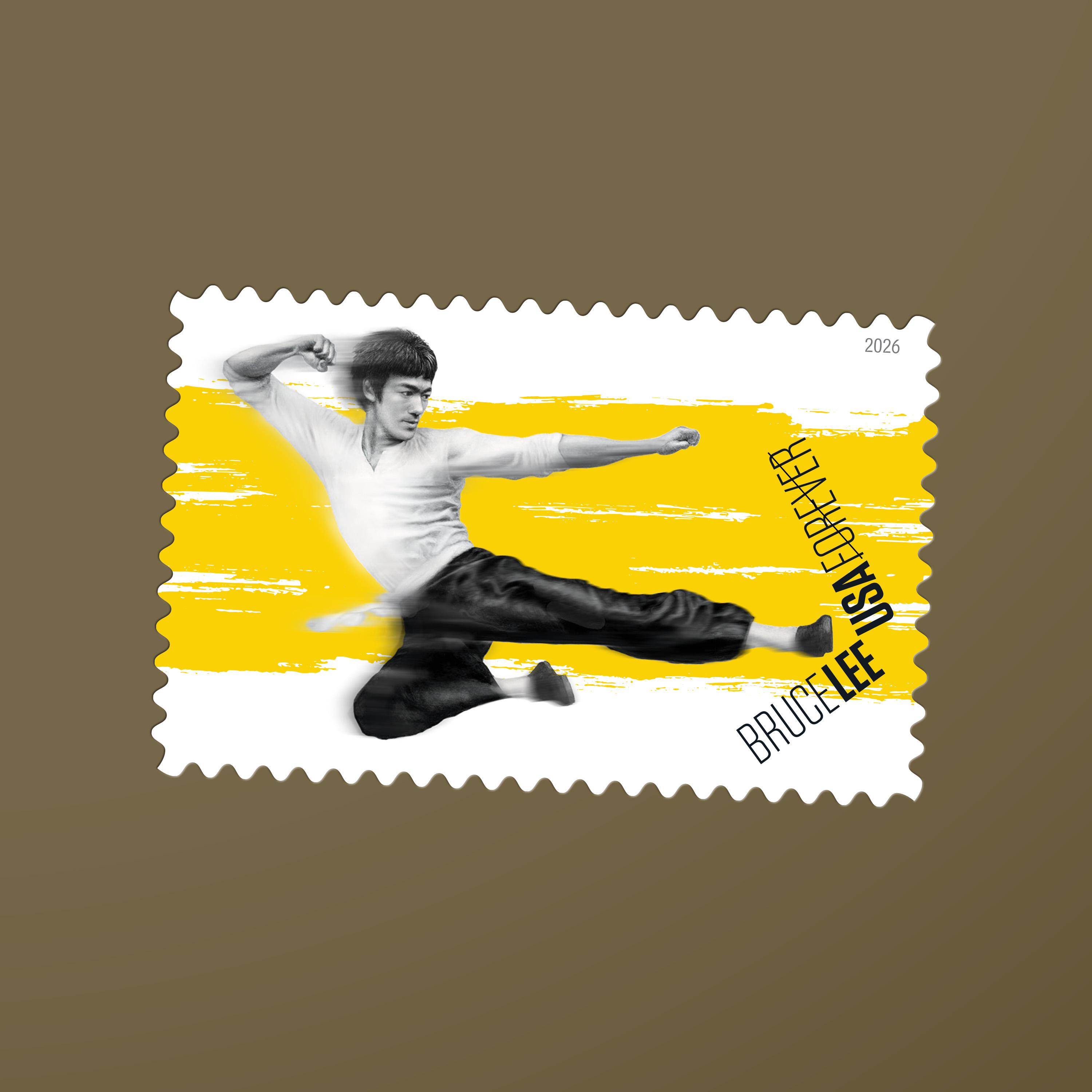
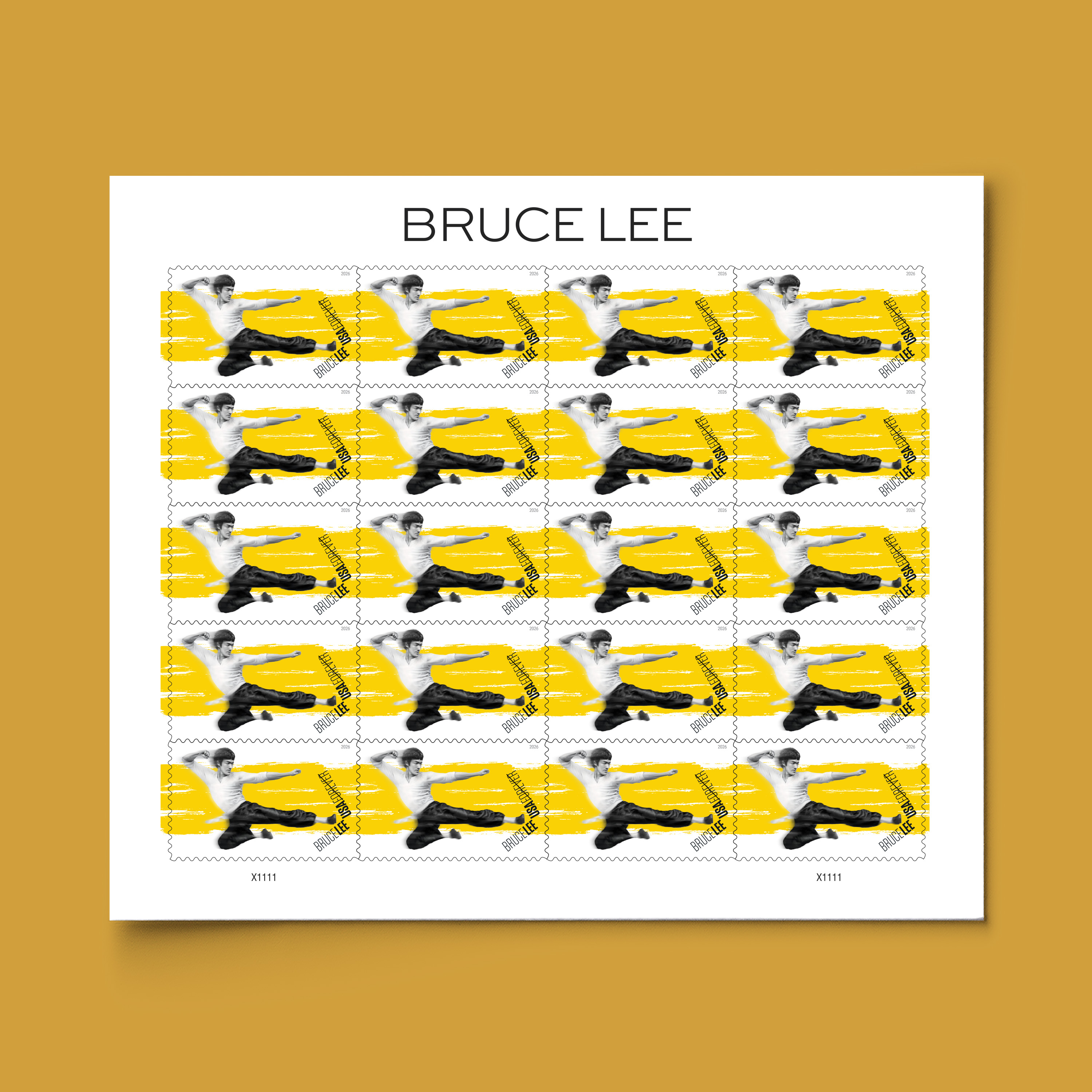
More than 50 years after his death, Bruce Lee (1940–1973) is being honored on a United States postage stamp. The Chinese American martial artist, actor, and filmmaker was the first Asian leading man in American film, captivating audiences with his skill, charisma, and screen presence and inspiring a generation of young fans. His legacy continues to shape global culture, from action cinema and popular music to mixed martial arts. The Forever stamp features a painting of Lee by an artist who is also a serious Lee fan.
Born in San Francisco but raised in Hong Kong, Lee later returned to the U.S. to attend college, and soon also began teaching martial arts. His popularity as an instructor grew, and before long his chiseled frame, lightning-fast hands and feet, and Zen-like aura had caught the attention of a Hollywood producer who was looking for a Chinese actor for a Chinese role. This was groundbreaking because, at the time, Asian roles were usually given to white actors.
Lee performed his first major American role in 1966–1967, as Kato, a martial artist and partner to the title hero in the television series The Green Hornet. Although the show lasted just one season, Lee continued to find work, choreographing movie fight scenes and acting in other TV series — but never in a starring role. Hollywood considered Asian actors not to be bankable in leading roles, and scripts often painted Asian characters as passive and subservient. Lee sought to destroy those stereotypes.
He also continued developing his own form of martial arts. With Jeet Kune Do — roughly, “The Way of the Intercepting Fist” — Lee rejected the rigidity of traditional martial arts for a more free-flowing and holistic approach.
Soon Golden Harvest Studios in Hong Kong came calling, offering Lee a chance to star in the kind of fast-paced action films that properly showcased his talent. His first, The Big Boss (1971), became a box office success in Hong Kong, elsewhere in Asia, and later in the U.S. Then came Fist of Fury, Lee’s second straight smash hit.
Next Lee produced, directed, wrote, and starred in The Way of the Dragon (1972), which again broke Hong Kong box office records. He stopped work on a fourth film, The Game of Death, when American studio Warner Bros. agreed to make its first production starring him. The quintessential Lee film Enter the Dragon is full of eye-popping set pieces. In the spectacular climactic scene, his character vanquishes crime lord Han in a mirror-walled room. The movie became a worldwide phenomenon.
Tragically, Lee did not live to see his opus dazzle audiences. On July 20, 1973, a month before the premiere of Enter the Dragon, he died at age 32 of cerebral edema.
When it came to designing a stamp to honor Lee, USPS art director Antonio Alcalá decided he “needed an artist who could do an accurate rendering of the star performing a flying kick based on reference materials.” His fellow art directors recommended Kam Mak, an award-winning painter/illustrator who has worked on multiple other stamps. In addition, “It didn’t hurt that he’s been a big Bruce Lee fan for most of his life!” Alcalá says.
The stamp artwork features Mak’s black-and-white painting of Lee executing his iconic move. Rendered in egg tempera on traditional gesso, the portrait is set against what Alcalá calls “a calligraphic, yellow brush stroke,” a reference to the iconic yellow tracksuit Lee wore in The Game of Death, which was completed and released years after his death. Ingeniously, Alcalá placed the words BRUCE LEE and USA FOREVER vertically and angled, as if Lee’s kick were breaking them in half. This arrangement — with LEE and USA in bold — enhances the action, the art director says. “I think he would have appreciated the design.”