Why Do We Have Stamps?
A history of the creation of U.S. stamps
The function of a postage stamp — simple and straightforward, right? Stick a nicely designed bit of paper to an envelope or package, and it is on its way from Point A to Point B — whether down the road or halfway around the world.
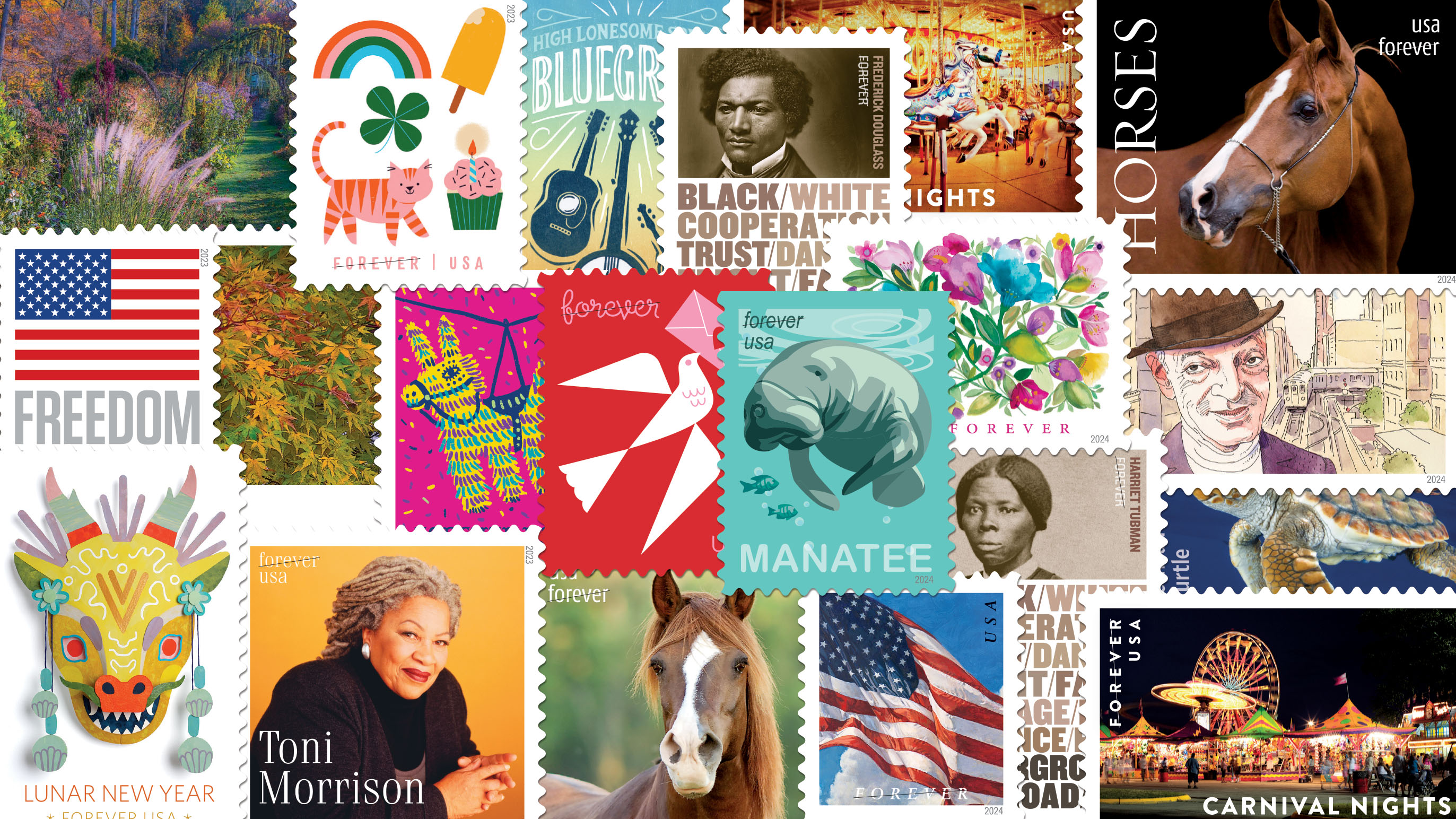
Aside from their utilitarian function, stamps have long helped us honor the heroes, innovations, and milestones of the nation’s history. They help us celebrate and express the many facets of the American experience.
Today, we take postage stamps and their utility for granted, and might not think about the communications revolution sparked by their introduction about 180 years ago. We might appreciate stamps’ artistry without considering how these little gems of design earned their unique place in American culture.
Definitive versus commemorative stamps
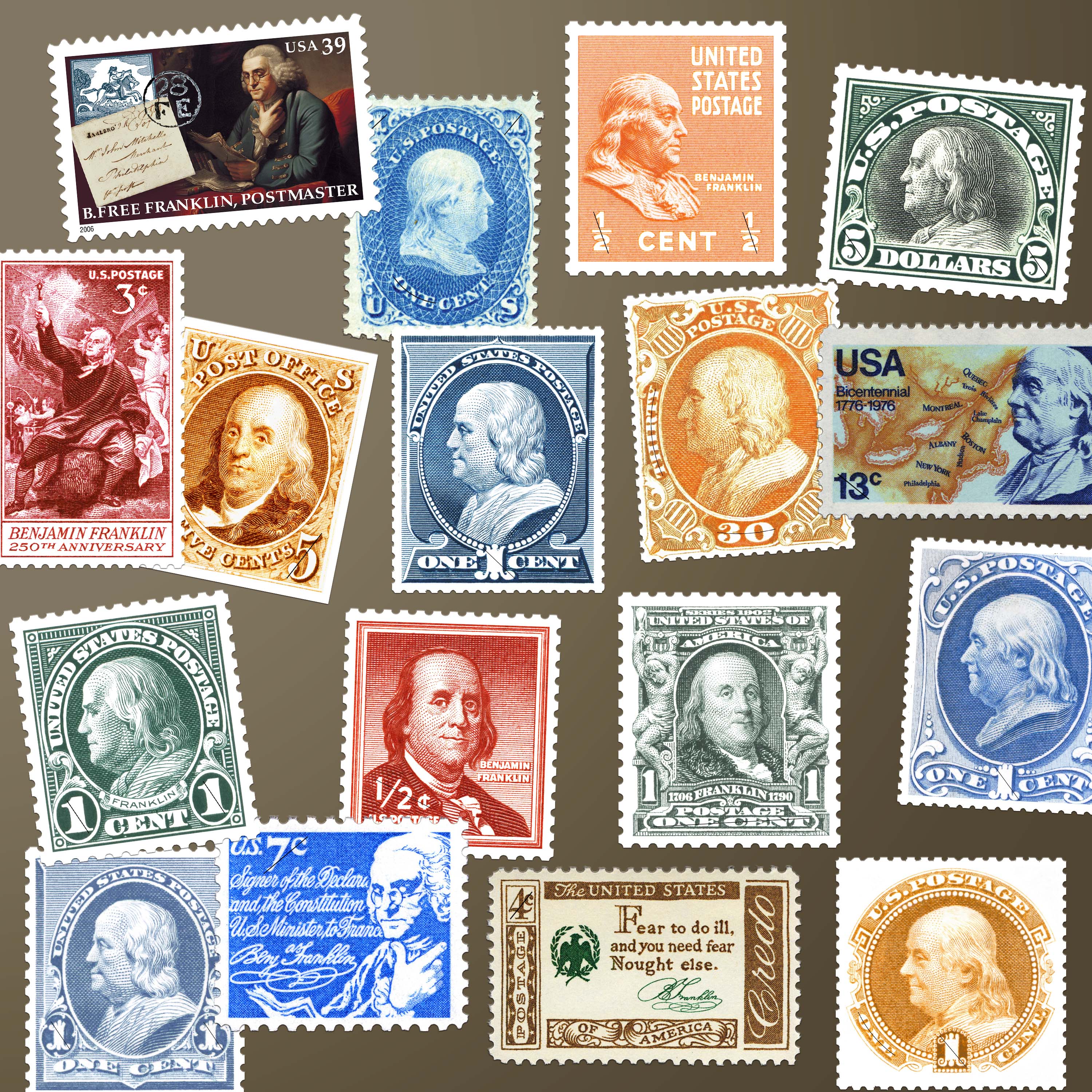
The earliest American stamps were definitives, also known as mail-use stamps. They are the most commonly available stamps, printed in huge numbers and ready to reprint as inventories demand. Today’s definitive stamps include the ubiquitous U.S. Flag Forever® stamp, available in the usual outlets — Post Offices, online, and at other convenient locations like supermarkets. Other mail-use stamps range from the 1-cent Fringed Tulip stamp to the $10 Floral Geometry stamp, and even higher values for special services like Priority Mail Express®.
Commemoratives, on the other hand, are limited-edition stamps, generally printed just once and available only until the supply is depleted. Larger in size than definitives, commemoratives honor people, events, and subjects of importance to American life and culture. In the United States, definitives were introduced first, in 1847. Commemoratives followed in 1893.
The first U.S. postage stamps
Before stamps were introduced, sending a letter was complicated and expensive. Local postmasters calculated prices on a case-by-case basis, marking each letter with a price based on its destination’s distance and the number of pages enclosed. Under this system, a letter’s recipient, not its sender, was expected to pay the postage, “cash on delivery” (C.O.D.). Refused letters — and there were many — piled up in the local Dead Letter Office. The system was financially unsustainable, since the Post Office’s considerable efforts to deliver a letter often reaped no payment whatsoever.
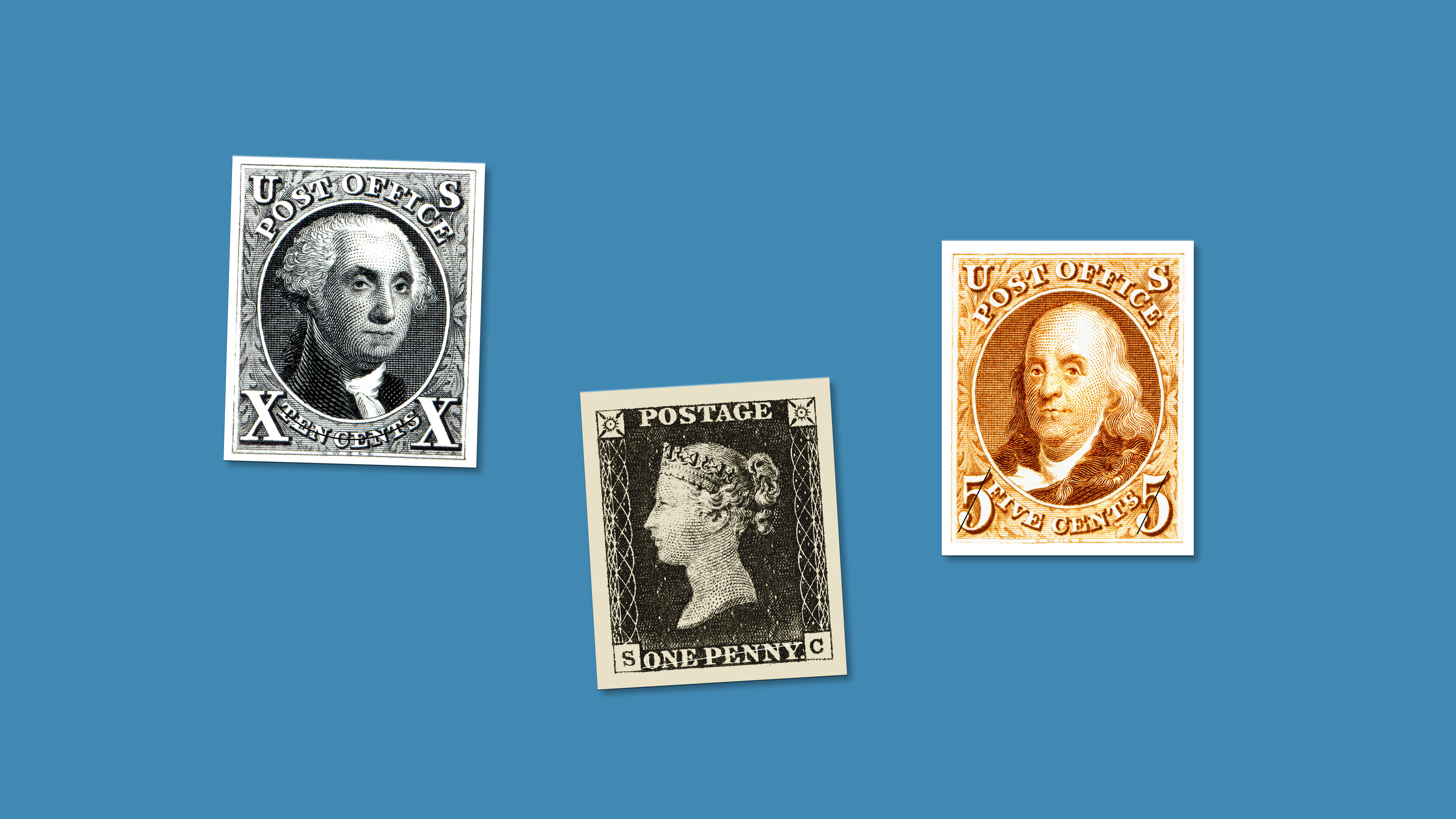
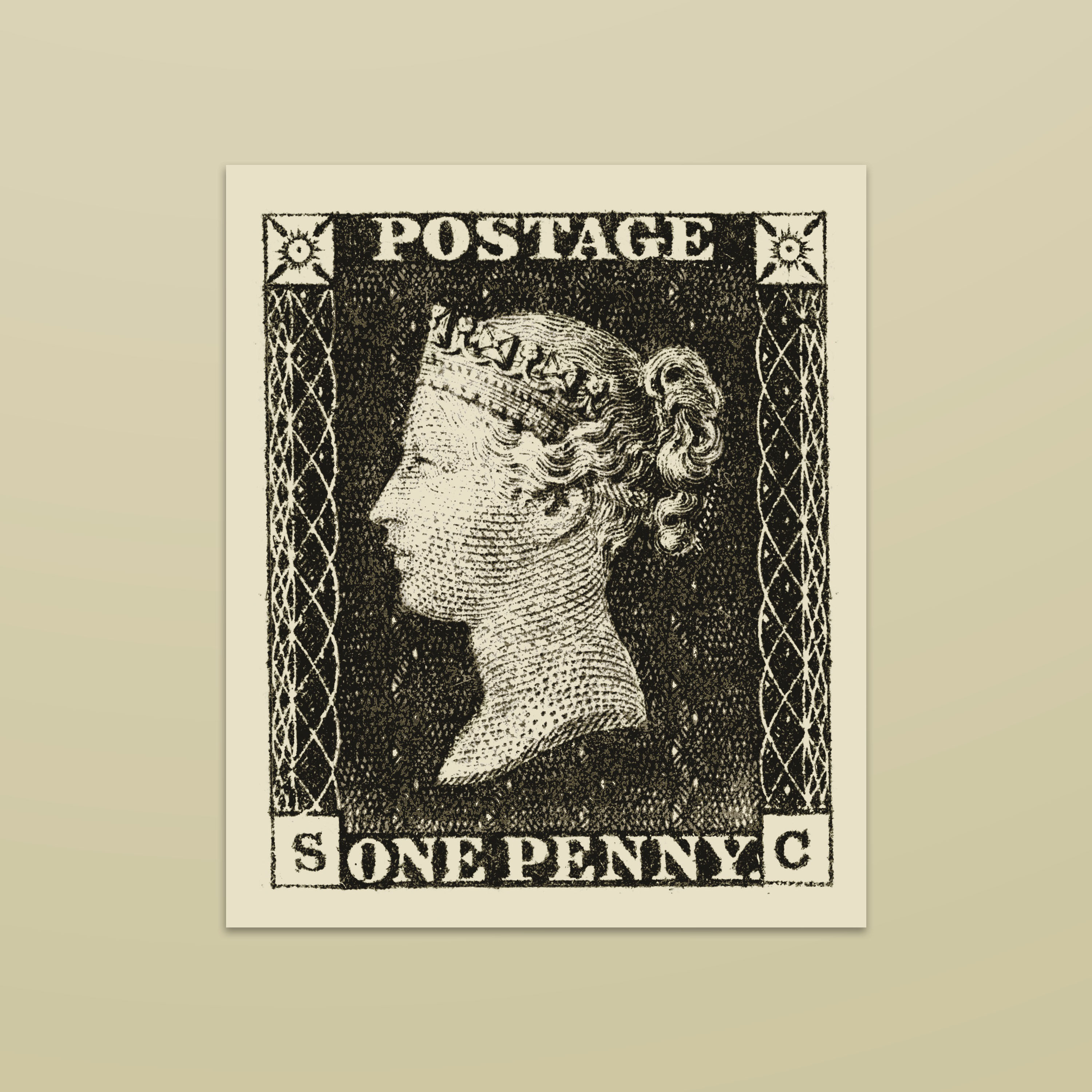
In Britain, the 1840 introduction of the adhesive Penny Black stamp coincided with a lowering of postage rates and set off a letter-writing craze. Senator Daniel Webster admired the innovation and proposed that the U.S. Post Office follow suit. But it would be another seven years before Congress authorized the first federal postage stamps.
In some large cities such as New York, Baltimore, and St. Louis, 1840s postmasters issued their own makeshift stamps, called provisionals. These, however, were useful only within a strictly limited urban zone.
Two U.S. postage stamps introduced on July 1, 1847, along with corresponding rate simplifications, changed the game. These stamps — a 5-cent Benjamin Franklin and a 10-cent George Washington issued by the U.S. Post Office Department — were valid nationwide.
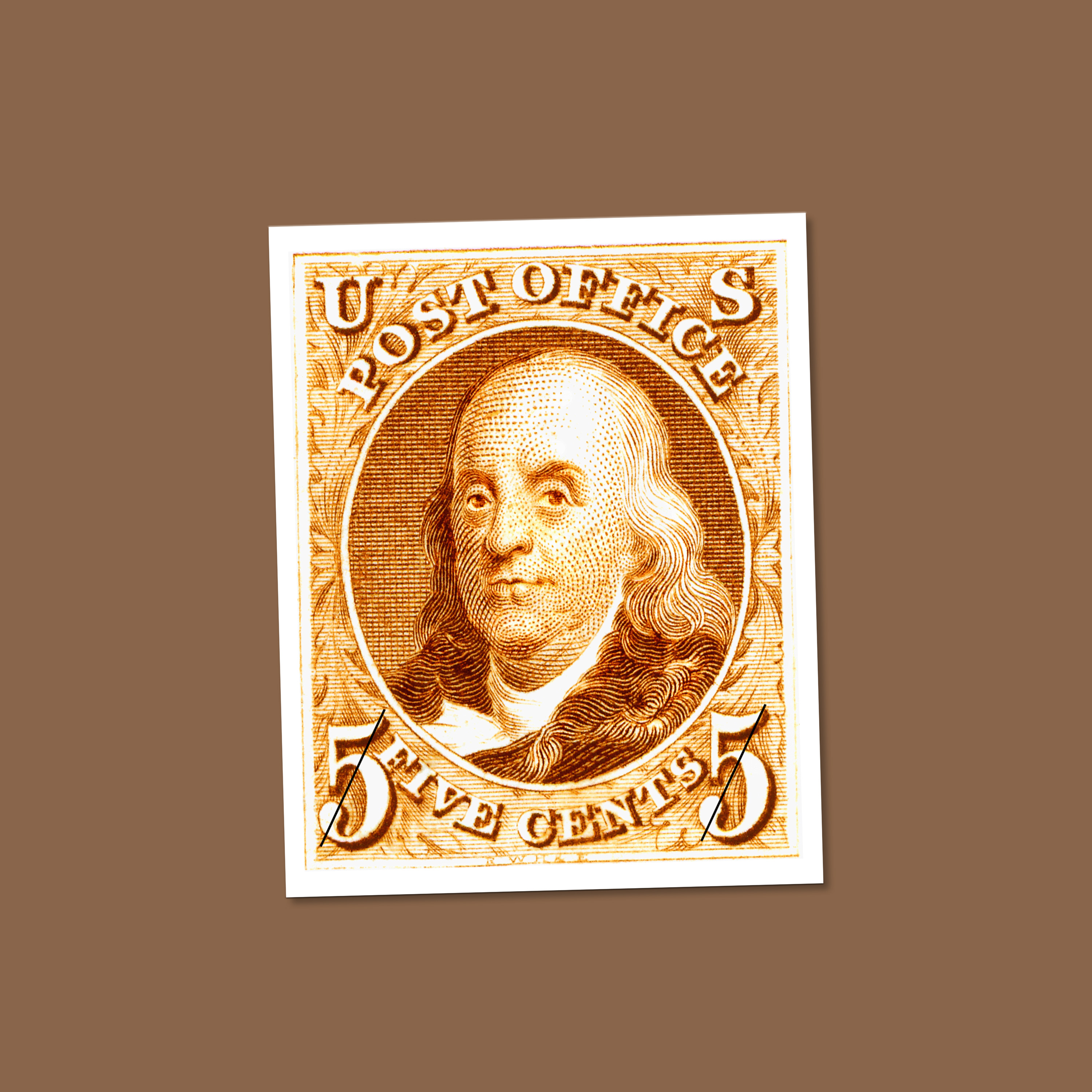
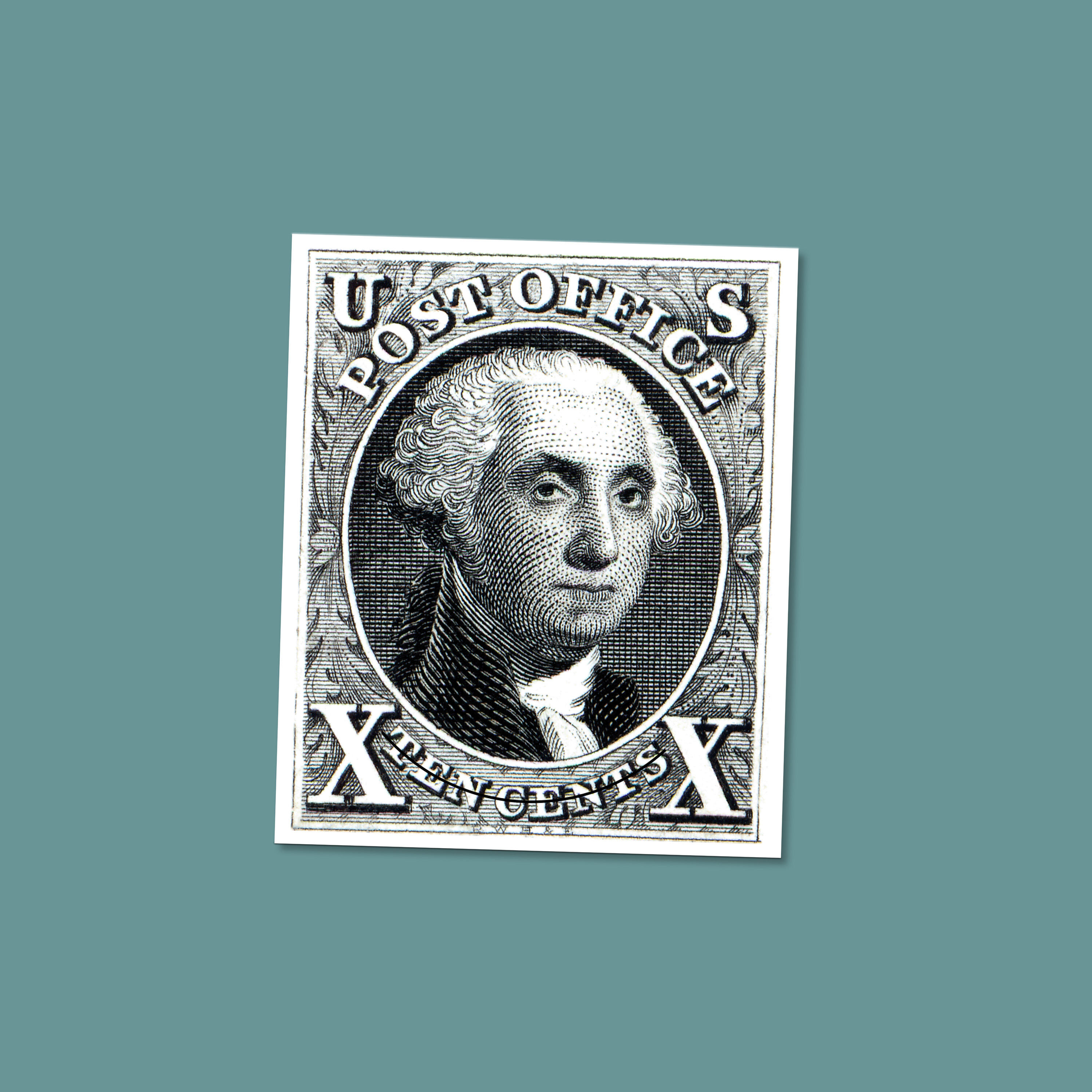
During a transitional period, while letters could still be sent C.O.D., Americans were slow to adopt the stamp-using habit. In the first five years after stamps became available, only about two percent of letters bore them.
The new communications technology, like any other, involved a learning curve. For one thing, paying up front for a service yet to be rendered was not customary at the time. Senders also worried that pre-paying with a stamp might be perceived as an insult — an insinuation that the addressee could not afford to accept mail. This was actually a legitimate concern in the days of high postage rates, when getting a letter could cost half a day’s wages.
People who did purchase and receive those first American stamps delighted in owning beautifully engraved portraits of the Founding Fathers. Many Americans of the time had not seen — let alone owned — printed, mass-produced artwork. The novelty helped give rise to the hobby of stamp collecting.
The “ick” of the lick
Stamp customers balked at the dry glue coating on the reverse of stamps, activated by moisture. The practice of licking glued paper was totally new to Americans, and some considered it unintuitive, even worrisome. A newspaper contributor in 1851 shared his experience:
At first I moistened the stamp with my tongue, and then applied the stamp to the dry letter. I now moisten the letter and apply the dry stamp to it.
Another correspondent helpfully advised:
After the stamp has been put on the letter, it should be pressed hard for a few seconds by something having an elastic surface, such as the muscle of the thumb, or a pocket handkerchief rolled tight… thus forcing out all the air between the stamp and the paper.
Moisture-activated glue remained in use on U.S. stamps until the 1990s, when self-adhesive stamps became the norm.
Letter-writing catches on
In the mid-1850s, the transition to stamps was complete. Mail volume shot up, thanks to dramatically lower prices enabled by stamp efficiency, the expansion of railroads, and other innovations like curbside mail boxes for depositing letters and perforations for separating stamps, which previously had to be carefully scissor-cut from a sheet.
Suddenly, a one-cent stamp paid the way for a local, lightweight “drop letter,” without the sender having to visit the Post Office. Three cents’ worth of stamps carried a light letter virtually anywhere in the nation.
With stamps, letter-writing became much more accessible to the masses. The innovation proved vital, helping families and friends keep in touch in an era of great population growth and migration, as multitudes of Americans moved westward.