Up Close With New Squirrels & Chipmunks in Snow Stamps
Art director Derry Noyes shares how four photographs of familiar winter animals came together on a playful new set of stamps
From polar bears and arctic hares to otters and deer, animals in winter settings have appeared on U.S. postage stamps before. With the 2026 Squirrels & Chipmunks in Snow stamps, some of our most familiar wild neighbors take center stage.
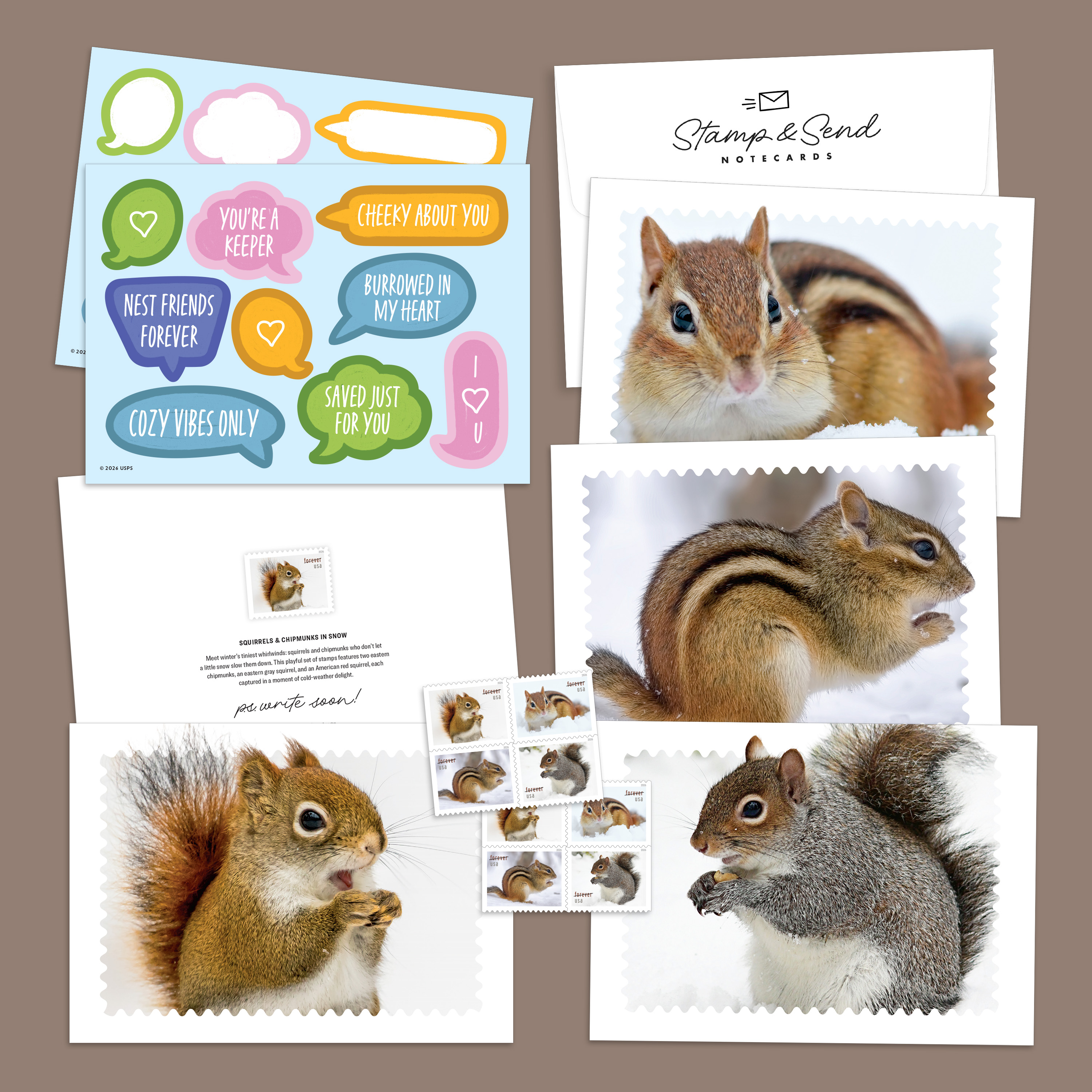
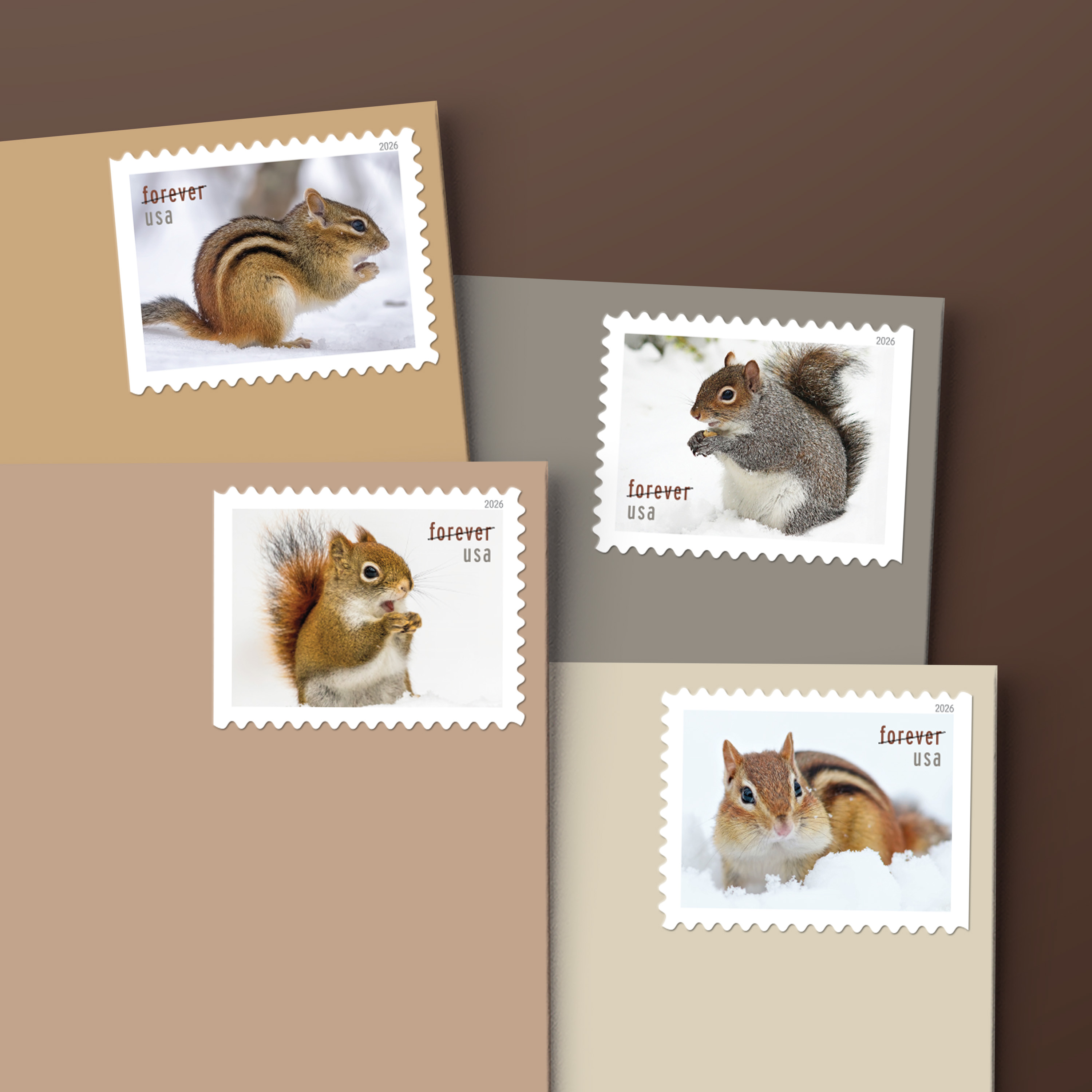
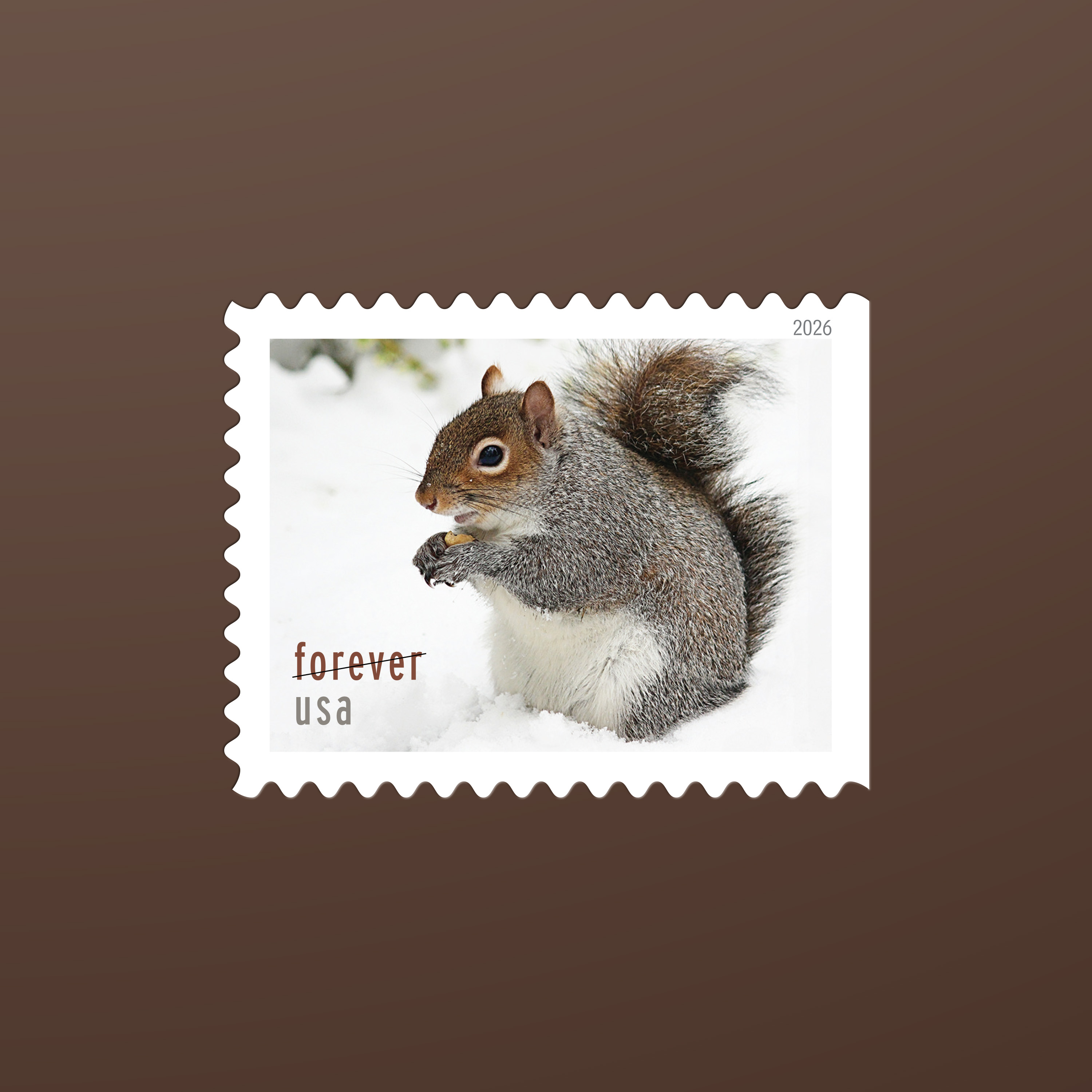
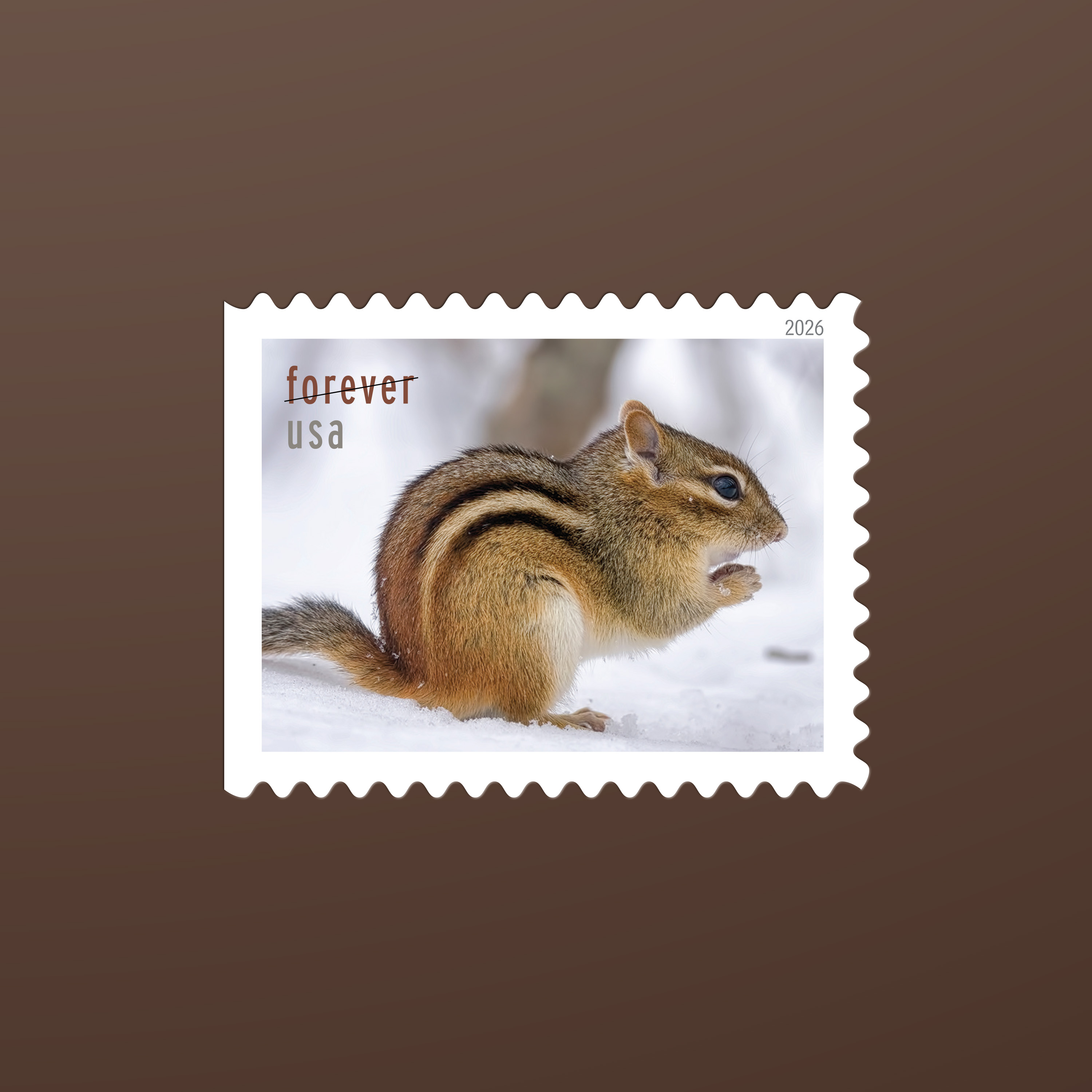
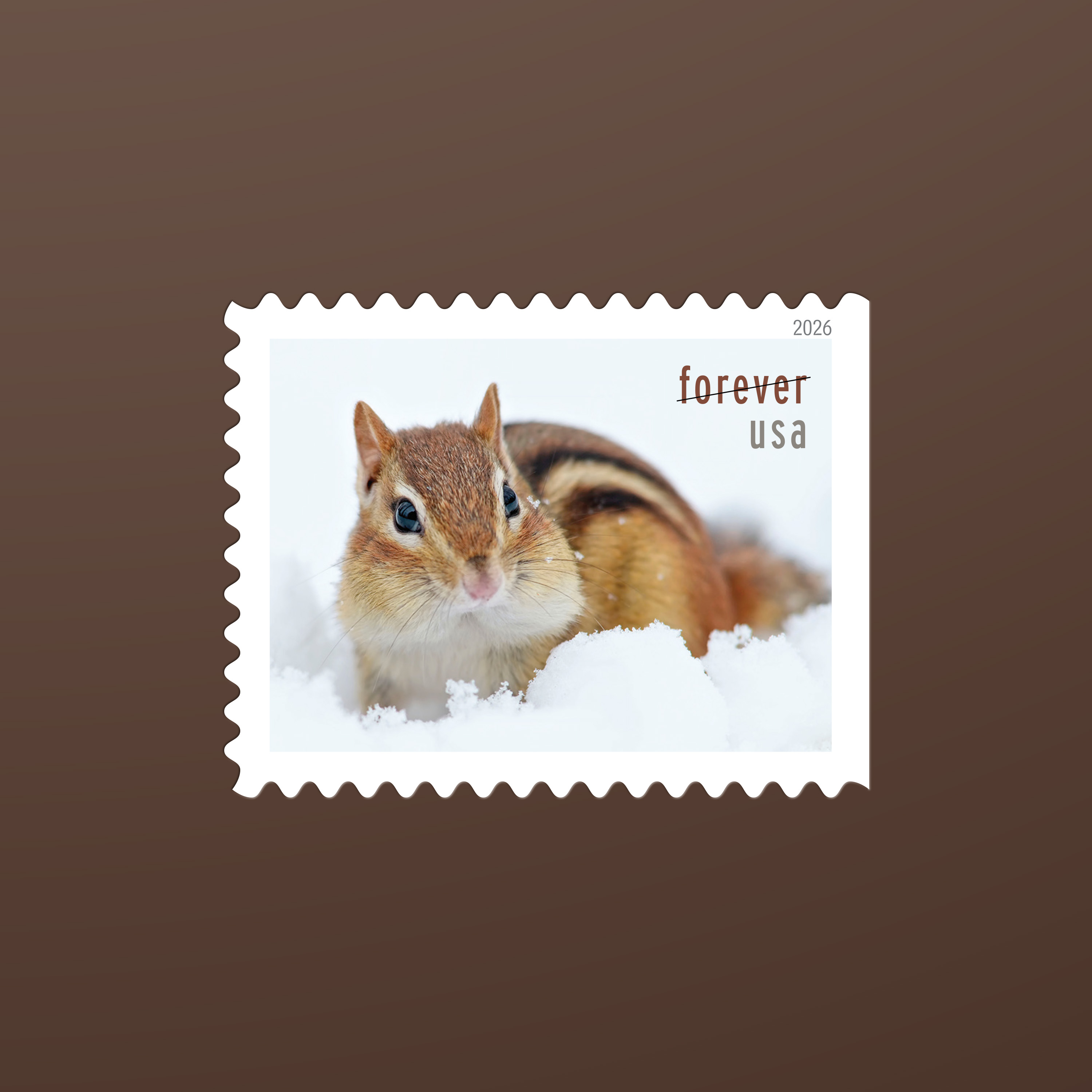
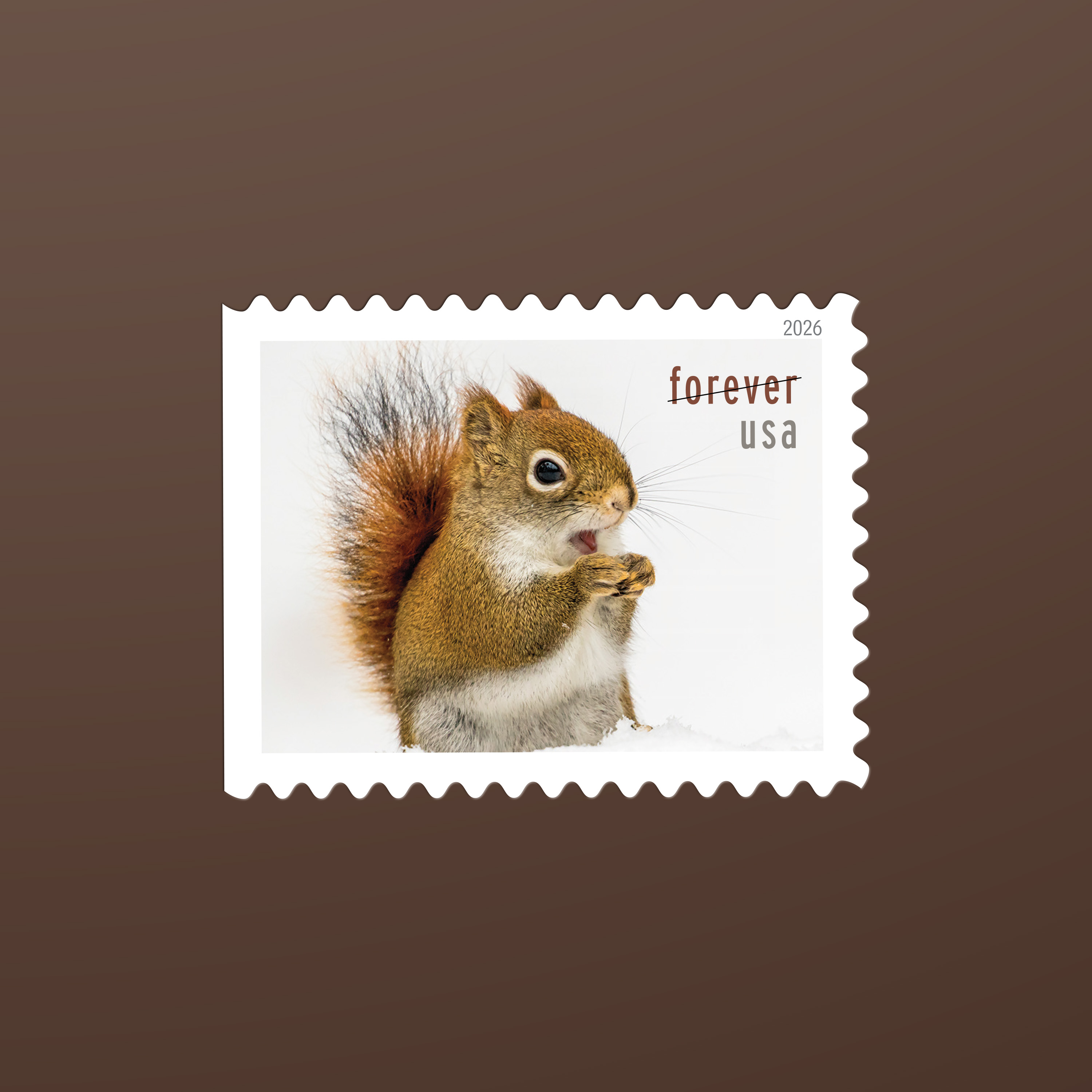
The four stamps feature photographs of an American red squirrel (Tamiasciurus hudsonicus), an eastern gray squirrel (Sciurus carolinensis), and two eastern chipmunks (Tamias striatus), all of them pictured on the snowy ground.
Squirrels and Chipmunks Up Close
Normally spotted darting about from place to place, squirrels and chipmunks can seem to us as though they never slow down. These stamps catch them in a moment of stillness that gives us a chance to really look at them.
“There’s something about their expressions,” says art director and stamp designer Derry Noyes. “We see squirrels and chipmunks all the time, but not always up close like this. The stamps let us pause and take in their little faces. There’s so much joy in them.”
Choosing the right photographs involved more than finding appealing expressions. Noyes also had to consider how each image would work on a stamp. To narrow down the photo selection, she looked at photographs of each animal from different angles and in different poses. “To determine if a photograph would work, I also had to consider scale,” she explains.
Of the four photographs she decided to use, three show the animals in profile, sitting on their haunches while they use their front paws to lift something tasty to their mouths. In the fourth, one of the chipmunks looks out at us, its cheek pouches bulging with food. Like the others, its eyes and ears are alert.
Winter Survival Strategies
The images are cute. They also reveal a little bit about how these familiar animals feed themselves and stay warm in the cold winter months.
American red squirrels, for example, grow fluffy ear tufts and a thicker coat that help them stay warm in winter. On especially cold days, they will retreat to a nest or other cozy spot in a tree or occasionally underground.
Eastern gray squirrels also build their nests high up in the trees. Some of these nests, called dreys, are sturdy enough to withstand a blizzard. When these squirrels venture out in search of something to eat, snow is no obstacle. They can use their keen sense of smell to locate food stored weeks earlier, sometimes even tunneling through deep drifts to reach a hidden stash.
Unlike the squirrels, eastern chipmunks typically finish gathering their food before the cold truly sets in, stocking their burrows with a pantry full of nuts and seeds. Then they settle in for the season, napping for long stretches and waking now and then to eat. On mild days, they might even go above ground to search for food before heading back to their underground hideaway.
A Playful Effect
Each stamp gives us a close look at one of these animals, but the four images take on a different character when viewed as a group.
“I really like how these stamps look as a booklet,” says Noyes. “Seeing them together in that format really highlights these agile little rodents. Seeing the animals’ faces popping up from the snow has a playful effect. The stamps are fun and uplifting. I hope they make people smile, especially in the heart of winter.”
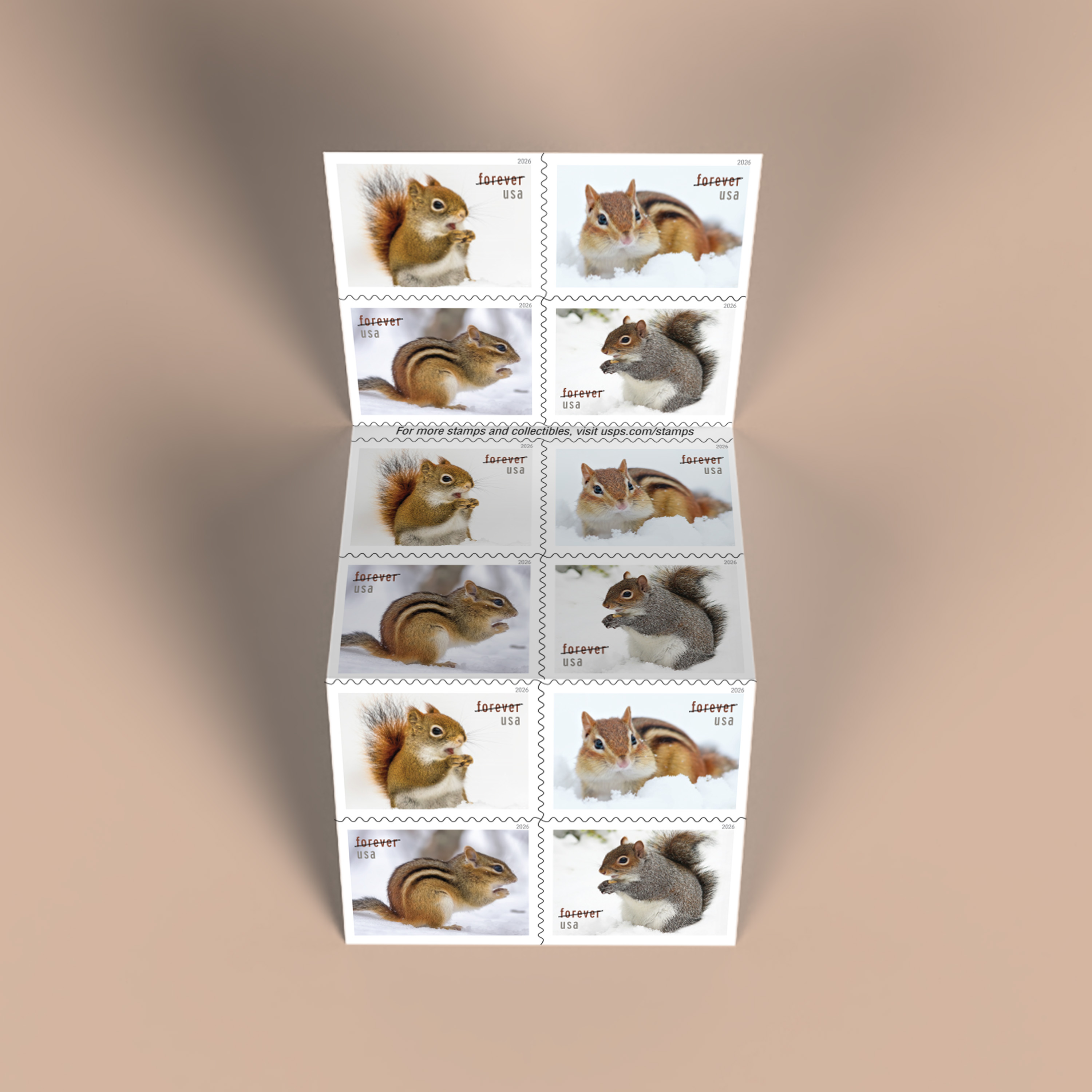
Booklet of 20