
New Literary Arts Stamp Honors Sarah Orne Jewett
The 35th stamp in the Literary Arts series honors a foundational figure in American literary regionalism, Sarah Orne Jewett (1849–1909). In her work she sought to highlight the positive spirit of the region, an enduring model of harmony between individualism and communal values. Often drawing inspiration from people she knew in her lifelong village home of South Berwick, Maine, Jewett created intimate portrayals of her characters and of the landscape and culture that shaped them. More recently, her strong female characters have led to a renewed interest in her work.
Jewett began publishing in her late teens, mainly for children. During her career, she published poetry and essays, 18 novels, and hundreds of short stories, including about 300 pieces in The Atlantic Monthly alone. Her style of American realist fiction resonated deeply with her contemporaries and has experienced revived attention since the late 20th century. Jewett’s portraits of New Englanders, both rural and urban, and of the landscapes of her native Maine, left a mark on American literature.
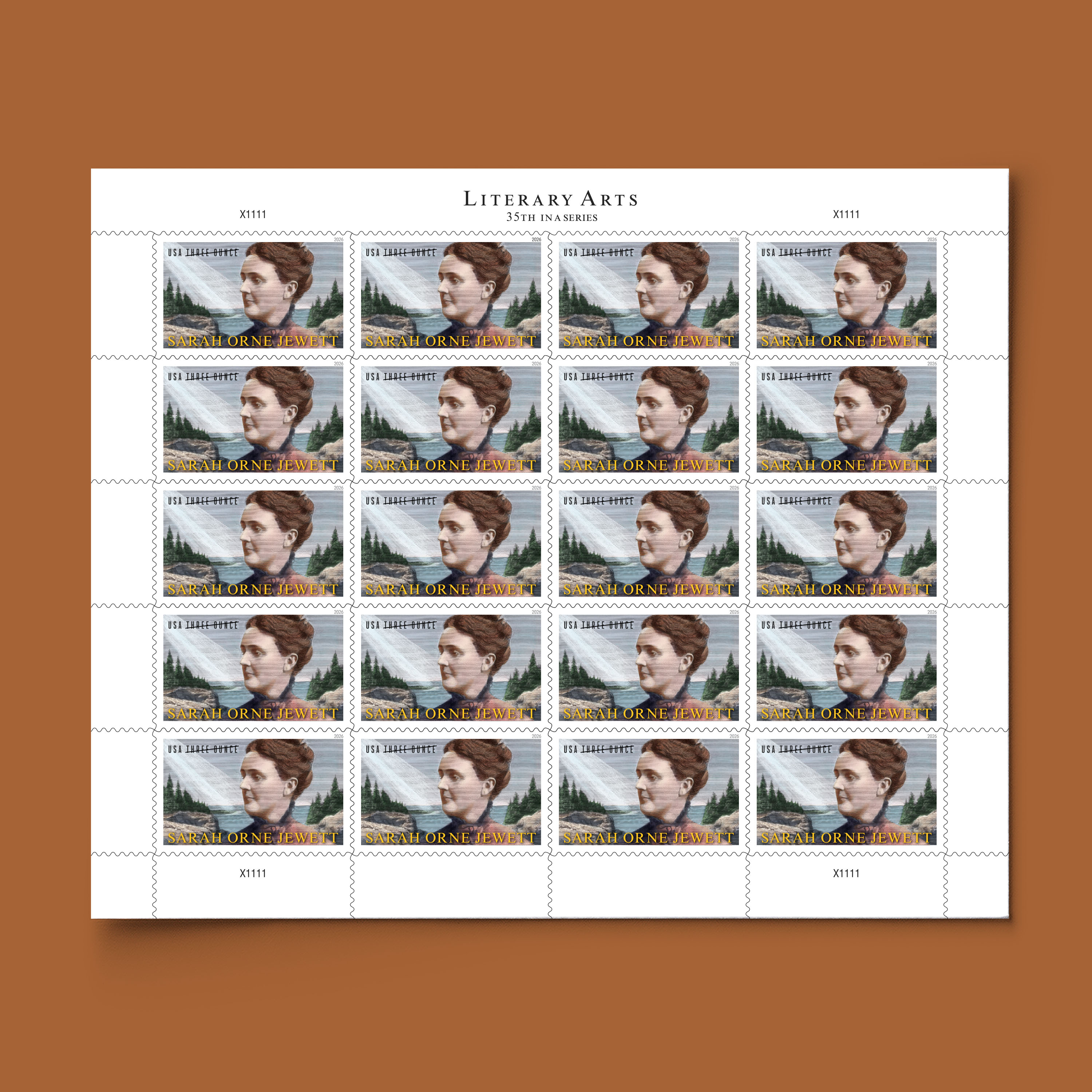
Illustrator Mark Summers was a natural choice for this stamp project. He had worked on several previous Postal Service issuances and, in his long career, has portrayed hundreds of literary figures.
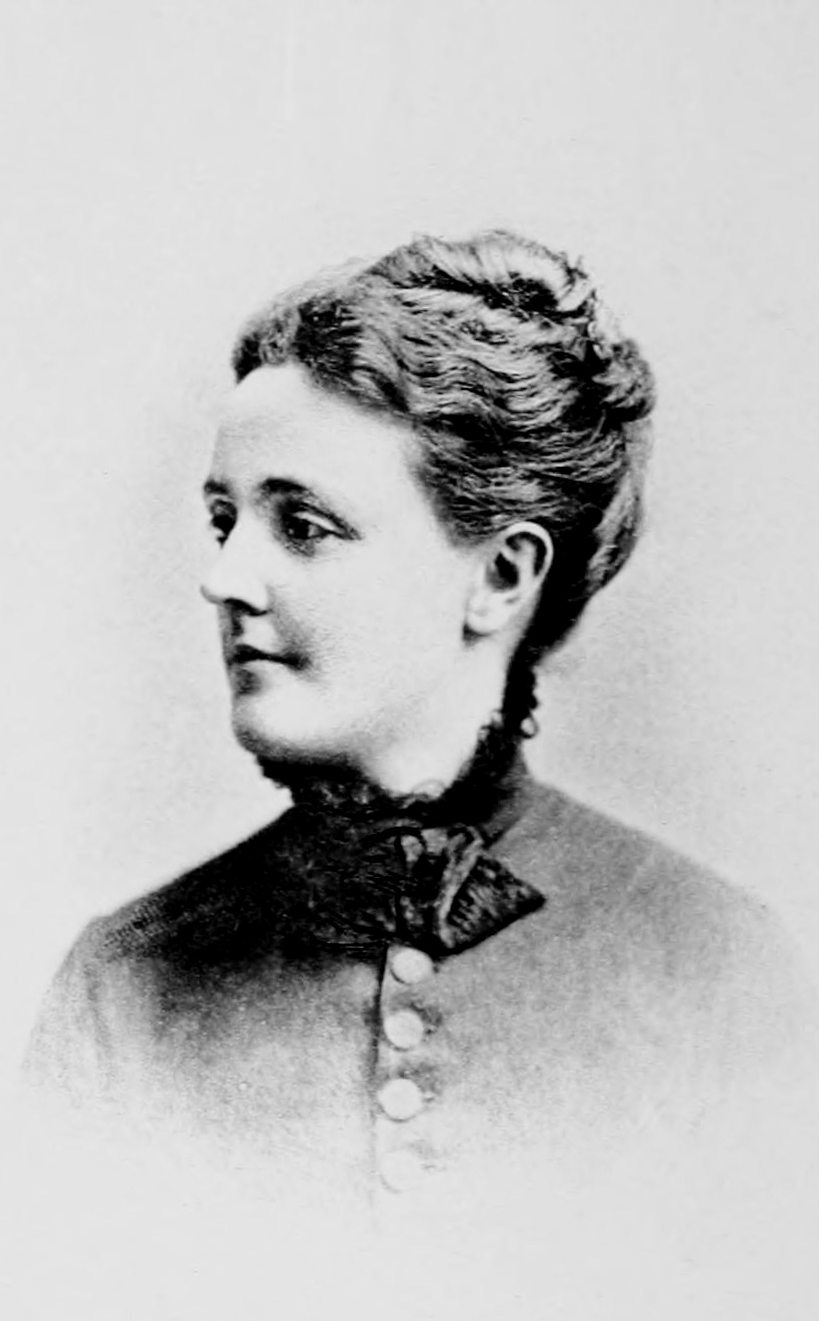
For his portrait of Jewett, which he based on an 1894 photograph, Summers turned to his iconic scratchboard technique, characterized by precisely etched black horizontal lines, reminiscent of late 19th century engraved illustrations. “The scratchboard style is one that the illustrator has perfected and used on most everything I’ve seen of his, in a way that no one else does quite as masterfully,” says art director Ethel Kessler.
To add the color, Summers made an entirely separate piece with watercolor, pastel, and some airbrush. He then printed the black-and-white version on top of the color version to produce the final artwork.
“I wanted to really tie her to the age she lived in and to the landscape of Maine,” Summers says of Jewett, a writer who left an indelible mark on American literature.
In her first novel, Deephaven (1877) — about two young Boston women who travel to the titular village for a summer of leisure — Jewett paints a realistic portrait of economically pressed villages, reflecting tensions between rural locals and urban tourists, as well as the cultural heritage preserved in these insular communities. Admired for its subtle and unsentimental descriptions, Deephaven affirms Jewett’s reverence for the natural world as much as for the people of her home state.
The Country of the Pointed Firs (1896), Jewett’s second and most well-known novel, features a city woman who spends a summer in a small coastal town. The fictional Dunnet Landing, with its picturesque scenery and quaint way of life, holds a deep allure for the protagonist and soon distracts her from her mission of completing a writing project. Critically acclaimed, The Country of the Pointed Firs would come to be seen as an American literary masterpiece.
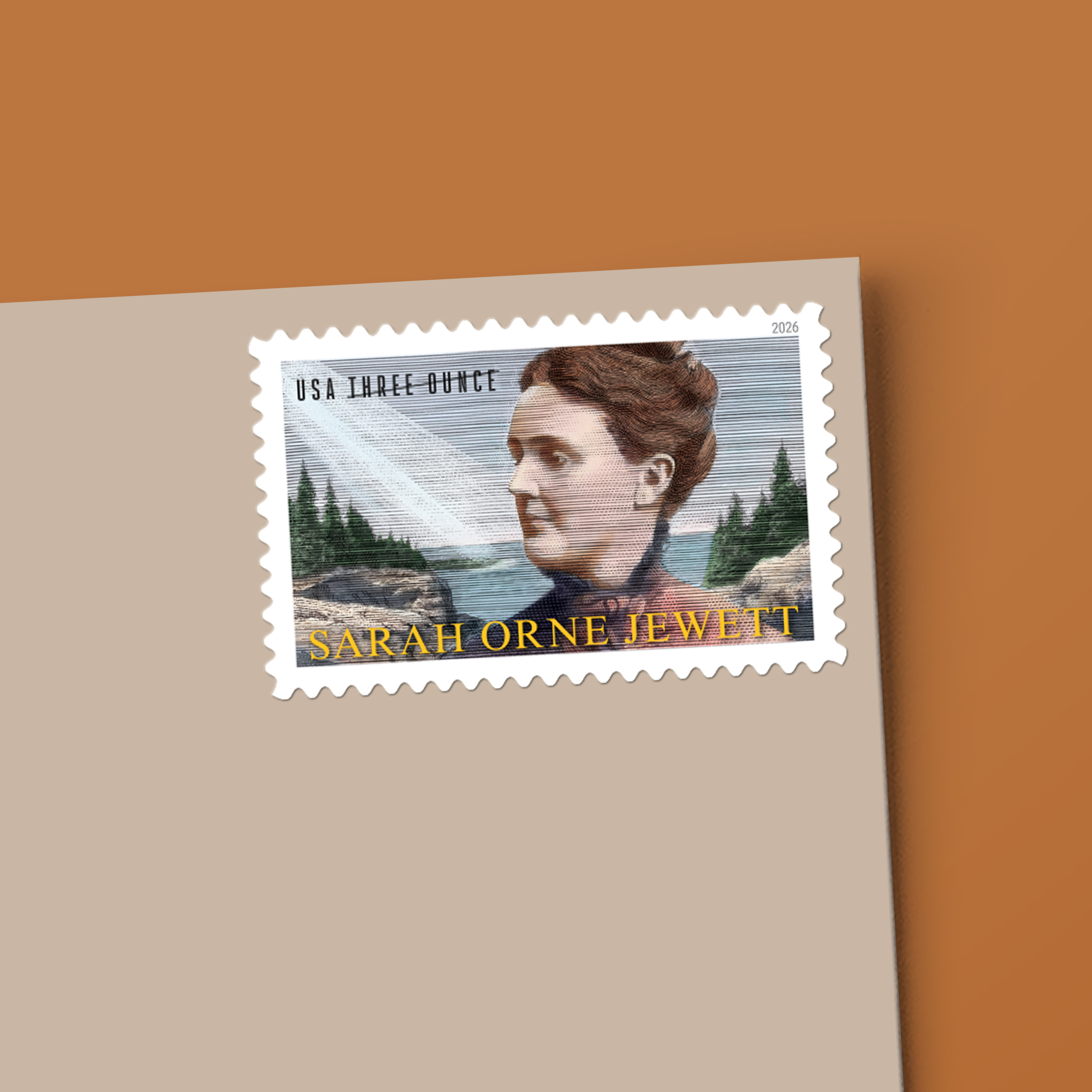
It is this novel that is evoked in the stamp artwork, which depicts the author before an expanse of rocky Maine coast lined with coniferous trees. The ray of sunshine angling from the upper left references a specific scene described in the book: “The sunburst upon that outermost island made it seem like a sudden revelation of the world beyond this which some believe to be so near.”