
A Guide to Addressing Envelopes and Packages
Tiny spaces, important guidelines
Getting the address right is a simple way to help your mail or package arrive quickly and without hiccups. The U.S. Postal Service has guidelines for how addresses should be written — whether you're sending something across town or overseas.
Following these tips makes it easier for postal systems to sort and deliver mail smoothly.
Use this quick guide to make sure your mail gets where it’s going with no surprises.
How to Address Domestic Mail
When sending letters within the United States, start by turning the envelope so it’s horizontal — the long side goes at the bottom, and the flap is at the top in the back.
Write the recipient’s address right in the center of the front. The return address (that’s yours) goes in the top left corner, and the stamp goes in the top right. That’s it — you’re ready to mail.
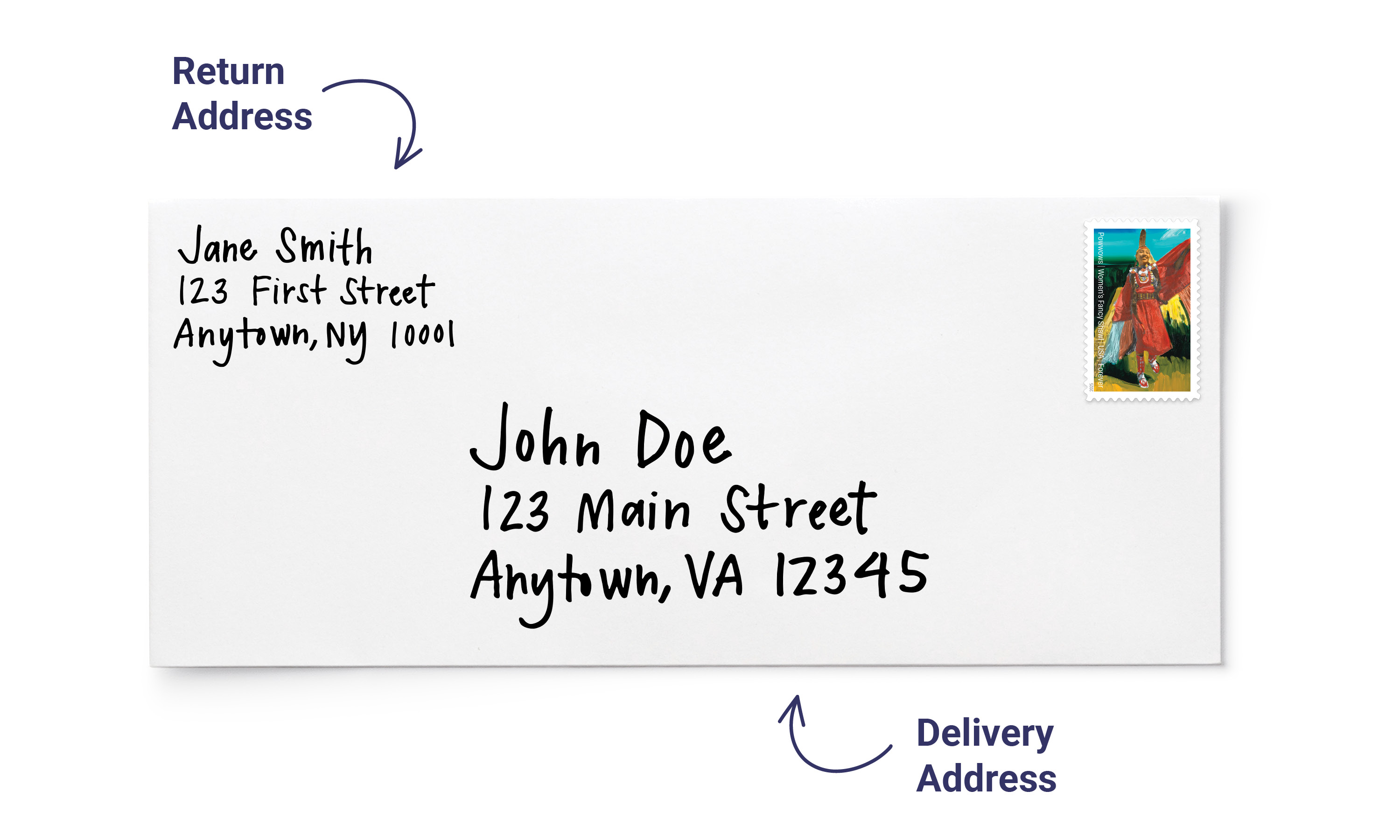
Key Details for Domestic Mail:
- ZIP Codes must be accurate — use five digits (e.g., 80203), or the ZIP+4 format for precision (e.g., 80203-1257).
- Street directionals (e.g., N, S, E, W) and unit numbers (Apt, Ste) should be included without punctuation.
- Handwriting should be clear, preferably printed, using blue or black ink on white or light-colored envelopes.
- Colored envelopes, such as those used for birthday and holiday cards, are OK to use as long as the ink used contrasts with the envelope’s color.
Note: The return address is important even though it’s optional. If the recipient’s address is unreadable or undeliverable, the return address allows the Postal Service to send the mail back to the sender.
Browse Forever Stamps
How to Address International (Overseas) Mail
When you're sending mail from the United States to another country, it's important to follow both USPS and international guidelines so everything gets through customs and reaches the right place.
How to Format an International Address
The return address and stamp go in the same spots as they do for domestic mail. The big difference is in the recipient’s address. Be sure to include the country name in English and in all capital letters on the last line. Right above that, list the city, province or state, and postal code — and you're good to go.
Example for a letter to England:
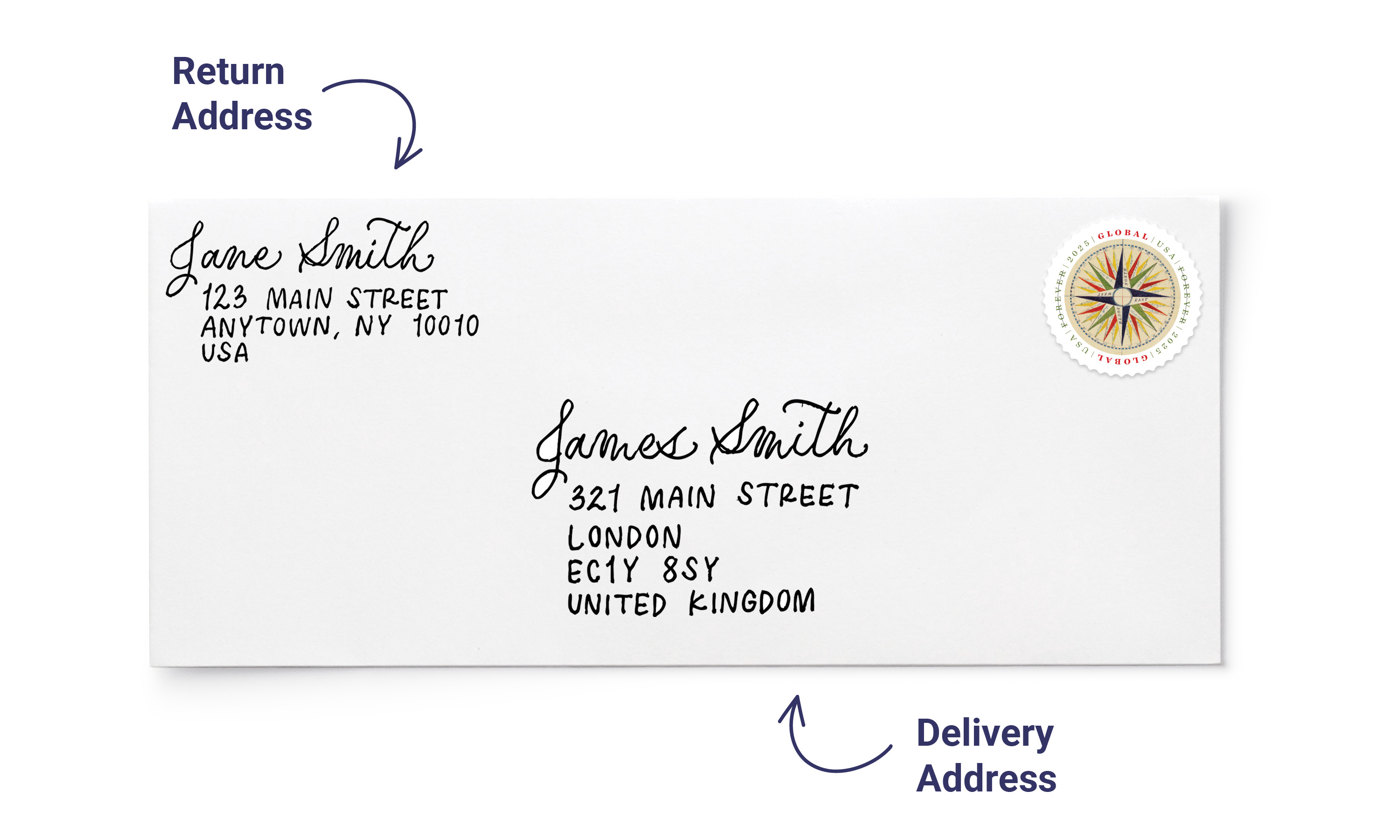
Key Tips for International Mail:
- Always write the full country name in English.
- The return address must include “USA” on the last line.
- Ensure the address lines are in the correct order for the destination country. For example, some countries list the postal code before the city name.
- Place postage in the upper right-hand corner, as with domestic mail, but be sure it covers the international rate.
- When sending a letter from the United States to another country, the address may need to be written a little differently, but it's still easy and affordable: It only costs $1.70 to send a standard-sized, 1-ounce letter or postcard using a USPS® Global real Forever® stamp. Postage varies for envelopes weighing over 1 ounce.
- You may need a customs form (especially for packages or anything containing goods). Forms can be filled out online at USPS.com or in person at a Post Office. Different countries have different rules on what they’ll allow in. Look up your destination country in the Index of Countries and Localities to make sure you’re following their rules.
Browse International Stamps
How to Address Packages
Addressing a package — whether it's staying in the United States or heading overseas — follows the same format as envelopes. The main difference? You’ll usually need more space. No matter the size of the box, the rules stay the same.
How to Format Addresses for Packages
Use a mailing label or write directly on the box with permanent ink. The delivery address should be placed on the largest surface of the package, centered and clear. The return address should be in the top left corner or on a separate area in the upper left section.
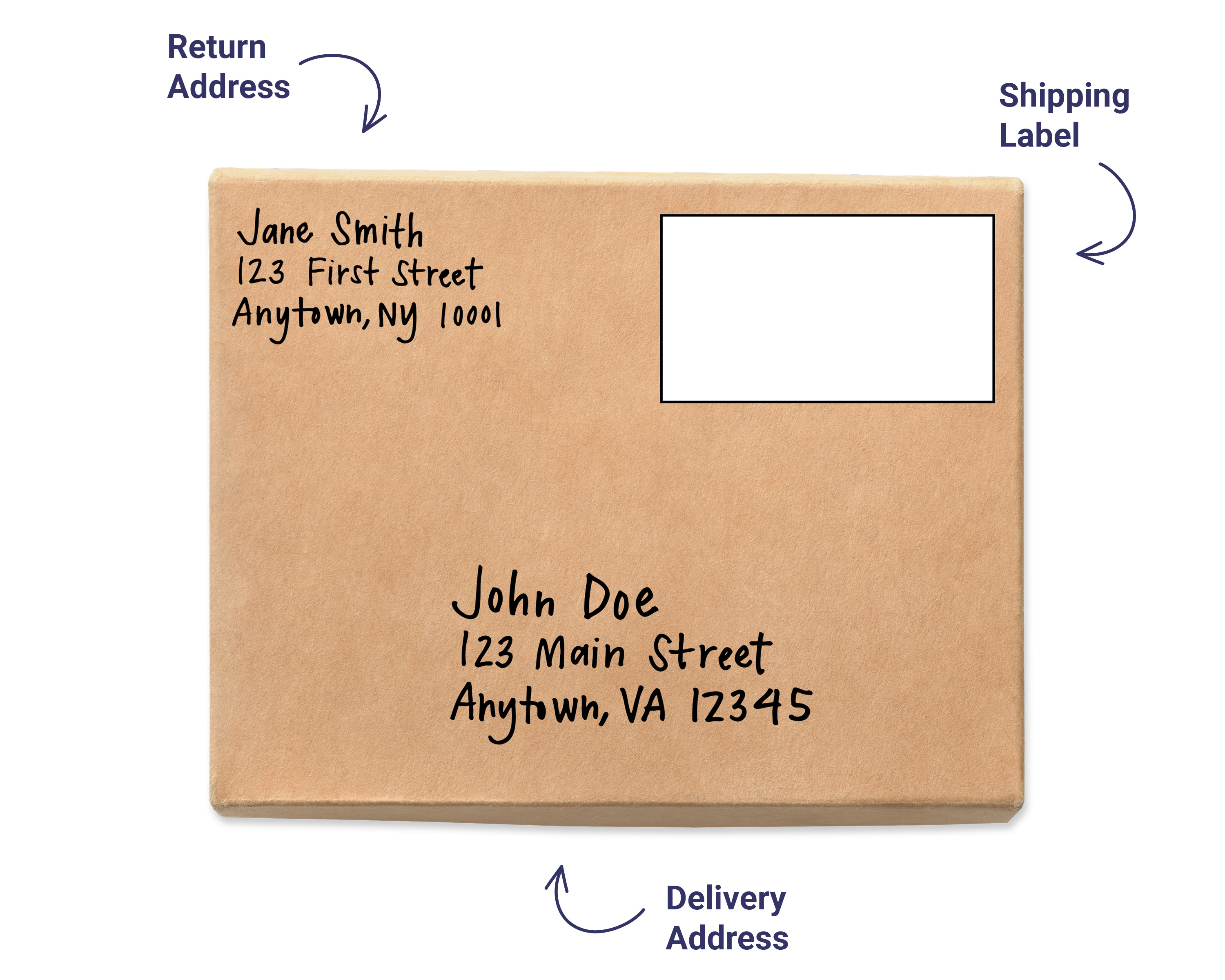
If the package is going overseas, include the country in English on the last line, just as you would for an international envelope.
Packaging and Labeling Tips:
- Use a ballpoint pen or printed label with dark ink on a light background.
- Avoid writing across seams, tape, or corners.
- Include a duplicate address label inside the package in case the outside becomes damaged.
- Remove or cover old labels or barcodes if reusing a box.
- Include apartment, suite, or floor numbers when applicable.
- Do not use nicknames or abbreviations that might confuse postal workers.
If you’re shipping through a speedier USPS service such as Priority Mail or Priority Mail Express, you can print official shipping labels that automatically include barcodes and tracking numbers.
Common Addressing Mistakes to Avoid
Even small errors can cause delays. Watch out for these common pitfalls:
- Missing or Incorrect ZIP Code: Always double-check ZIP Codes — the USPS “Find a ZIP Code” tool can help.
- Incorrect order of address lines: Write the street address on one line and city/state/ZIP Code on the next.
- Illegible handwriting: If you’re unsure whether your handwriting is clear enough, print labels instead.
- Leaving out a return address: Without it, undeliverable mail cannot be returned.
- Insufficient postage: Domestic and international rates differ — verify postage before mailing by using the USPS postage guide.
In Summary
By sticking to USPS guidelines, you’ll make things easier for postal workers and avoid delays, whether you’re sending something across town or around the world.
Double-checking things like ZIP Codes and making sure everything is easy to read can save you time and hassle. From a thank-you card to an international shipment, a clear, correctly written address is the key to smooth delivery.